
Dark Auburn Hair: 25 Rich Color Ideas for Women Over 40
After more than two decades behind the salon chair, I can tell you without hesitation that dark auburn hair is one of the most flattering, age-defying color choices a woman can make — especially once she hits her 40s, 50s, and beyond. There is something uniquely magnetic about these deep, red-kissed browns. They warm the complexion, add incredible dimension, and give hair a sense of richness and vitality that cooler, ashier tones simply cannot match. If you have been thinking about making a change, I want you to save this collection right now — bookmark our full gallery of hairstyles for women over 50 to pair these gorgeous colors with the perfect cut. In this guide, I am going to walk you through everything: the best dark auburn shades for mature women, how to choose the right variation for your skin tone and face shape, the cuts that show them off best, and exactly how to keep your color looking salon-fresh at home.
What Exactly Is Dark Auburn Hair?
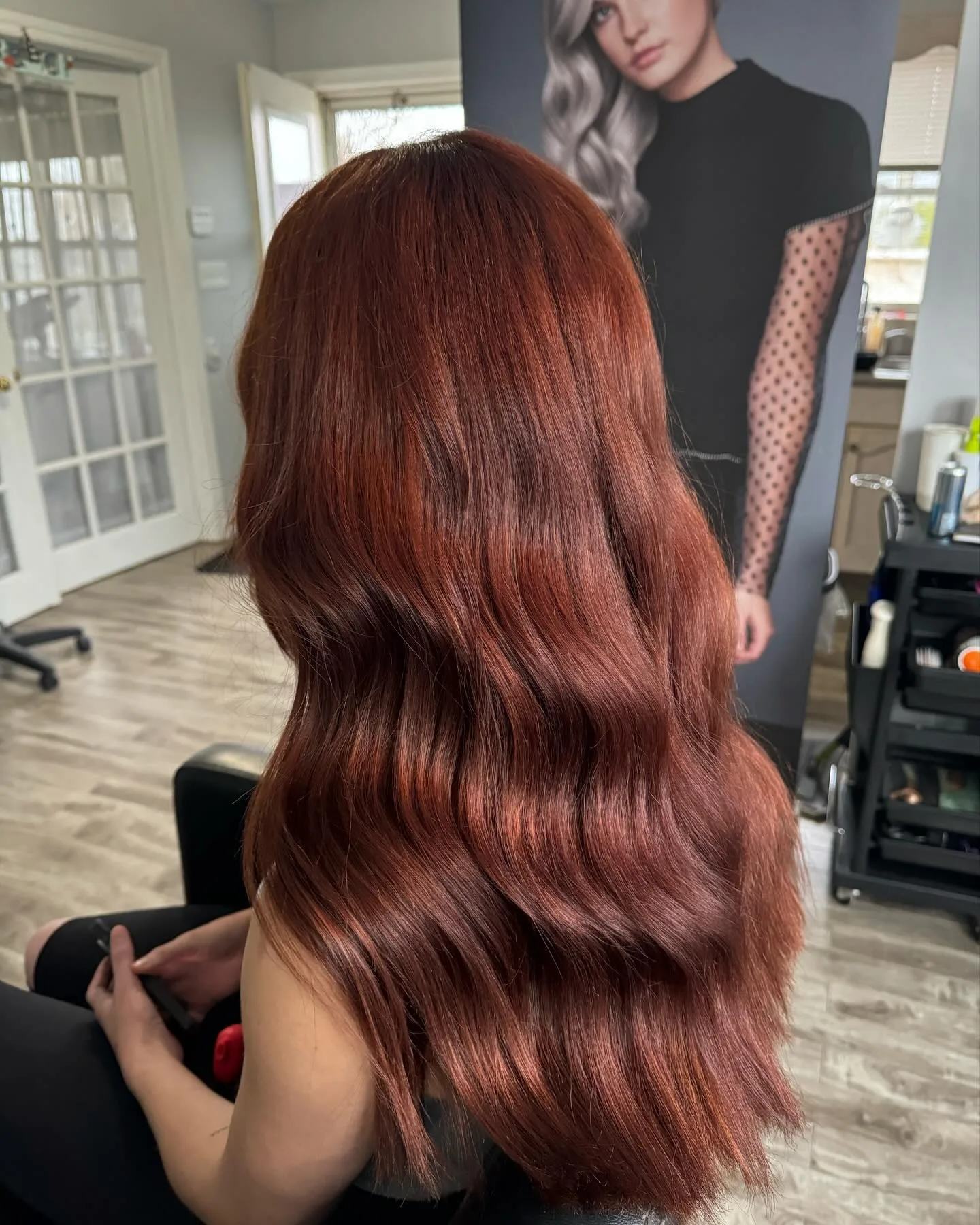
Before we dive into looks and inspiration, let me clarify what we mean when we talk about dark auburn. Auburn itself sits in that beautiful intersection between brown and red — it is warmer than a chocolate brown but deeper and more complex than a true red. Dark auburn specifically refers to shades that lean toward the deeper end of this spectrum: think rich mahogany, deep copper-infused brown, warm burgundy-touched brunette, and deep chestnut with fiery undertones.
What makes dark auburn so special for mature women is its warmth. As we age, our skin can lose some of its natural warmth and luminosity. A cool, ashy color can sometimes accentuate that, making us look a little tired or washed out. Dark auburn does the opposite — it bounces warm light back onto the skin, creating a subtle glow that takes years off your appearance. That is not marketing language; that is color theory, and I have seen it work wonders on hundreds of clients over the years.
The Most Beautiful Dark Auburn Shades to Consider
Not all dark auburns are created equal, and part of my job as your expert guide is to help you understand the range of options available so you can communicate clearly with your colorist. Here are the key variations I recommend most often to my mature clients:

1. Mahogany Auburn
Mahogany is the darkest, most sophisticated entry in the auburn family. It blends deep brown with rich red-violet undertones, creating a color that looks almost jewel-like in the light. This shade is phenomenal for women with cool or neutral skin undertones and is a beautiful alternative for anyone who wants to cover gray while still having visible warmth and interest in their color. It photographs beautifully and works across all hair textures.
2. Deep Copper Auburn
This is a warmer, more vivid take on dark auburn. Deep copper auburn still sits firmly in the brown family — it is not an orange or a bright red — but it has fiery golden-copper highlights that catch the light brilliantly. Women with warm or golden skin undertones absolutely glow in this shade. If your natural hair had warm golden or reddish tones before it began going gray, deep copper auburn will feel like a beautifully enhanced version of your original color.
3. Burgundy-Touched Dark Auburn
For women who love a little drama, a dark auburn with burgundy undertones is extraordinary. This shade leans into the red-violet side of auburn, giving the hair incredible depth and a sophisticated, almost wine-like richness. It is particularly stunning on women with olive or deeper skin tones, and it is one of those colors that looks even more beautiful as it fades slightly, taking on an almost ombre quality over time.

4. Tawny Dark Auburn
Tawny auburn sits between mahogany and copper — it has that lovely warmth without being too cool or too vivid. Think of it as the most wearable, most universally flattering version of dark auburn. This is the shade I recommend most often to first-timers because it is genuinely adaptable and tends to look natural on almost anyone. It also tends to fade very gracefully, which is a real practical advantage for women who prefer lower-maintenance color schedules.
5. Warm Chestnut Auburn
Chestnut auburn is the most natural-looking of the dark auburn family. It is essentially a very rich brown with auburn undertones that reveal themselves most clearly in sunlight. This is a wonderful option for women who want to look polished and put-together without anyone necessarily being able to pinpoint that they have colored their hair. It creates an impression of naturally vibrant, healthy hair — which is exactly what we are going for.
Dark Auburn Hair by Age: What Works Best in Your Decade
One of the things I am most passionate about is the idea that hair color should evolve as we do. The shade that looked incredible at 35 may benefit from a slight adjustment at 55. Here is how I approach dark auburn for each decade.

Dark Auburn in Your 40s
Women in their 40s are often at an exciting crossroads with their hair. You may be noticing the first significant gray growth, your natural color may be shifting, and you are probably looking for something that feels both current and flattering. Dark auburn in your 40s is truly transformative. I typically recommend going slightly richer and deeper than you might instinctively think to go — the boldness pays off. A deep copper auburn or a tawny dark auburn with balayage-style lighter pieces woven through can create extraordinary movement and dimension. If you are experimenting with over-40 hairstyles that have more texture and body, a dark auburn with some lighter copper pieces woven through will make those layers sing.
At this stage, I also encourage you to be open to covering gray rather than blending it — dark auburn is one of the most effective gray-coverage colors because the richness of the pigment creates a seamless, natural-looking result. Your skin is still producing enough warmth that vivid auburn shades look vibrant rather than harsh.
Dark Auburn in Your 50s
By your 50s, the relationship between hair color and skin tone becomes increasingly important. The skin starts to lose some of its youthful warmth and the contrast between dark hair and the face can sometimes look stark if not handled correctly. The solution? Softness and dimension. Rather than a flat, single-process dark auburn, I almost always recommend adding some lighter auburn, copper, or even caramel pieces around the face to create a luminous, softened effect that works with your skin rather than against it.

Women in their 50s also benefit enormously from the right cut alongside their color. Whether you love a classic bob hairstyle for women over 50 or prefer something shorter and more dramatic, the cut and color need to work together. A rich dark auburn on a beautifully shaped bob is one of the most elegant looks I have ever created for clients in this decade. The color adds depth to the silhouette and the cut gives the color beautiful shape and movement.
Dark Auburn in Your 60s
Here is something I want every woman in her 60s to hear: you are absolutely not too old for dark auburn. In fact, some of the most stunning dark auburn looks I have ever created have been on women in their 60s. The key at this stage is choosing the right depth and warmth. I typically soften the shade slightly — moving toward a warm chestnut auburn or a slightly lighter version of mahogany — so that it complements rather than overwhelms the face. I also pay very careful attention to the hairline, ensuring there is always some brightness or softening there.
For women in their 60s who are concerned about thinning hair, the dimensional quality of dark auburn is actually a major advantage. The contrast between lighter and darker pieces creates an optical illusion of thickness and body. You might also want to explore our guide to managing thinning hair in women alongside your color consultation — the combination of the right cut, color, and care approach can make a remarkable difference in how full and healthy your hair appears.

Choosing the Right Dark Auburn Shade for Your Skin Tone
Skin tone is genuinely the most important factor when selecting your dark auburn shade, and getting this right is the difference between a color that looks like it was made for you and one that feels slightly off. Here is my professional framework:
Fair skin with cool undertones: Mahogany auburn is your best friend. The violet-red depth of mahogany creates a beautiful contrast with pale, cool skin and can make your complexion appear more luminous. Avoid going too copper-orange, as that can clash with pink undertones.
Fair skin with warm undertones: You have maximum flexibility here. Tawny auburn, warm chestnut auburn, and deep copper auburn all work beautifully. The key is ensuring the warm undertones in your shade complement rather than compete with the golden warmth in your skin.


Medium skin with warm or neutral undertones: Deep copper auburn and tawny dark auburn are exceptional choices for medium complexions. The warmth in the color mirrors and enhances the natural warmth in medium skin tones, creating an incredibly harmonious, sun-kissed overall appearance.
Medium skin with olive undertones: Burgundy-touched dark auburn and mahogany auburn work beautifully with olive skin. The depth and richness of these shades complement olive’s inherent green undertones in a striking and sophisticated way.
Deep or dark skin tones: The deepest versions of dark auburn — very deep mahogany, burgundy auburn — create stunning results on darker complexions. The color may appear more subtle in very bright light, but the richness and warmth it adds to the hair is genuinely beautiful. I recommend going quite deep and rich for maximum visual impact.


Dark Auburn and Face Shape: Finding Your Most Flattering Look
Color is only one half of the equation — the other half is how you wear it. Different styling approaches and cut combinations can work with your face shape to create a beautifully balanced, flattering overall look.
Oval face: Lucky you — virtually any dark auburn look works beautifully with an oval face. You have the freedom to go as bold or as subtle as you like, in any length or style. My personal recommendation is to take advantage of that freedom and go for something genuinely rich and dimensional.
Round face: Dark auburn with lighter pieces around the crown and darker saturation at the sides is a brilliant technique for round faces — the light on top draws the eye upward, while the depth at the sides creates a slimming effect. Pair with a longer length that falls below the chin for maximum effect.


Square face: Warm dark auburn with softer, more diffused edges works beautifully for square faces. The warmth in auburn softens angular jawlines naturally, and adding face-framing lighter pieces can further reduce the visual sharpness of strong angles. A soft, layered style complements this beautifully.
Heart-shaped face: Deep auburn at the roots with lighter ends — a reverse-ombre effect — is incredibly flattering for heart-shaped faces. It adds visual weight to the lower half of the face, creating balance with a wider forehead and narrower jaw.
Long face: Rich, all-over dark auburn with horizontal volume — think waves, curls, or a bob with movement — helps to visually widen a longer face. For gorgeous inspiration, our collection of curly hair color ideas includes some stunning dark auburn looks that demonstrate exactly how well rich red-brown tones work with natural curl and wave texture.


And if you wear glasses, know that dark auburn is one of the most frame-complementary colors there is. I always love directing clients to our expert resource on hairstyles for glasses wearers — the combination of warm auburn tones and the right frame color can be genuinely stunning.
The Best Cuts to Pair with Dark Auburn Hair
Over my career, I have learned that certain cuts showcase dark auburn color better than others. Here are my top recommendations:
Layered long styles: Long hair with layers is perhaps the ultimate showcase for dark auburn. The movement created by layers allows the different tones in the color to catch light from multiple angles, creating that gorgeous, multidimensional effect that makes dark auburn so visually arresting. If you love long hair, invest in beautiful layers.


The bob: A well-executed bob — whether chin-length, collarbone-length, or somewhere in between — is an exceptional vehicle for dark auburn. The defined silhouette of a bob concentrates the richness of the color and creates a clean, sophisticated look that feels both polished and modern. A slight wave or texture added to a bob with dark auburn color is truly one of my all-time favorite looks for women over 50.
The pixie cut: Short and bold, a pixie cut in dark auburn is genuinely stunning. The richness of the color makes a pixie look luxurious rather than plain, and the warmth of auburn draws incredible attention to the face. If you have been considering going short, dark auburn can give you the confidence to commit. Explore our inspiring gallery of pixie cuts for women over 50 — many of the looks there feature warm brunette-red tones that illustrate exactly what I mean.
Medium-length styles with face framing: A medium length — collarbone to shoulder — with deliberate face-framing pieces in a slightly lighter auburn or copper is one of the most universally flattering options for mature women. It softens the face beautifully and gives the overall look a natural, effortless quality.

How to Maintain Dark Auburn Hair Color at Home
I cannot stress this enough: beautiful dark auburn color requires proper maintenance. Reds and warm tones are the first pigments to fade from hair, and without proper care, your gorgeous dark auburn can slide into a dull, brassy, or muddy shade relatively quickly. Here is my professional maintenance protocol:
Use Color-Safe, Sulfate-Free Shampoo
Sulfates are the primary culprit in color fade. They are the cleansing agents in most standard shampoos, and while they are excellent at removing dirt and oil, they are equally excellent at stripping hair color. Make the switch to a sulfate-free, color-protecting shampoo as soon as you color your hair, and you will notice a significant difference in how long your auburn stays vibrant.
Wash with Cooler Water
Hot water opens the hair cuticle, allowing color molecules to escape more readily. Washing with lukewarm or cool water — and always finishing with a cool rinse — keeps the cuticle sealed and your color locked in. This is one of those simple adjustments that genuinely makes a noticeable difference.


Use a Red or Warm-Toned Color-Depositing Conditioner
Between salon visits, a color-depositing conditioner in a warm red or auburn tone can do remarkable things for maintaining your color’s vibrancy. I recommend using it once a week in place of your regular conditioner. Look for products specifically designed for red and auburn hair — they deposit just enough pigment to refresh the tone without requiring a full color service.
Protect from UV Exposure
Sun exposure accelerates color fade dramatically — and auburn pigments are particularly vulnerable. Use a UV-protective hair product whenever you spend extended time outdoors. A leave-in conditioner or hair oil with UV filters, or even a stylish sun hat, will protect your investment beautifully.
Deep Condition Weekly
Color-treated hair — especially hair that has been lightened or lifted before being toned auburn — requires extra moisture and protein to stay healthy. A weekly deep conditioning treatment is not optional; it is essential. The condition of your hair dramatically affects how your color appears: healthy hair reflects light beautifully and makes color look rich and luminous, while dry, damaged hair absorbs light and makes color look dull and flat.


Schedule Regular Gloss or Toning Treatments
Between full color appointments — which I typically recommend every 6-10 weeks for dark auburn — a salon gloss or toning treatment can refresh and intensify your color beautifully. These treatments take about 20 minutes, require no lifting, and can genuinely extend the life of your color significantly. Ask your colorist if they offer a glossing service; many do, and it is well worth the investment.
Dark Auburn vs. Salt and Pepper: Which Is Right for You?
I am frequently asked about this exact decision, and I want to give you an honest, nuanced answer rather than a blanket recommendation. Both dark auburn and embracing your natural gray are completely valid, beautiful choices — and the right one depends entirely on your personal priorities and lifestyle.
If you love low maintenance and have beautiful gray growth, our guide to salt and pepper hair over 50 is absolutely worth a read — there are extraordinary looks in there that celebrate natural silver and gray in incredibly stylish ways. Many women find enormous freedom and confidence in embracing their natural color.


On the other hand, if you miss the warmth and richness that your hair had before it began graying — if you find that gray makes you look tired or washed out, or if you simply love the idea of a rich, vibrant color — dark auburn may be exactly the answer you have been looking for. The warmth it brings to the complexion is, in my experience, unmatched by any other hair color family.
Some women also choose a beautiful middle path: covering most of their gray with dark auburn while allowing some lighter, silvery pieces to remain visible at the hairline or temples. This creates a stunning, natural-looking result that acknowledges the transition while still adding warmth and richness overall.
Frequently Asked Questions About Dark Auburn Hair
Is dark auburn hair hard to maintain?
Dark auburn requires more maintenance than neutral brunette shades because red pigments fade faster, but it is very manageable with the right at-home routine. Using sulfate-free shampoo, washing with cooler water, applying a color-depositing conditioner weekly, and protecting from UV exposure will significantly extend the life of your color. Most women with dark auburn schedule salon appointments every 6-10 weeks, with an optional gloss treatment in between.


Can dark auburn hair cover gray completely?
Yes — dark auburn is actually one of the most effective colors for gray coverage. The richness and depth of dark auburn pigments provide excellent coverage, and the warm tone helps to create a natural-looking result that blends seamlessly with any remaining non-gray hair. For very stubborn or coarse gray hair, your colorist may recommend a pre-softening treatment to open the hair cuticle before applying the color for maximum penetration and coverage.
What skin tones does dark auburn hair suit best?
Dark auburn is genuinely one of the most universally flattering hair colors — it works across a wide range of skin tones. Fair skin with cool undertones looks stunning with mahogany auburn; warm or medium skin tones glow with copper or tawny auburn; and deeper or olive complexions look extraordinary with deep mahogany or burgundy-touched auburn. The key is selecting the specific shade within the dark auburn family that harmonizes with your skin’s undertones, which is something a good colorist can help you determine.
How can I make dark auburn hair look more dimensional?
Dimension in dark auburn comes from contrast — having a mix of deeper and lighter tones throughout the hair so that light catches it differently from different angles. Techniques like balayage, highlights in a lighter auburn or copper shade, face-framing pieces, and glossing treatments can all add dimension. I always recommend against a flat, single-process color for dark auburn; the multidimensional approach is what makes it look so alive and rich.
Is dark auburn appropriate for women over 60?
Absolutely — and I say that from experience, not politeness. Dark auburn can be extraordinarily flattering for women in their 60s. The key is softening the approach slightly: choosing a slightly lighter or warmer version of the shade, ensuring there is brightness around the face, and pairing the color with a flattering, well-maintained cut. Women in their 60s who choose dark auburn consistently report feeling more vibrant and confident, and the compliments they receive from others speak for themselves.
How is dark auburn different from burgundy or red hair?
Dark auburn sits between burgundy and red on the spectrum, with brown as its foundation. Burgundy leans heavily into red-violet and can appear quite vivid or jewel-toned. True red hair is bright and fiery with minimal brown. Dark auburn, by contrast, is fundamentally a warm brown with red undertones — the red is present and beautiful, but it reads as richness and depth rather than a bold statement color. This makes dark auburn far more versatile for everyday wear and gives it a natural quality that bright reds and vivid burgundies can sometimes lack.
Final Thoughts: Why Dark Auburn Might Be Your Perfect Color
After more than 20 years of working with women at every stage of their hair journey, I keep coming back to dark auburn as one of the most genuinely transformative color choices available to mature women. It is warm without being garish, bold without being shocking, and rich without being heavy. It flatters an extraordinary range of skin tones and face shapes, works beautifully with virtually every cut and length, and has a remarkable ability to make the complexion look more luminous and vital.
Whether you choose a deep mahogany auburn, a warm copper, a sophisticated burgundy-touched shade, or a natural-looking tawny chestnut auburn, you are choosing a color with extraordinary depth and character. And that, in my professional opinion, is exactly what mature women deserve in their hair — color that reflects the richness of the lives they have lived.
If this guide has inspired you, I would love for you to save it to Pinterest so you can come back to it before your next salon appointment. Share it with a friend who has been thinking about making a change — sometimes all it takes is seeing the right picture to give you the confidence to take the leap. Your most beautiful hair chapter may be just around the corner.