
After twenty years behind the chair, I can tell you the single most common thing women say to me when they sit down: “I have a round face, and I don’t know what to do with it anymore.” If that’s you, take a breath. A round face is one of the easiest shapes to work with once you understand a few simple principles — and the right cut can soften, lift, and completely change how your whole face reads. I’ve put together my favorite hairstyles over 40 for round faces, organized by what actually works at different decades, so you can bookmark this collection and bring it straight to your next appointment.
Before we get into specific cuts, let’s talk about why round faces respond so well to certain shapes and so poorly to others. A round face typically has soft, curved lines, a wider midface, and a chin and forehead that are similar in width. The goal with cutting hair for this shape isn’t to fight the roundness — it’s to add visual length, create asymmetry, and break up the horizontal width with layers, angles, and movement. Once you see hair as a framing tool rather than just a style, everything gets easier.
Understanding Your Round Face Shape
A round face is defined by a few key measurements: your cheekbones are usually the widest point, your face length and width are close to equal, and your jawline has a soft curve rather than a defined angle. If you’re not sure whether this describes you, pull your hair back and look in a mirror. If the width at your cheekbones and the width at your forehead and jaw are all fairly similar, and your face looks more circular than oval or angular, you likely have a round face shape.
The good news is that round faces tend to look youthful — that softness is part of what keeps round-faced women looking fresh well into their 50s and 60s. The hairstyling goal is simply to add definition where the face is soft, and length where the face is wide. Layers that start at or below the cheekbone, side-swept volume, and asymmetrical partings are your best friends. What you want to avoid is anything that adds width at the midface — think one-length blunt bobs that hit right at the chin, or styles that are teased out wide at the sides.
The Best Cutting Techniques for Round Faces
Layering is the single most powerful tool for a round face, but not all layering is created equal. Long, soft layers that begin around the cheekbone and graduate downward create a slimming, elongating effect because they draw the eye vertically instead of horizontally. I always tell clients: think “downward movement,” not “outward volume.”
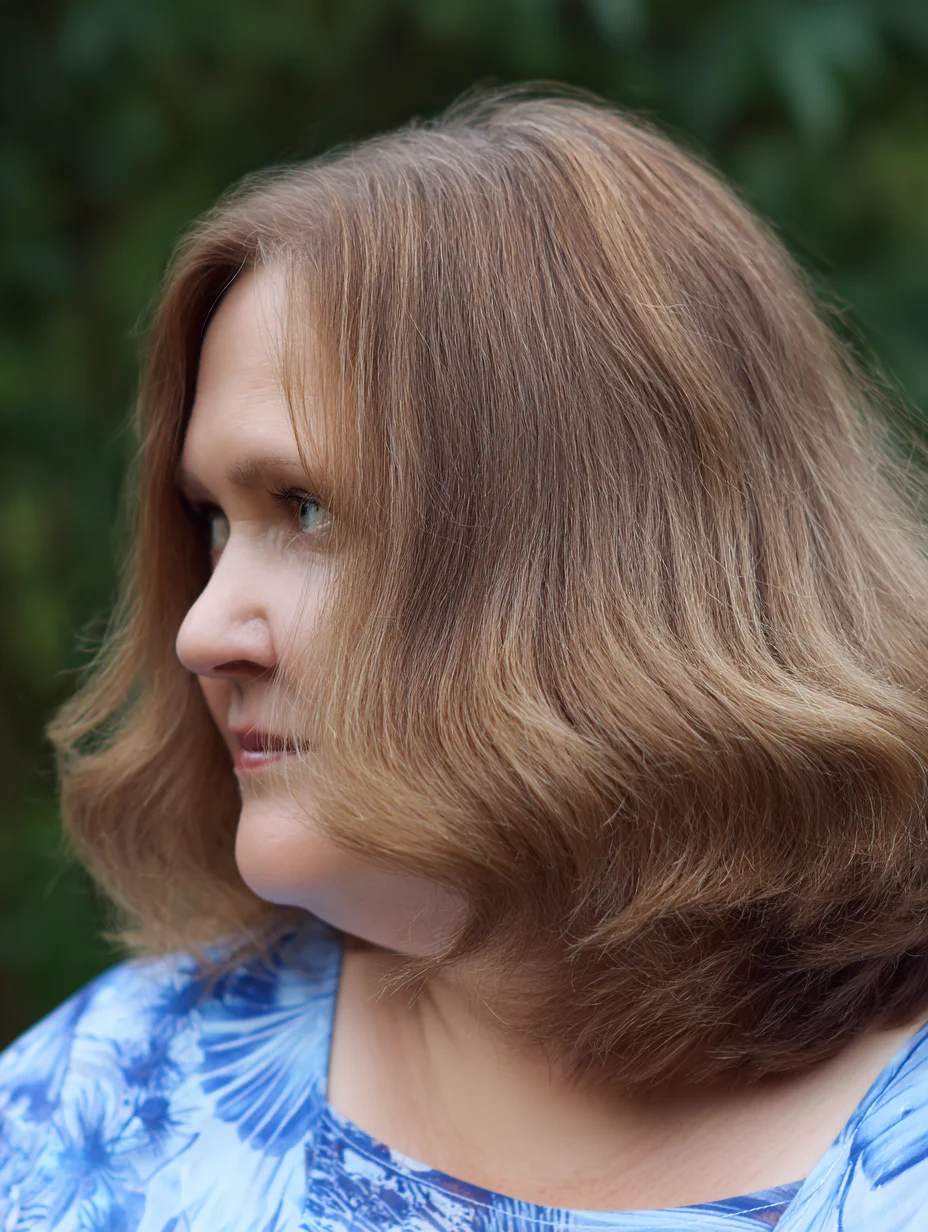
Face-framing layers are another technique I use constantly for round faces. These are shorter pieces that fall along the cheek and jaw, cut at an angle rather than straight across. They create the illusion of contour exactly where a round face naturally lacks it. Combined with a side part instead of a center part, face-framing layers can take years off your look almost instantly, because a side part naturally creates asymmetry, and asymmetry is what a round face needs most.
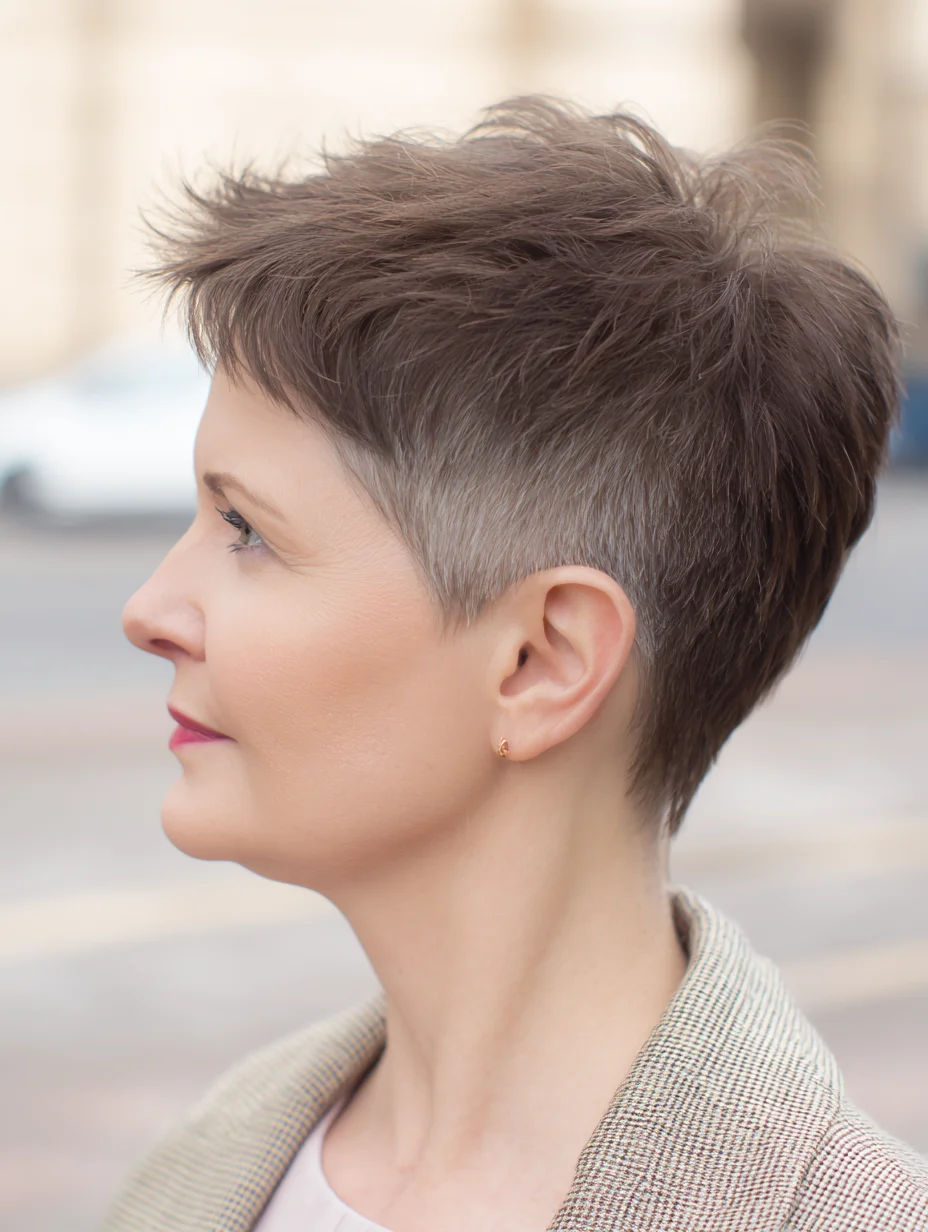
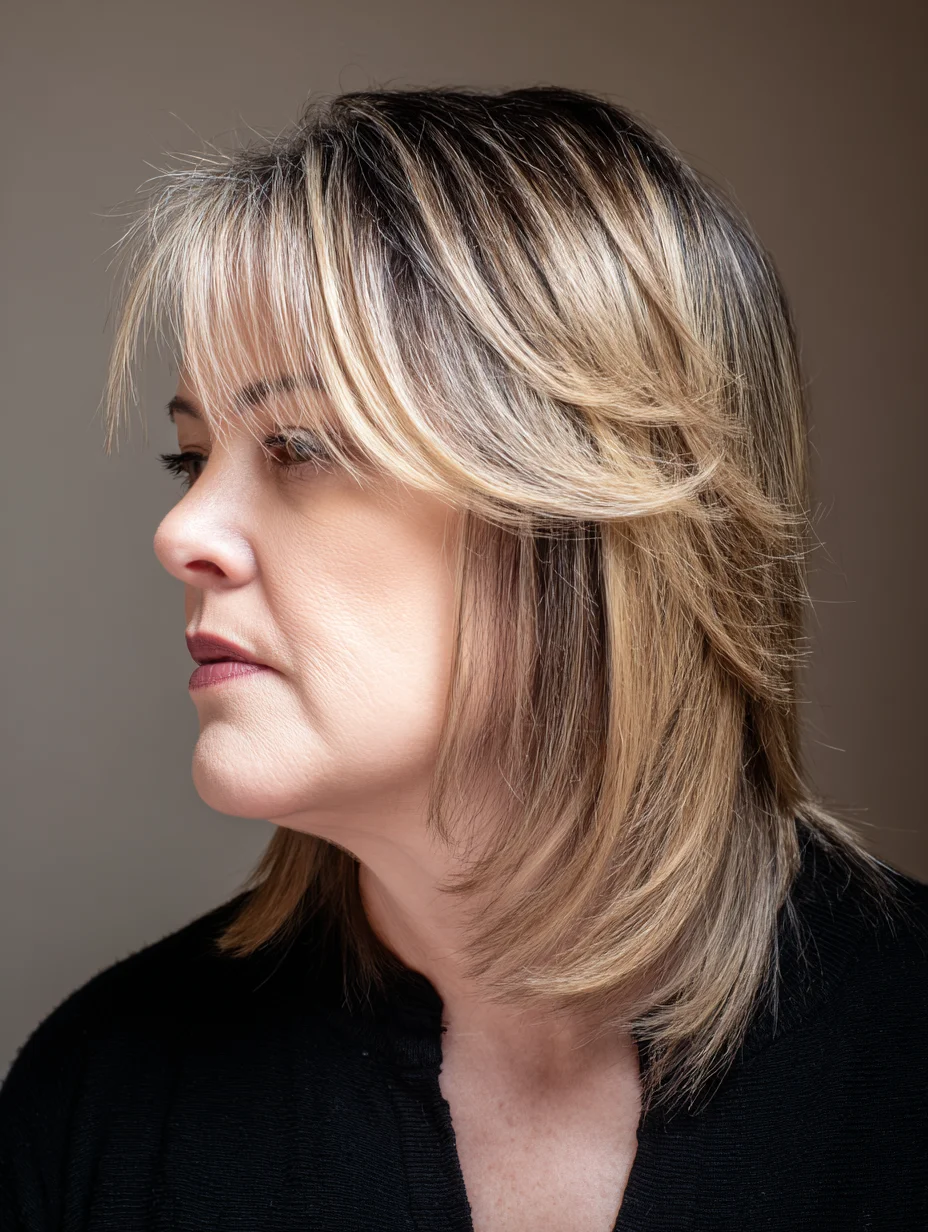
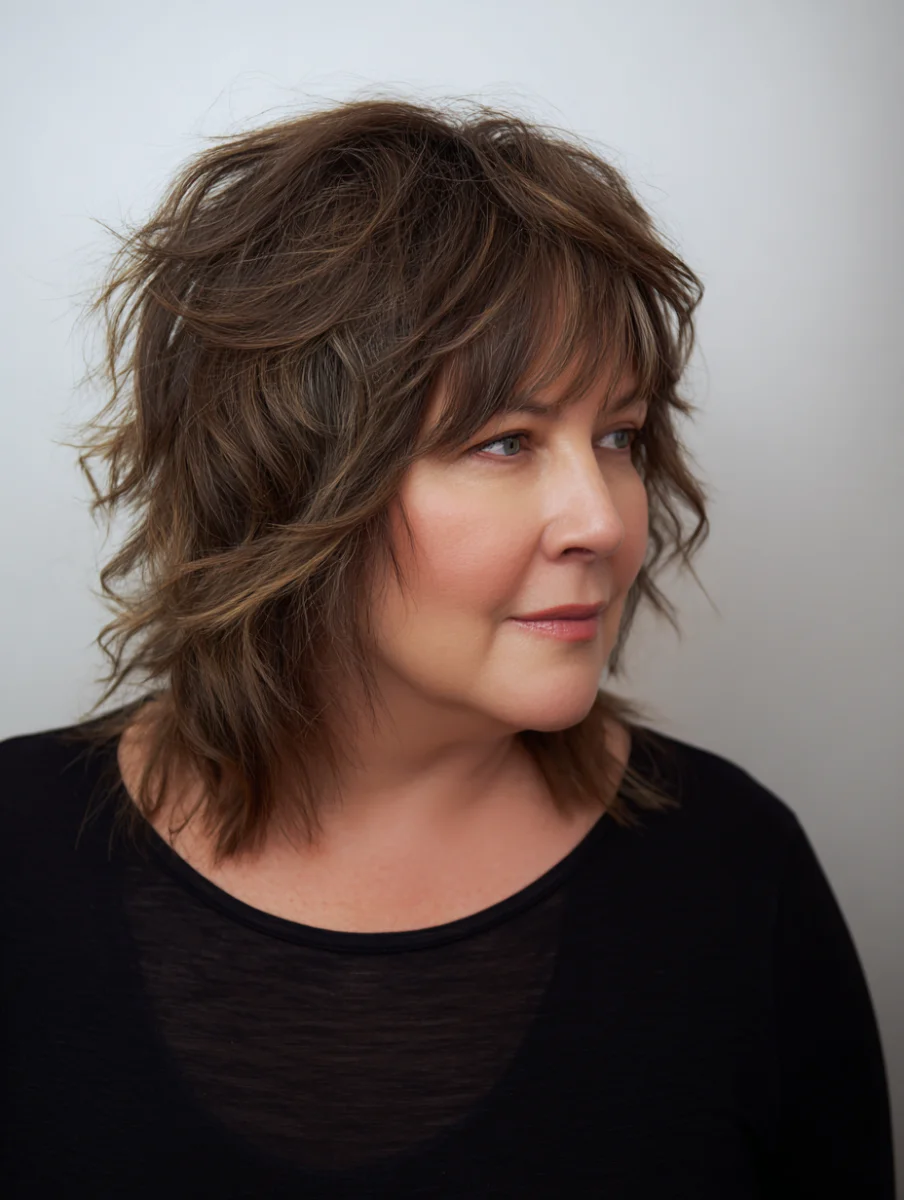
Texture is your third tool. A blunt, heavy cut reads as wide and flat on a round face, but textured ends — created with point cutting, slide cutting, or a razor — soften the silhouette and add movement. This is part of why choppy, layered cuts photograph so well; the broken-up ends catch light differently and create the illusion of a narrower face shape.
Short Hairstyles for Round Faces Over 40
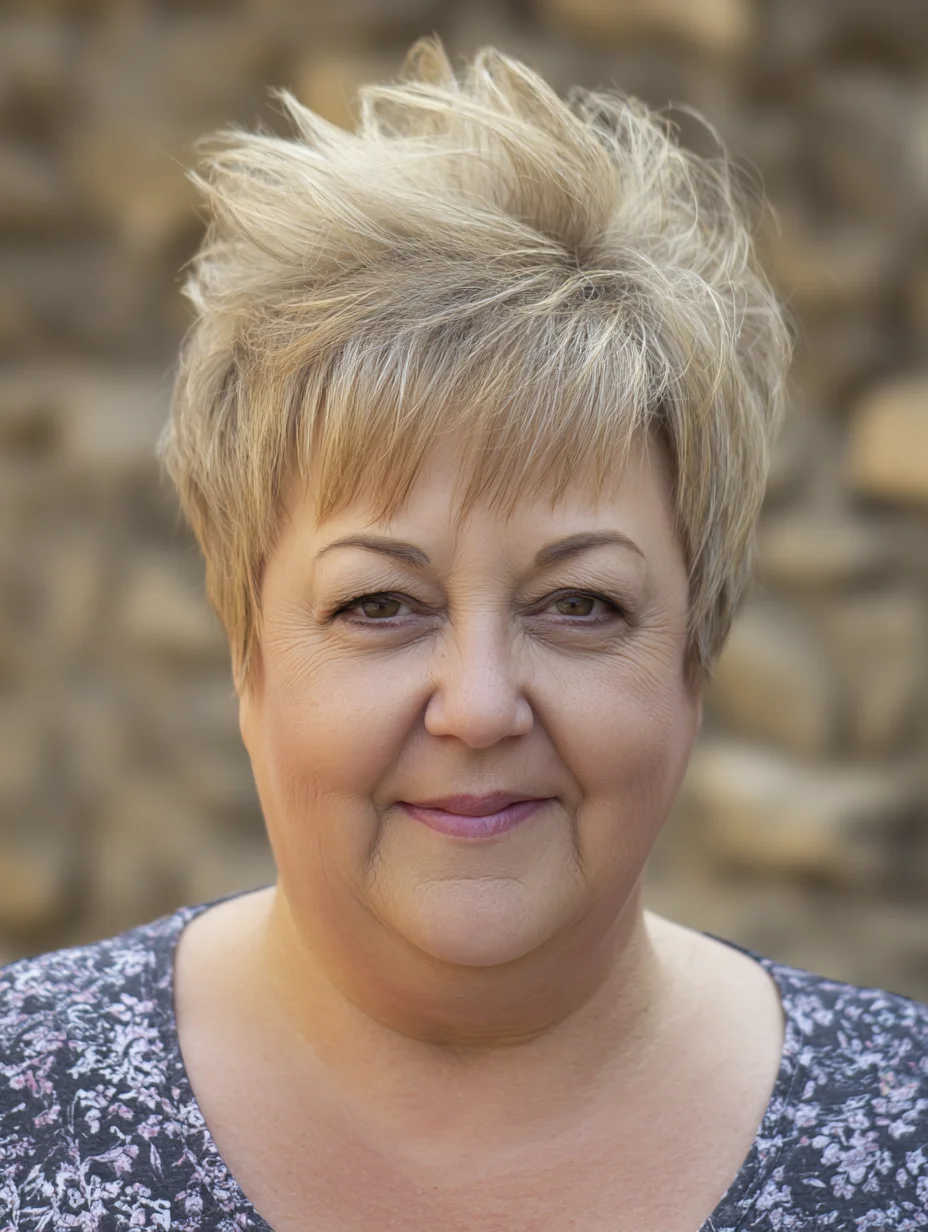
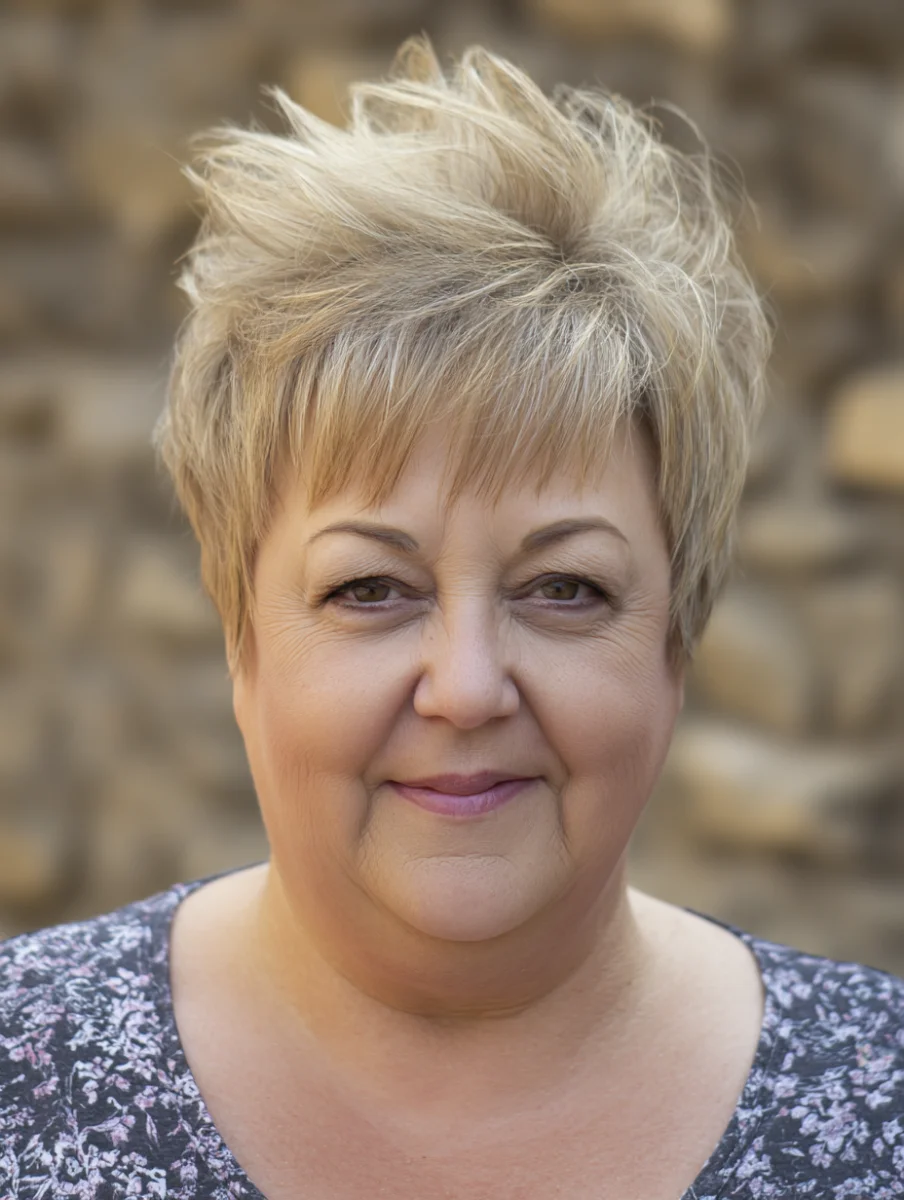
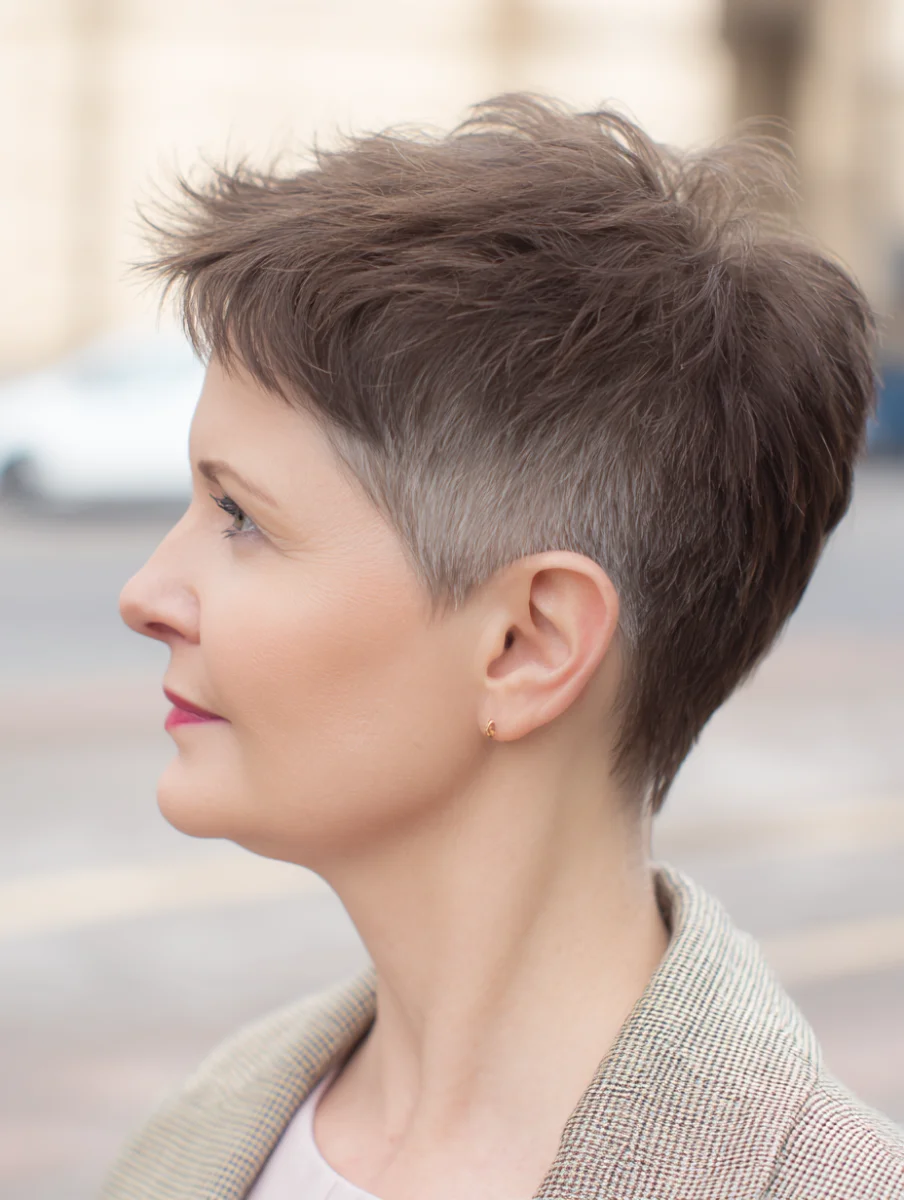
Short hair on a round face has a reputation for being risky, but I disagree — it’s actually one of the most flattering categories once it’s cut correctly. The key is height at the crown and length at the sides. A pixie cut with volume lifted on top elongates the whole face immediately, while keeping the sides close and slightly angled toward the cheek prevents any added width.
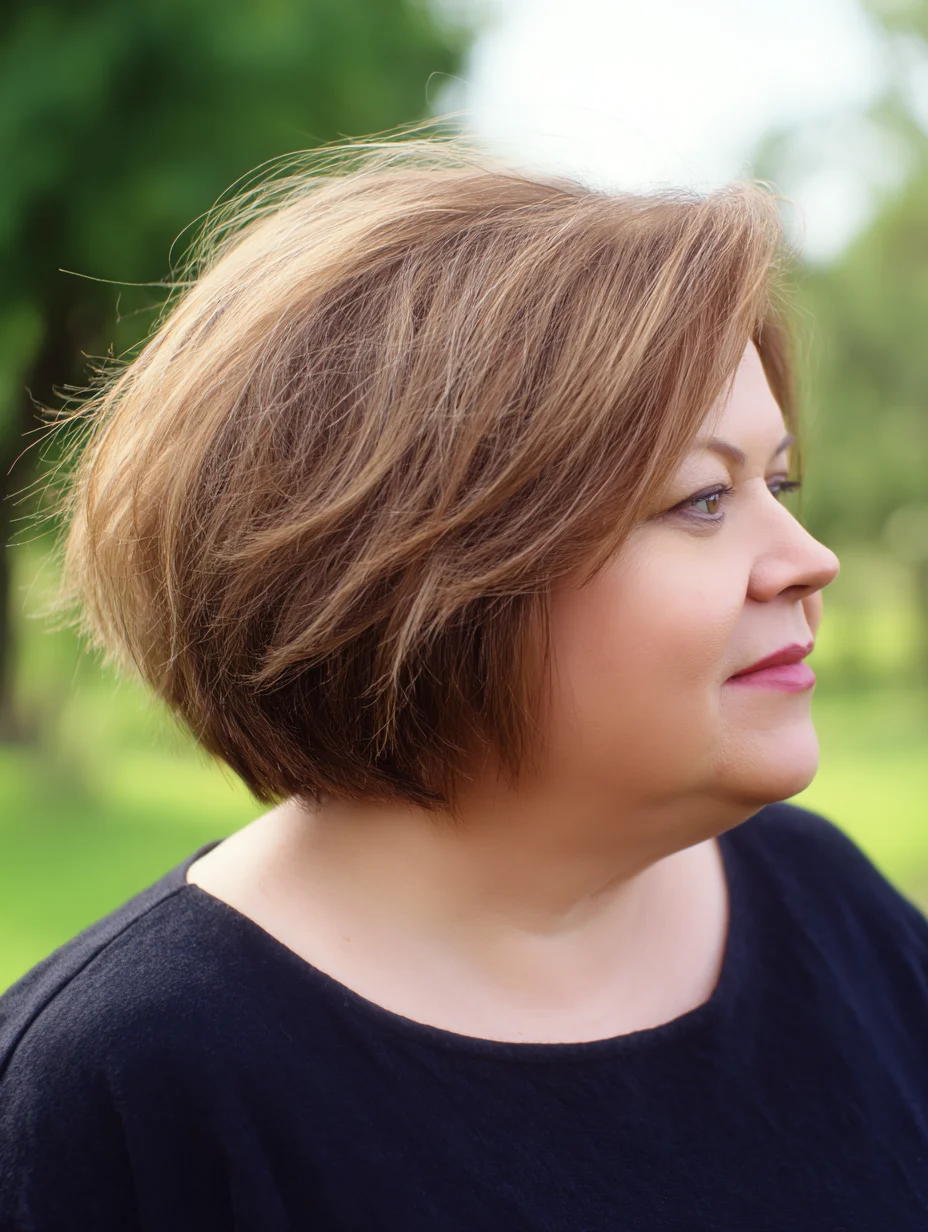
A textured crop is another excellent option, especially for women who want low-maintenance styling. The lifted crown does the heavy lifting (literally), and the choppy texture throughout keeps the overall shape from looking too rounded itself. I often pair this with a slightly longer fringe swept to one side rather than a blunt, full fringe, which can shorten the face and emphasize roundness.
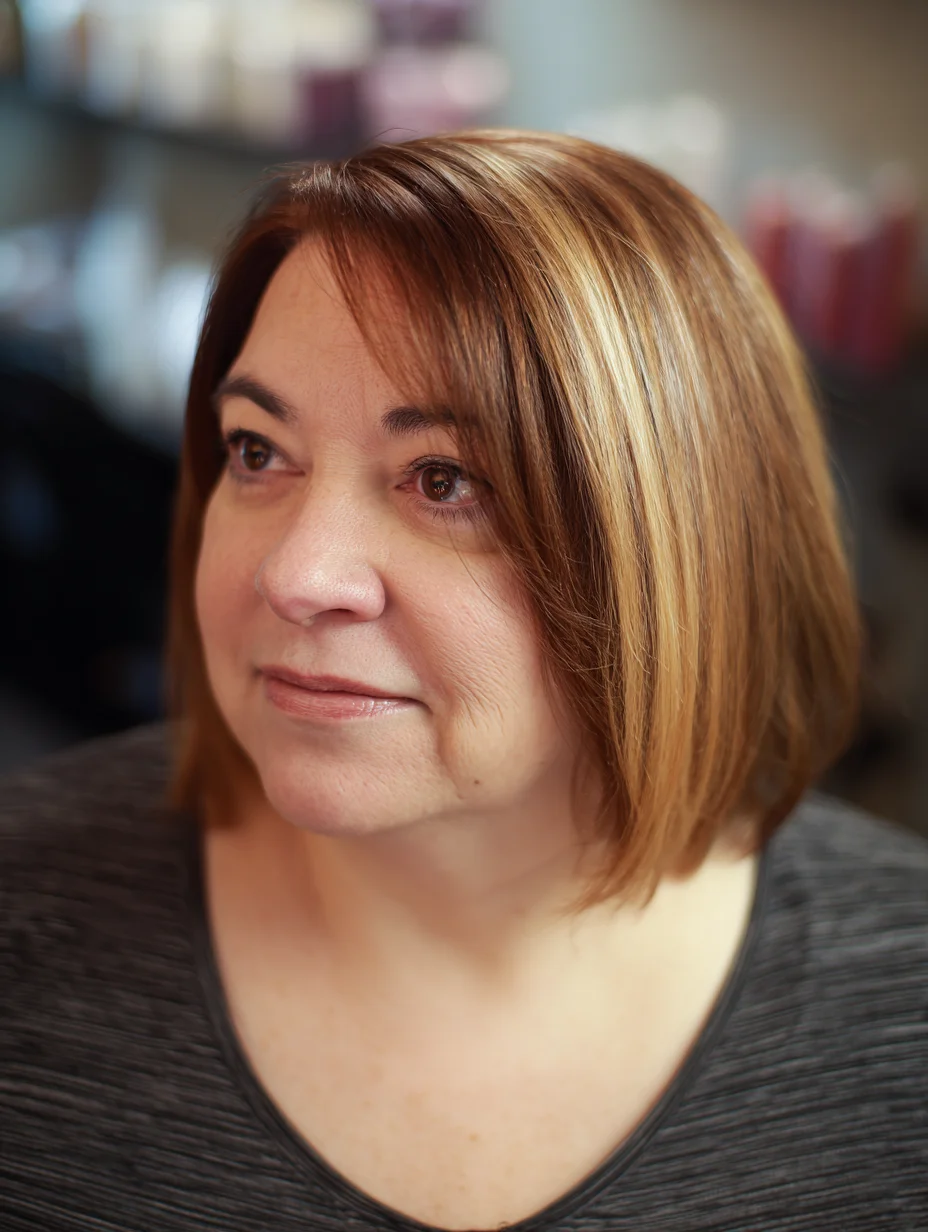
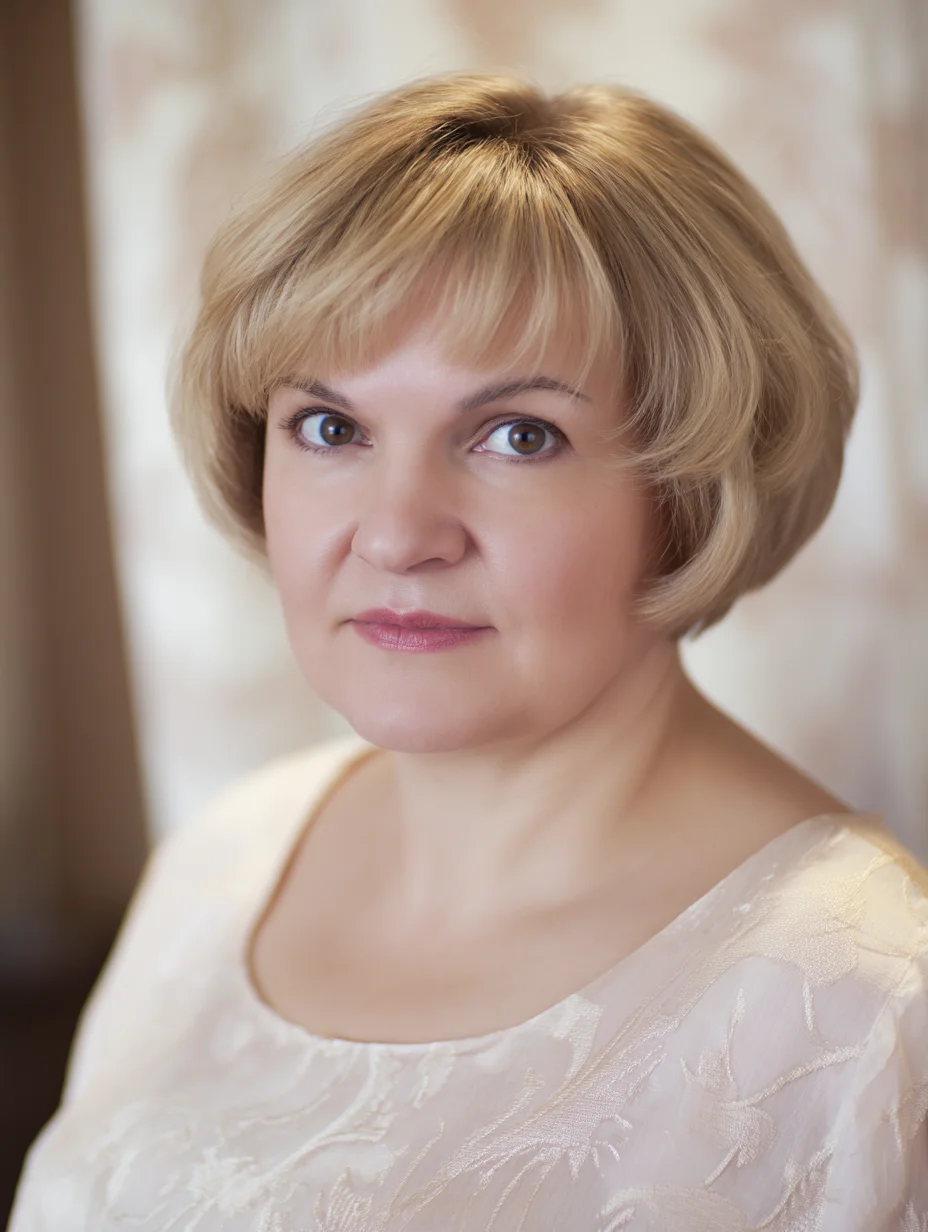
If you’re not ready to go quite that short, a short, tapered cut with soft edges offers a similar lengthening effect with a bit more versatility for styling. The tapering at the nape keeps things polished, while the softness around the face prevents the severity that can sometimes read as aging on a round shape.
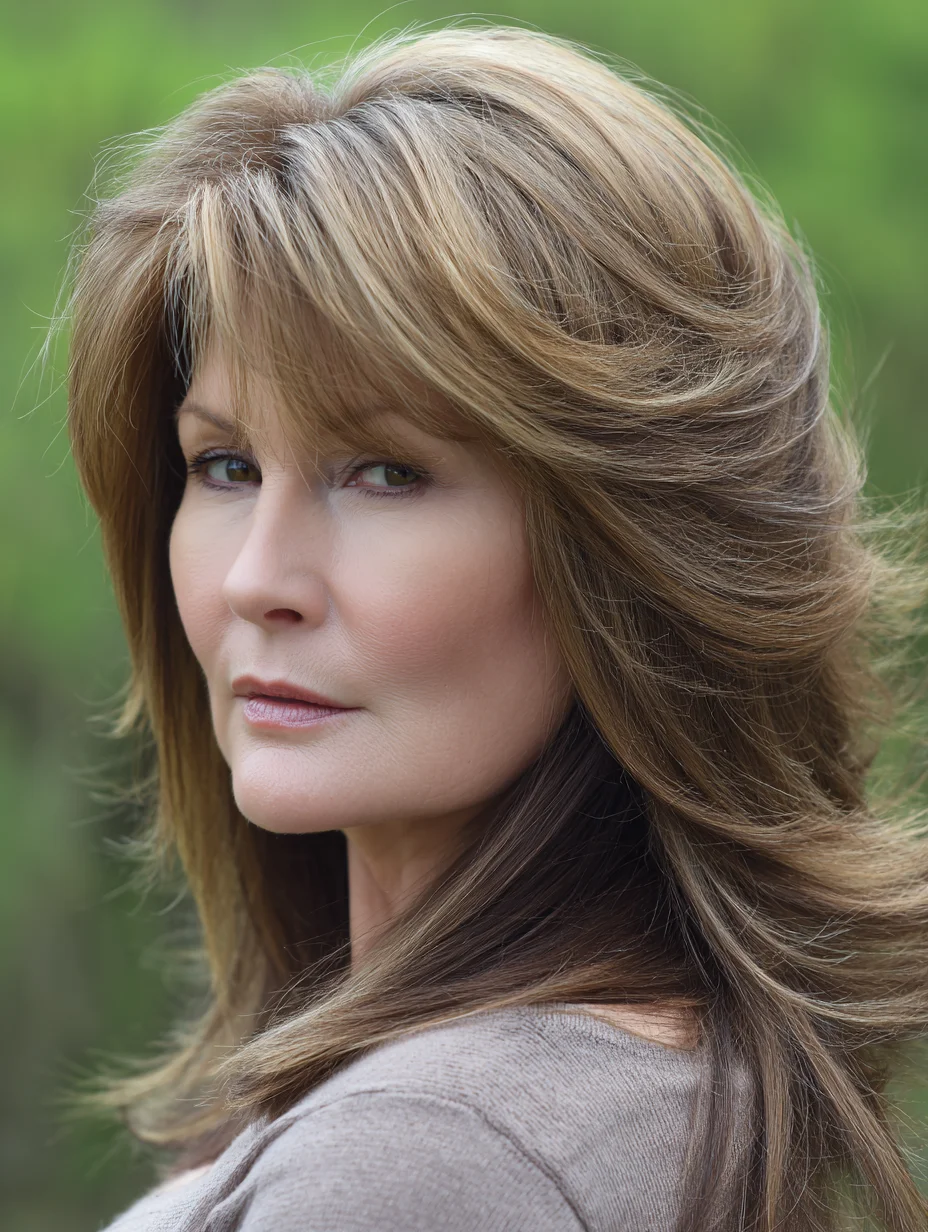
Medium-Length Cuts That Flatter Round Faces
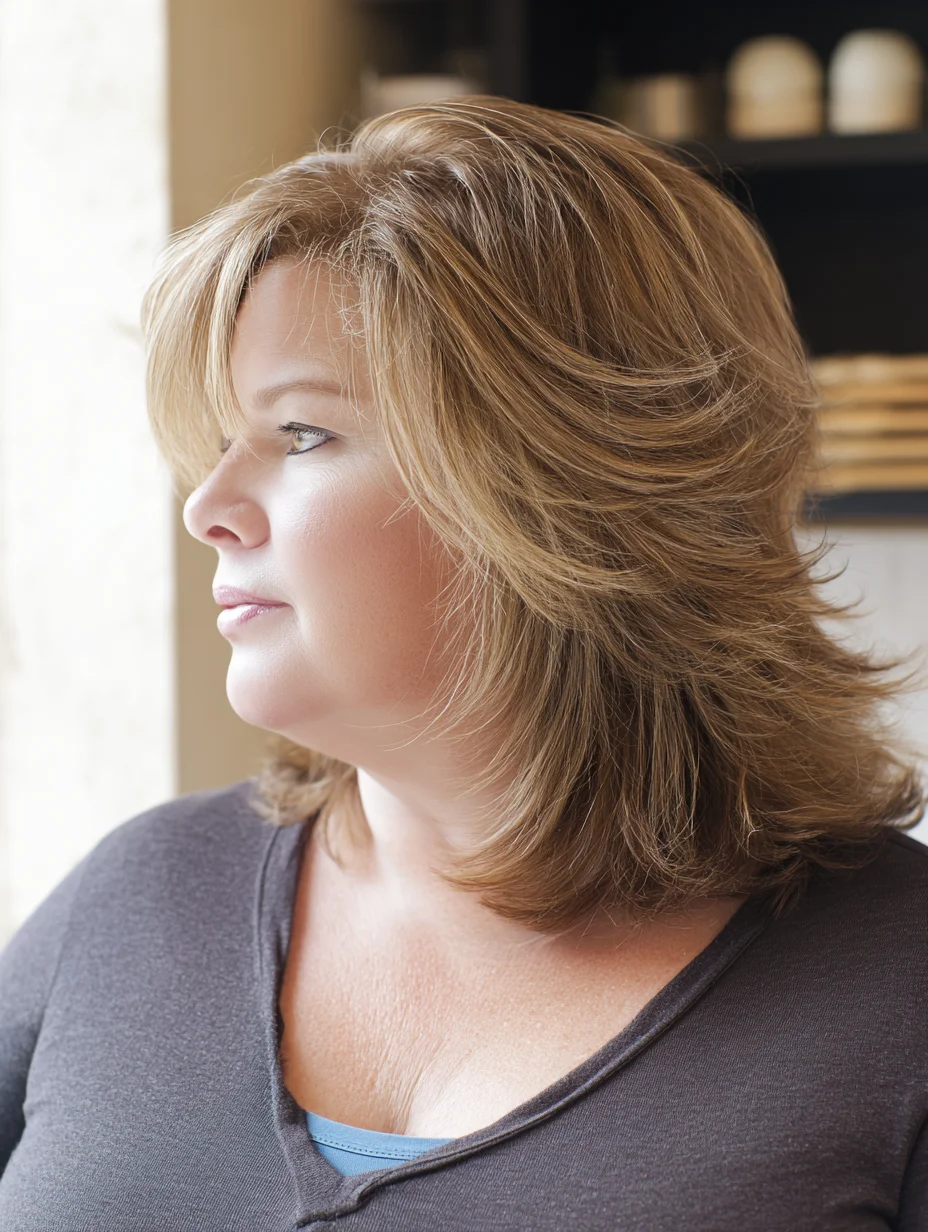
Medium length is, in my experience, the sweet spot for most round-faced women over 40. It gives you enough length to create that downward, slimming line, while still being manageable day to day. A collarbone-length cut with blended layers is one of my most-requested styles for this exact reason — it hits at a length that naturally elongates the neck and jaw area, and the blended layers prevent any blunt, boxy edges.
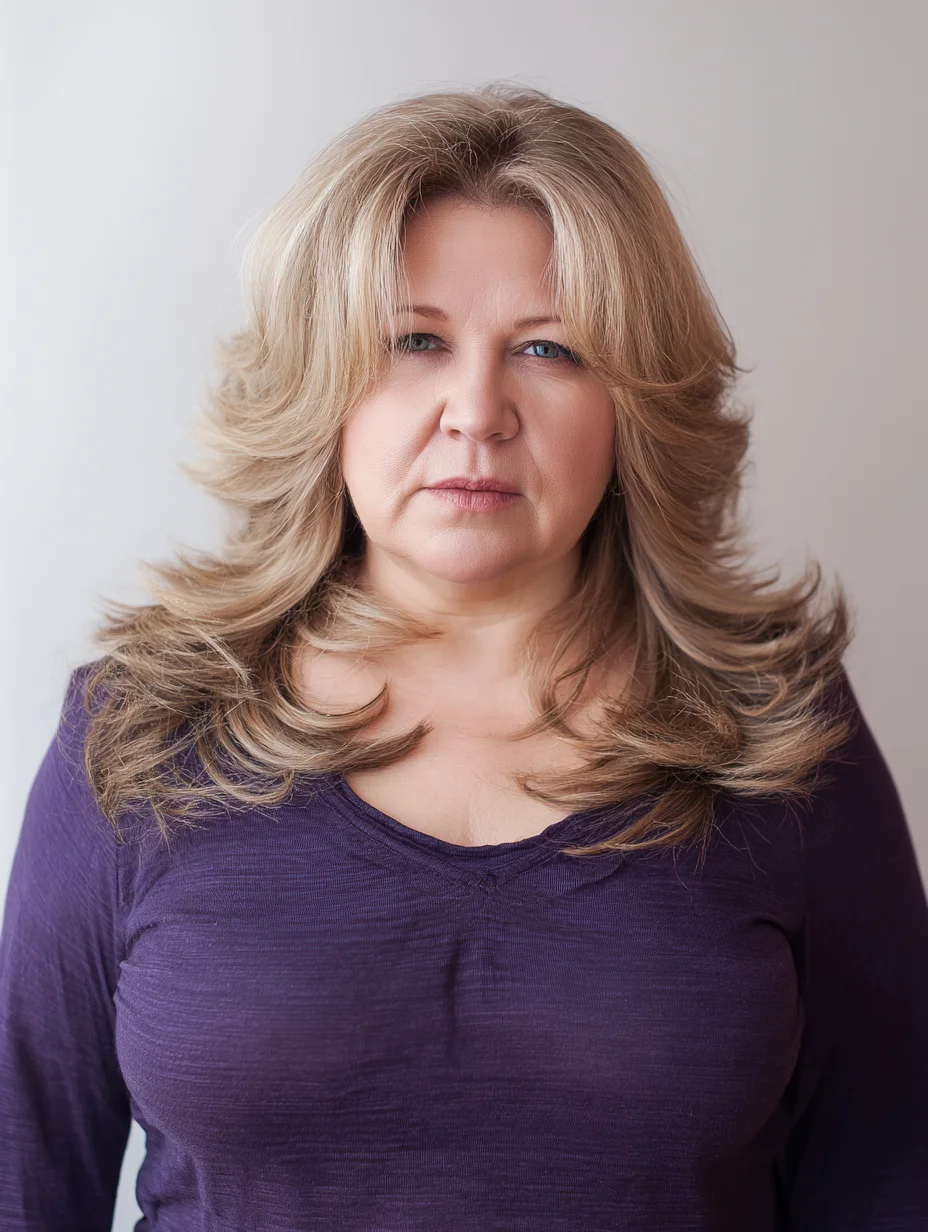
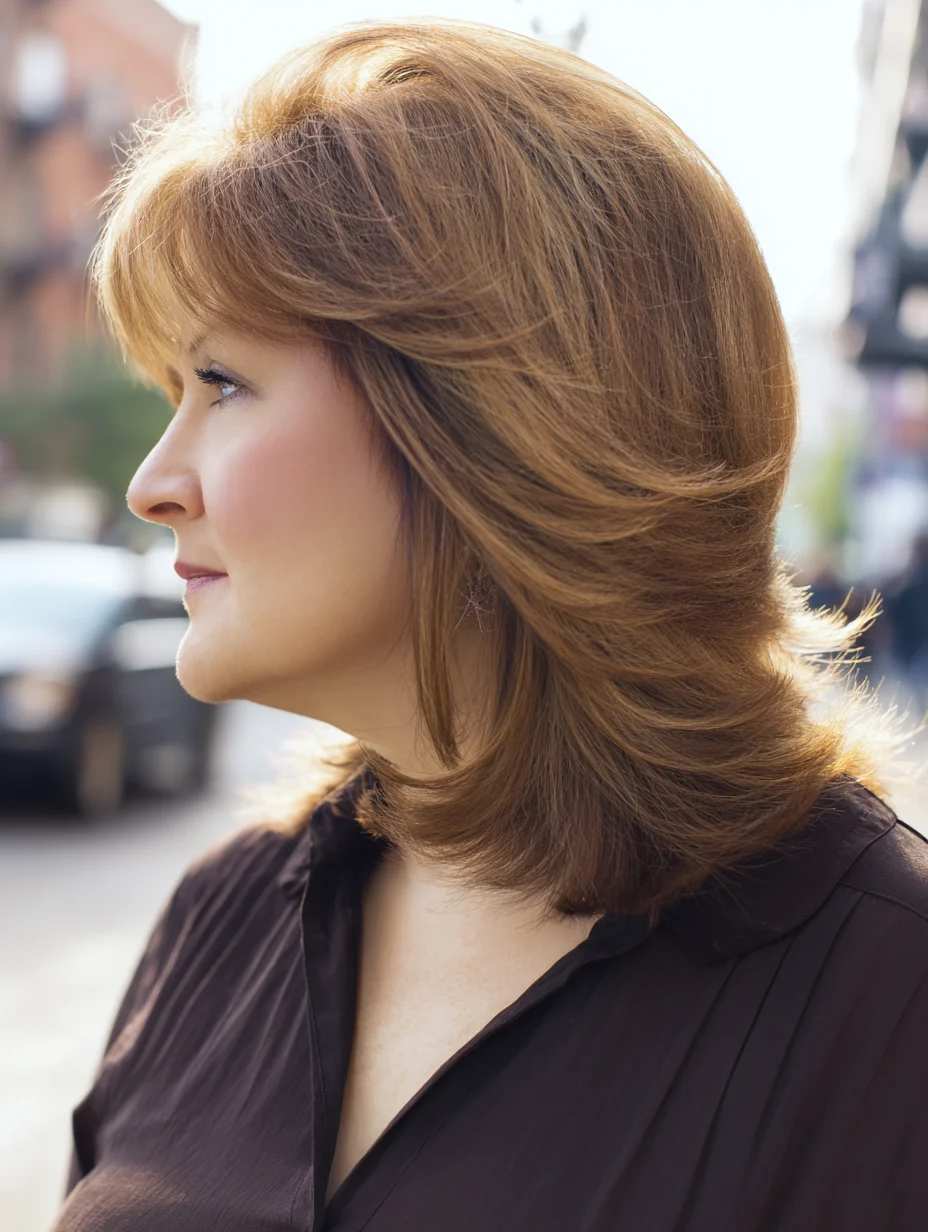
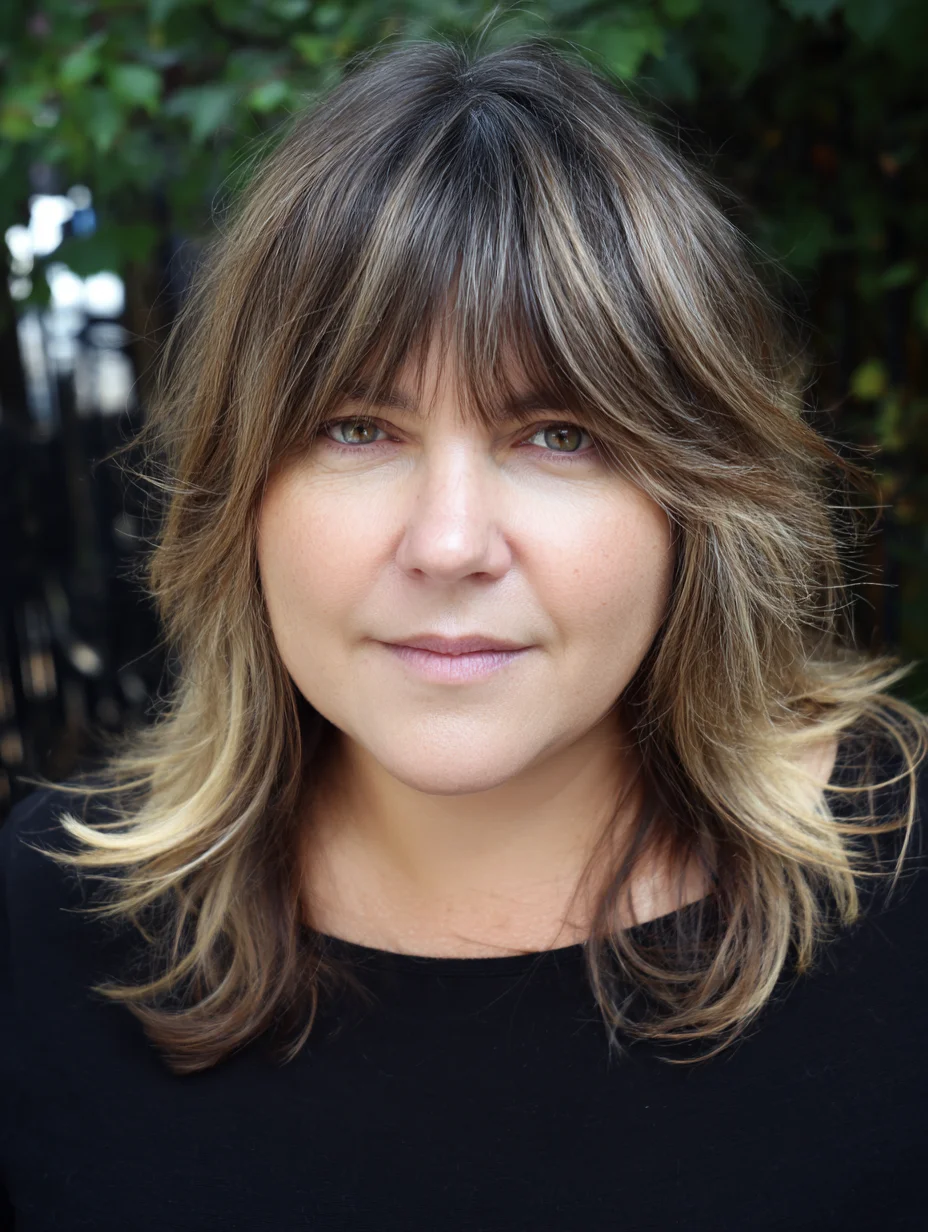
A shoulder-length shag with texture throughout is another favorite, particularly for women who want a bit more personality in their cut. The piecey, choppy layers do exactly what we talked about earlier — they break up the roundness and add movement that a smooth, one-length cut simply can’t. Pair it with curtain bangs, which part naturally down the middle but sweep outward, and you get face-framing on both sides without the heaviness of a full fringe.
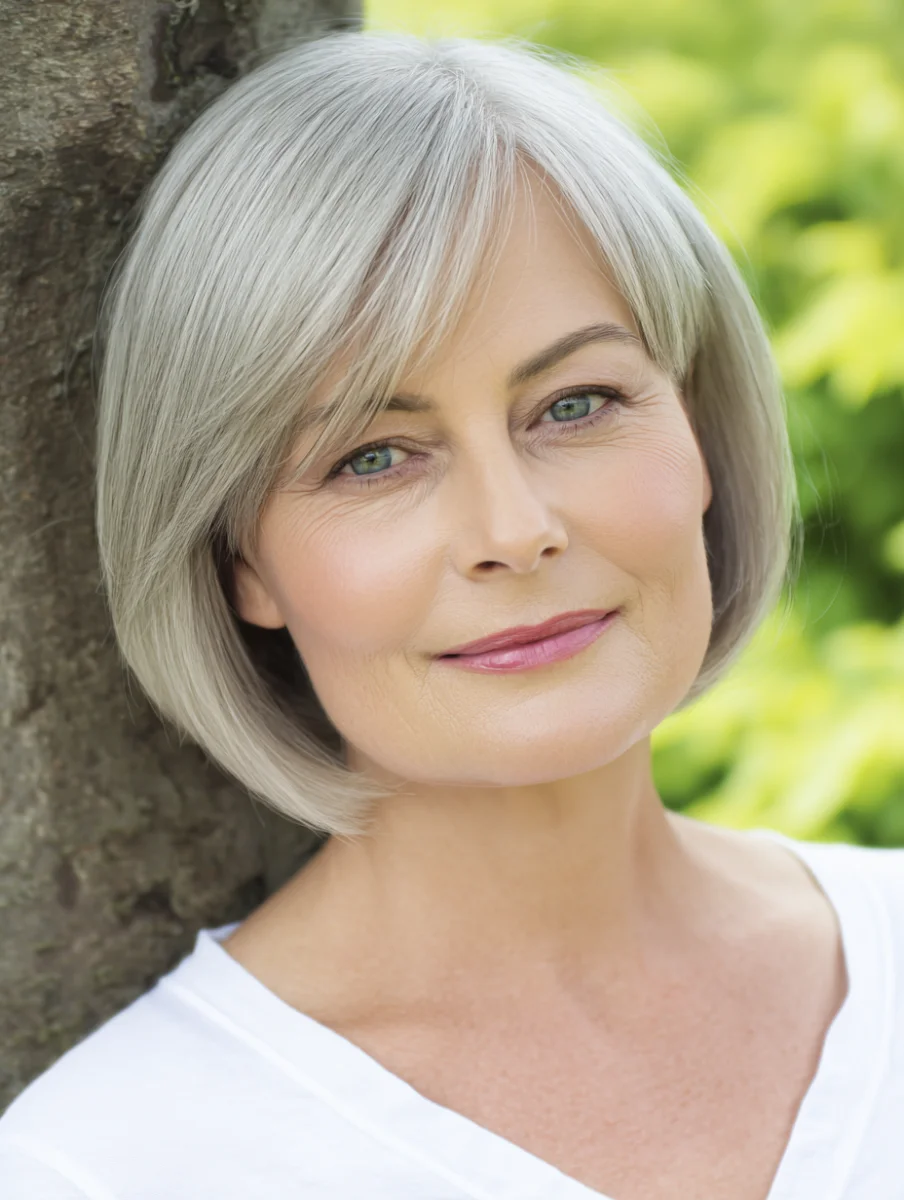
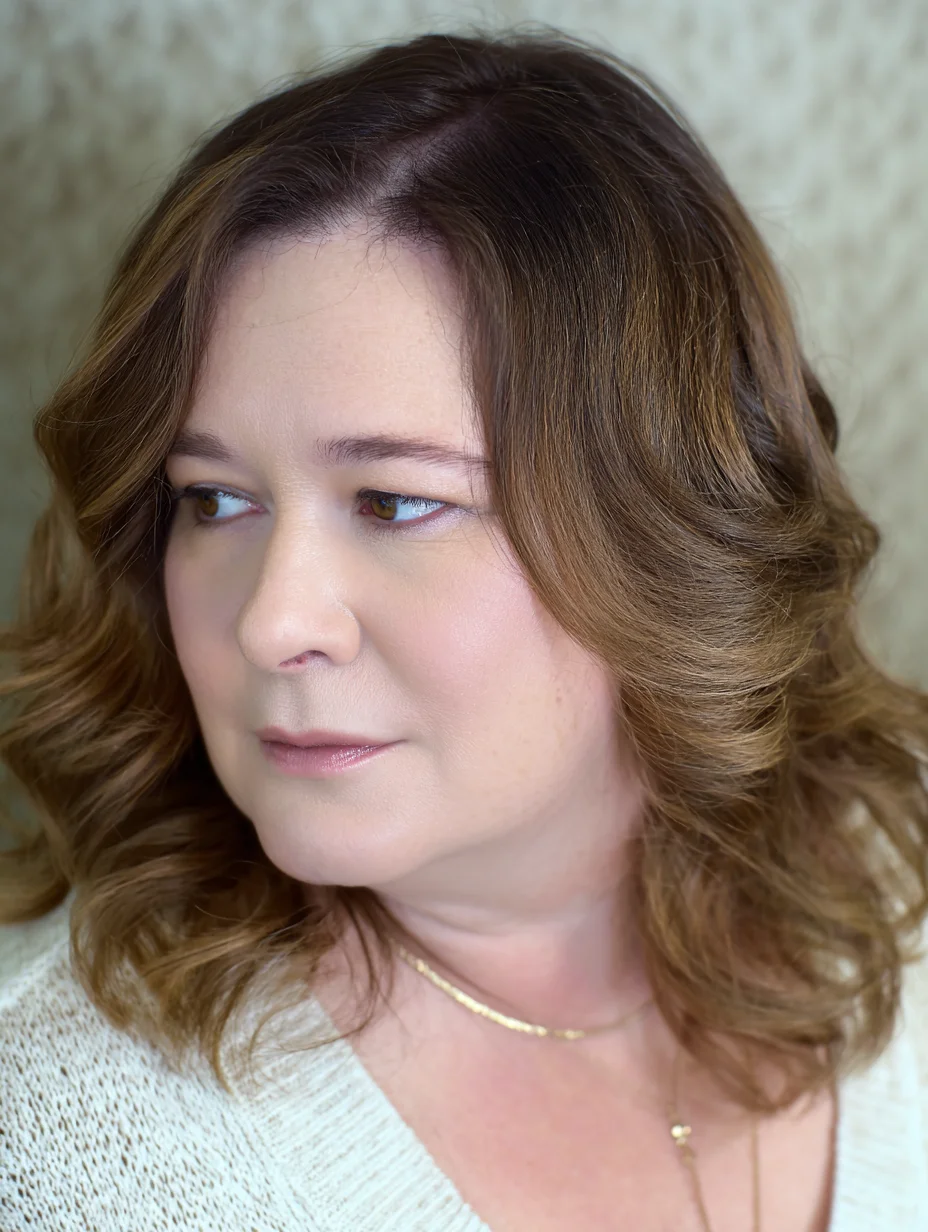
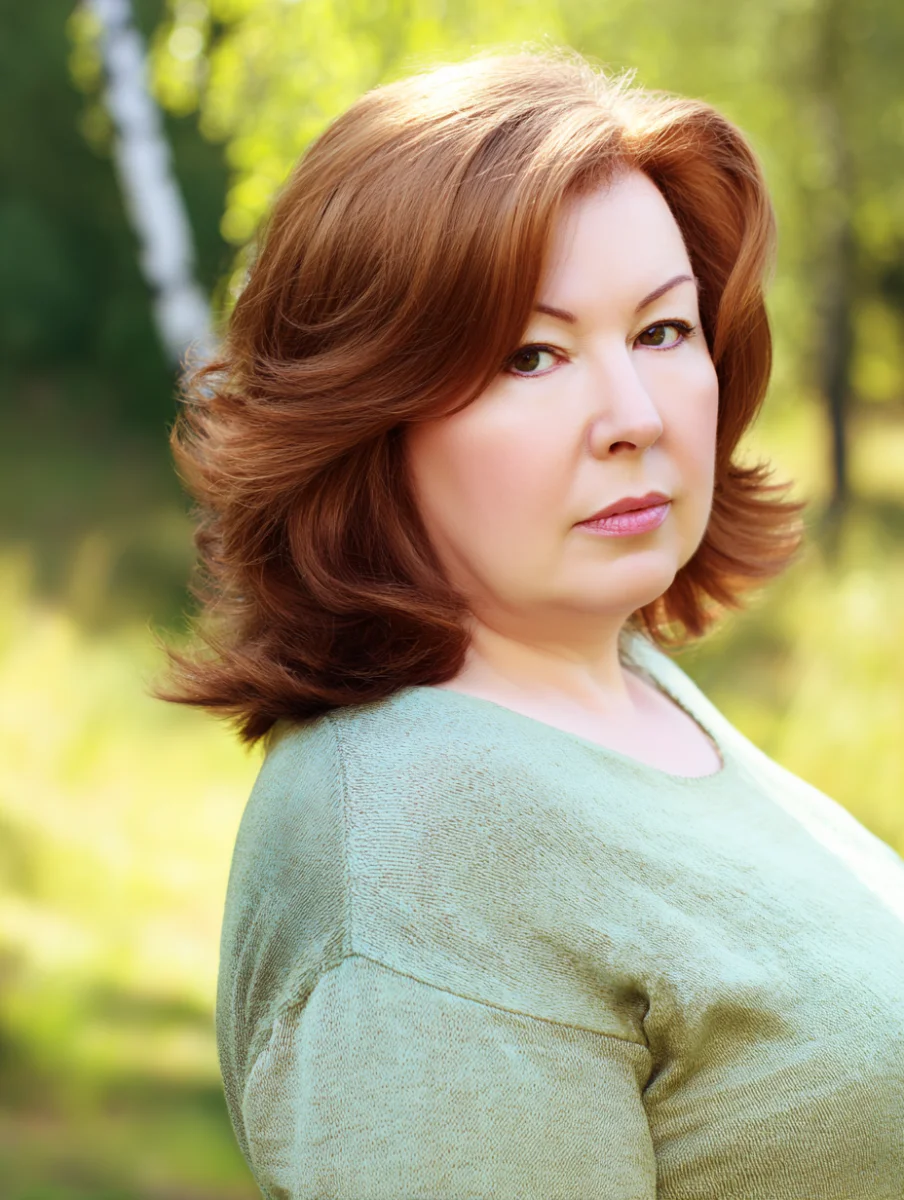
For something a little more polished, a medium-length cut with a deep side part and soft waves brings in volume exactly where it should be — at the crown and the ends — while the deep part itself is doing quiet but important work creating asymmetry across the whole face.
Long Hairstyles for a Round Face
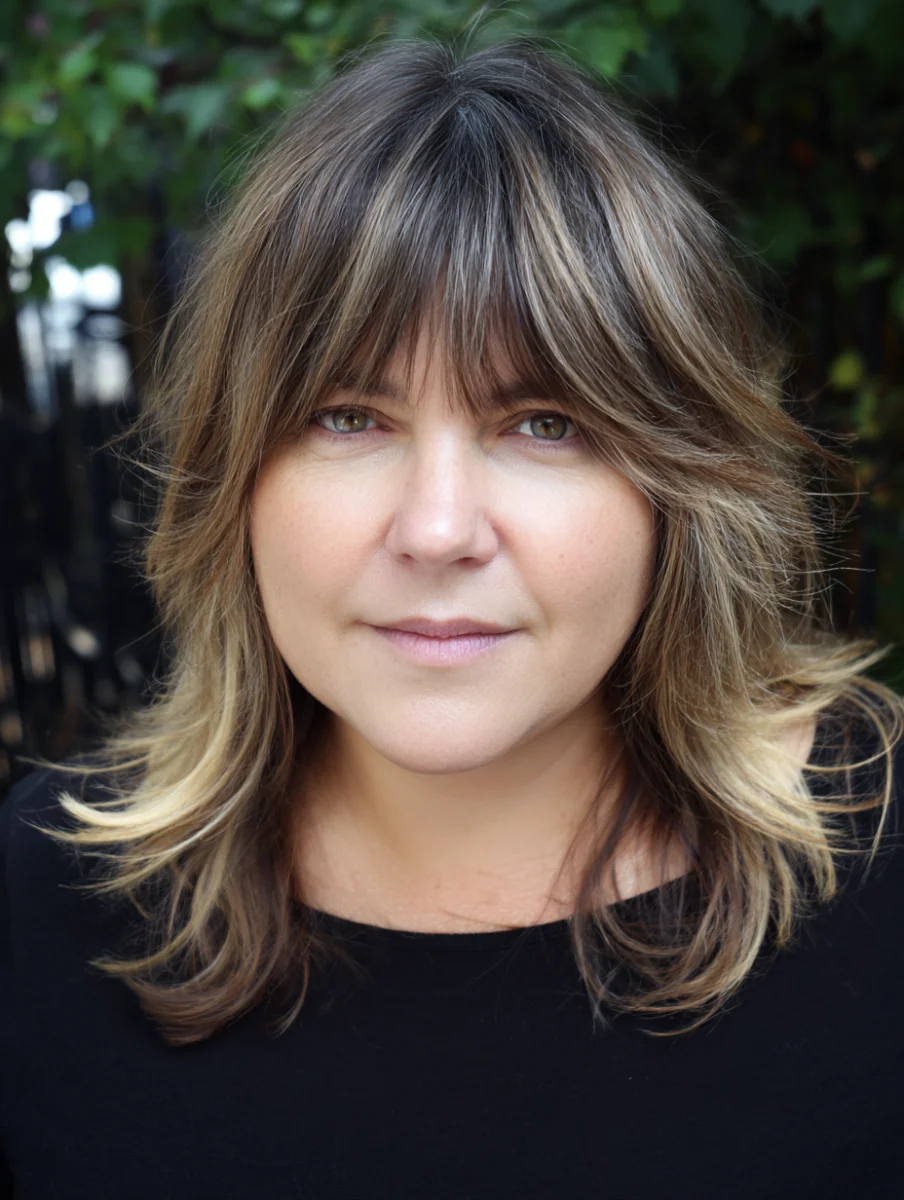
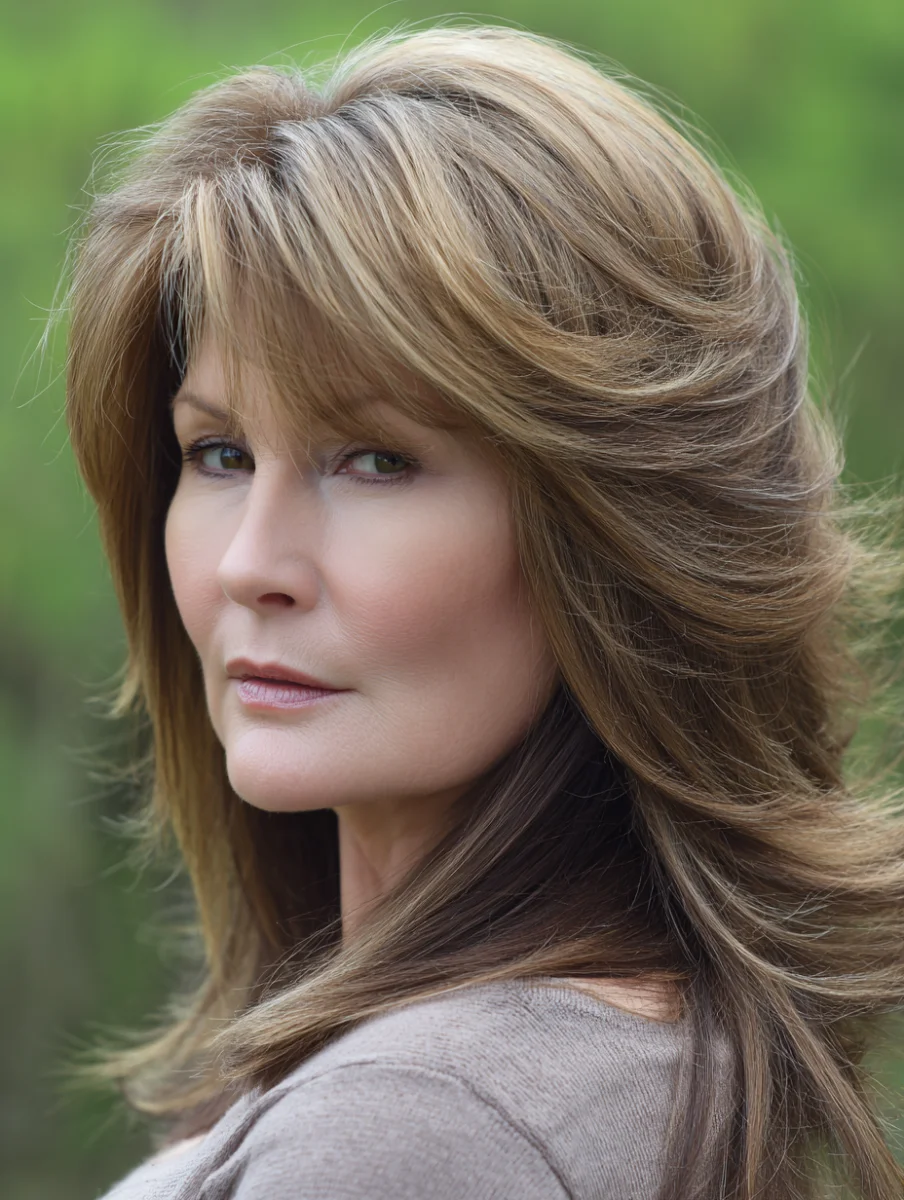
Many women assume long hair isn’t an option for a round face, but that’s a myth I love debunking. Long layers with side-swept bangs are incredibly flattering because the sheer length does most of the elongating work on its own, and the layers prevent the hair from sitting heavy and wide at the sides. The side-swept bangs add a soft frame without the boxiness of a blunt fringe.
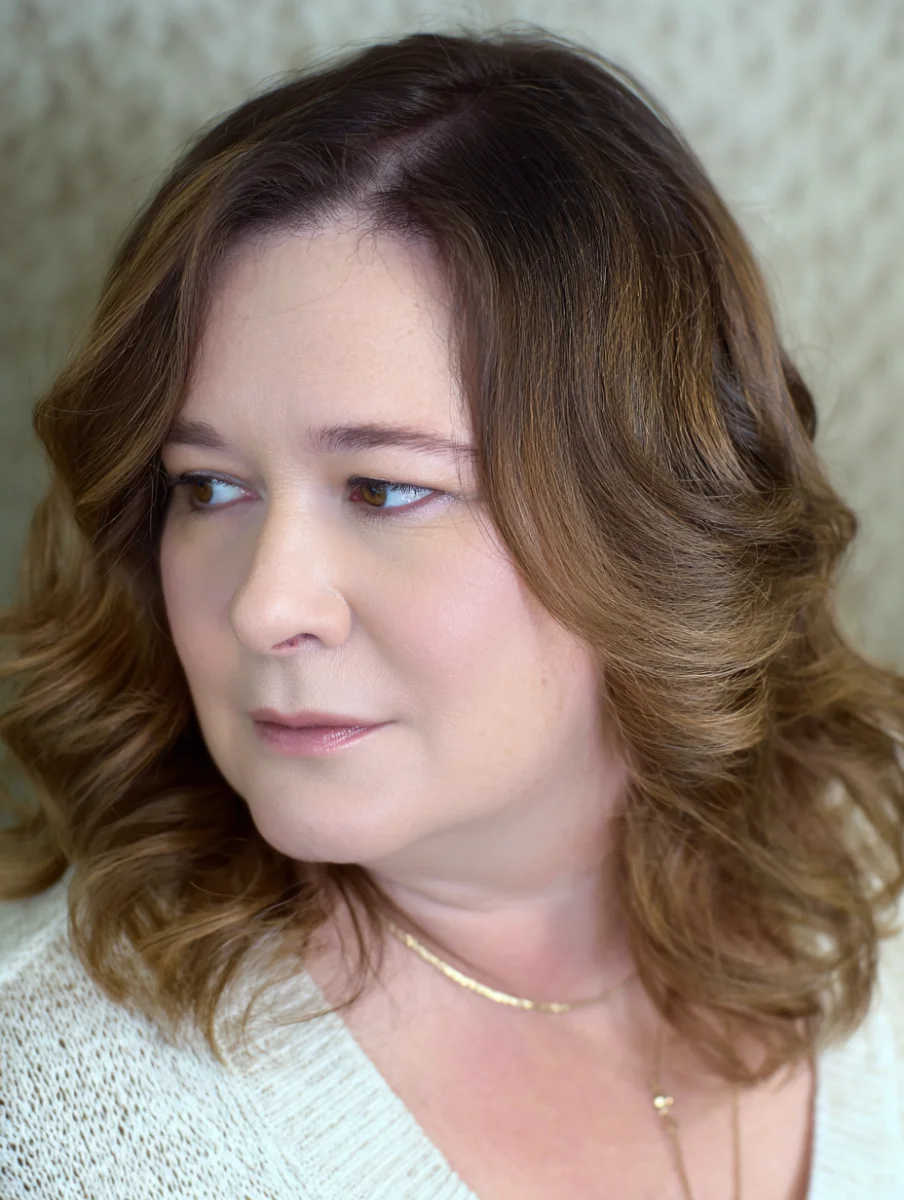
Long, feathered layers with movement are another option I love for round faces who want to keep their length. The feathering — soft, graduated layers throughout rather than just at the ends — keeps the silhouette from looking heavy, and the movement catches light beautifully, which is part of why this style photographs so well for anyone considering a red hair color over 40 alongside the cut, since warm tones tend to show off textured layers especially well.
If you love length but want something a touch more structured, long layers with blended ends in a slightly angled shape still keep enough weight at the bottom to feel substantial, while the layering throughout the mid-lengths does the contouring work.
The Bob: A Round Face’s Best-Kept Secret
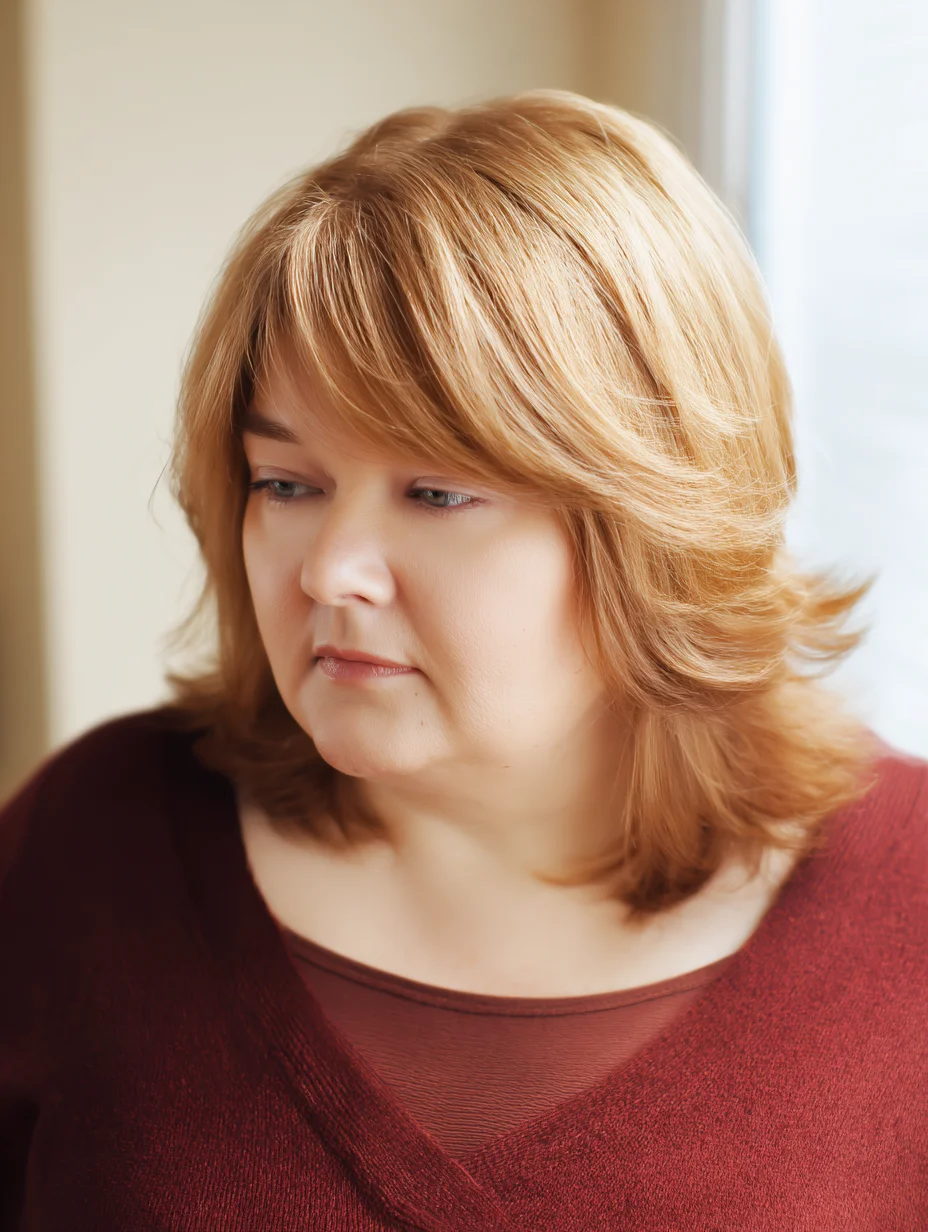
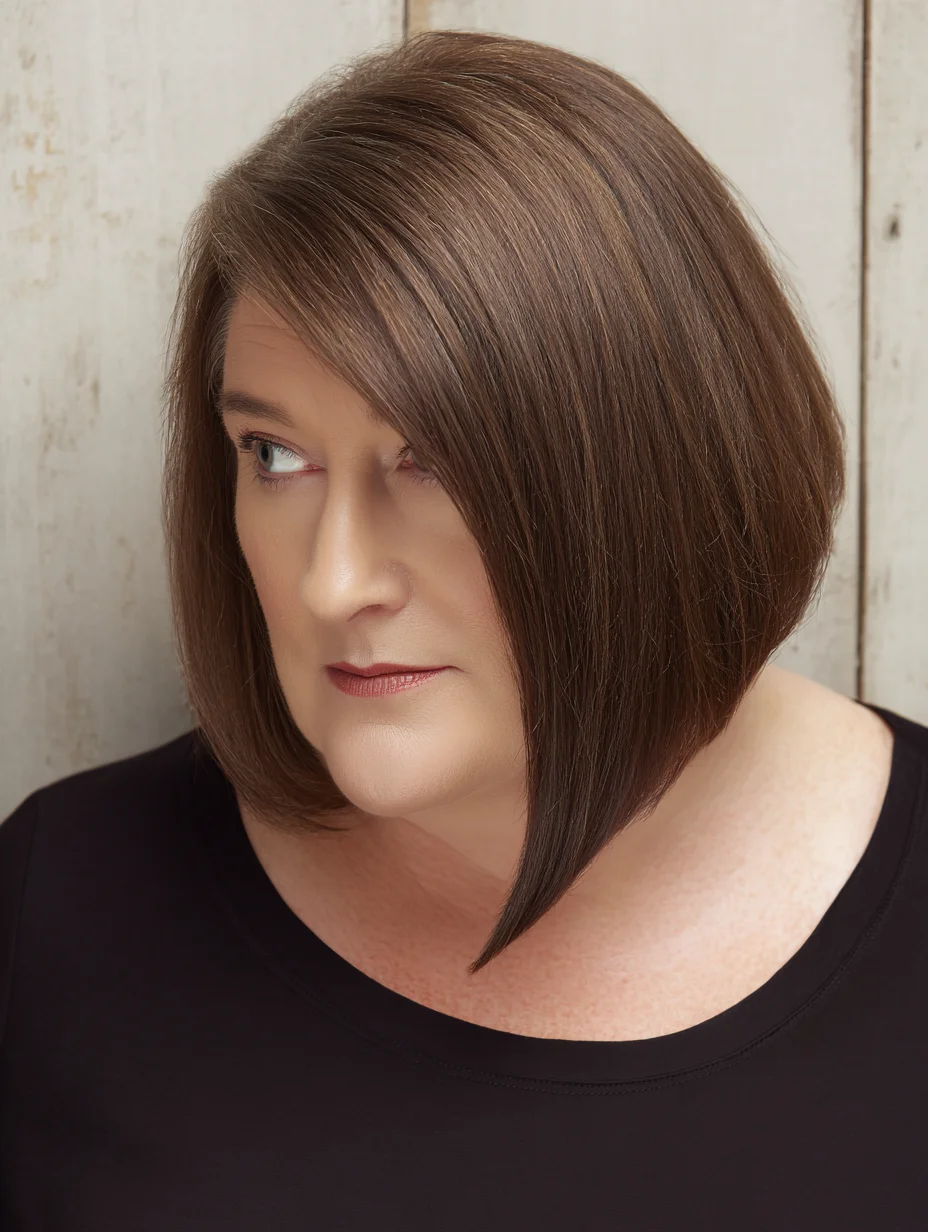
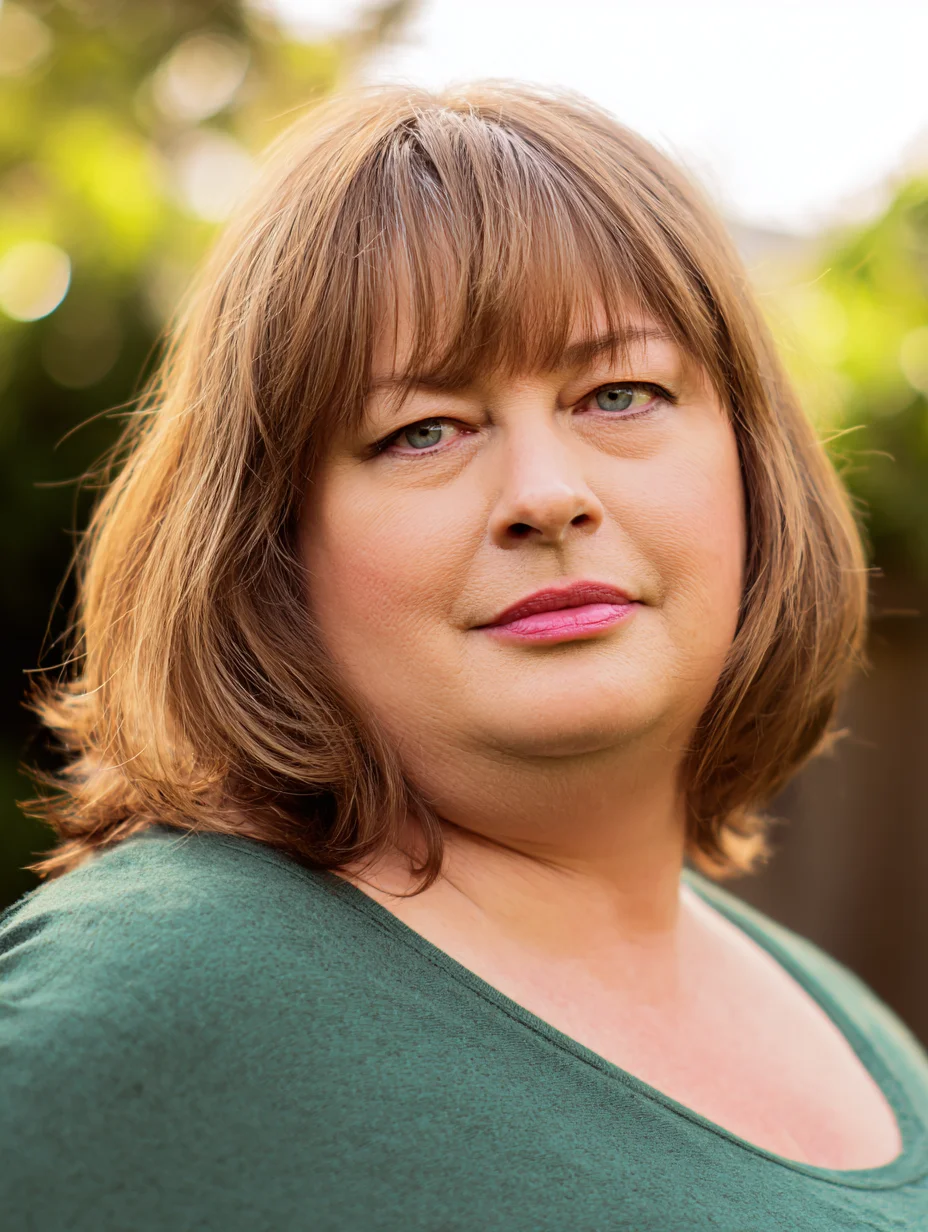
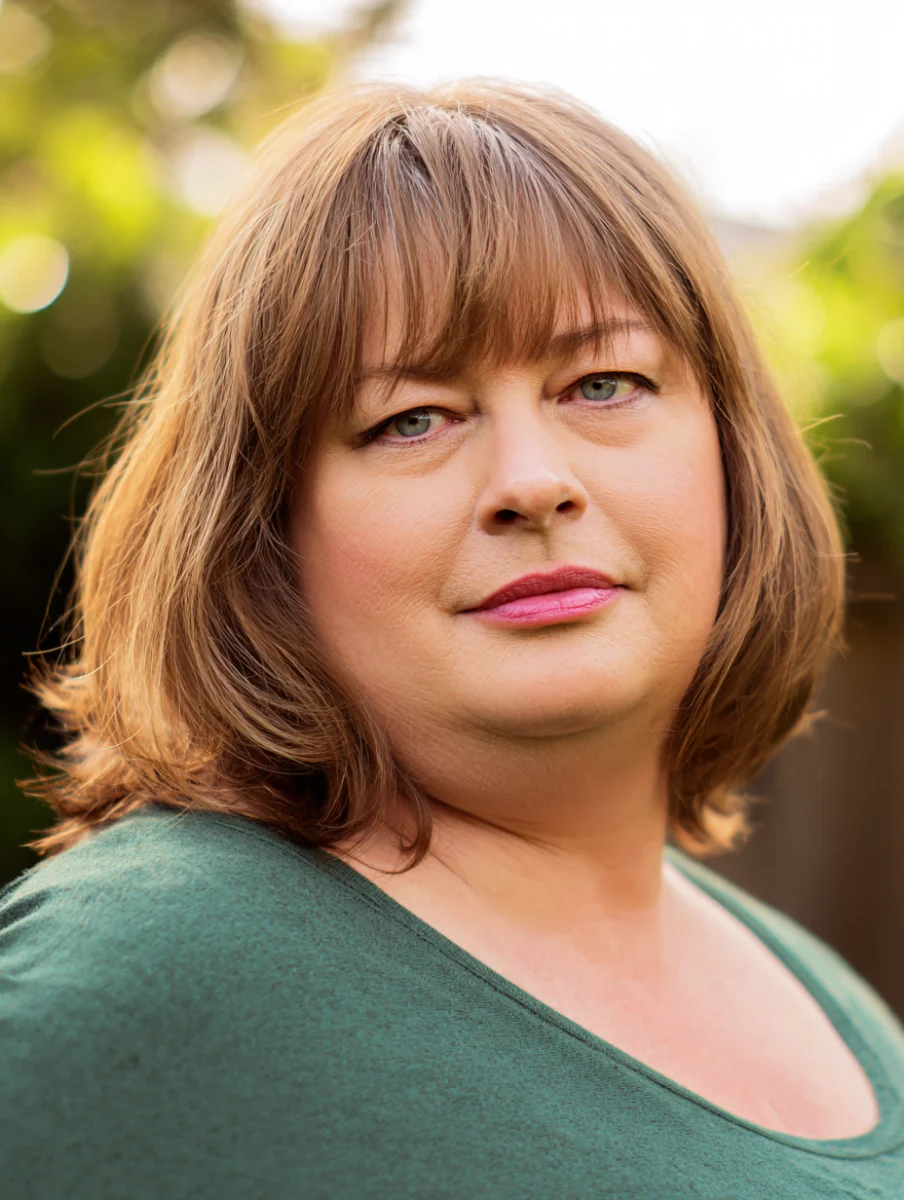
I could write an entire article just on bobs for round faces, because this is where small adjustments make an enormous difference. The angled long bob, often called a lob, is one of the most universally flattering cuts I do. The key is the angle — slightly longer in front, shorter in back — which creates a diagonal line that naturally slims the face. A classic, blunt bob that hits at one length right at the chin is the one style I caution round-faced clients away from, because it draws a horizontal line at the exact widest point of the face.
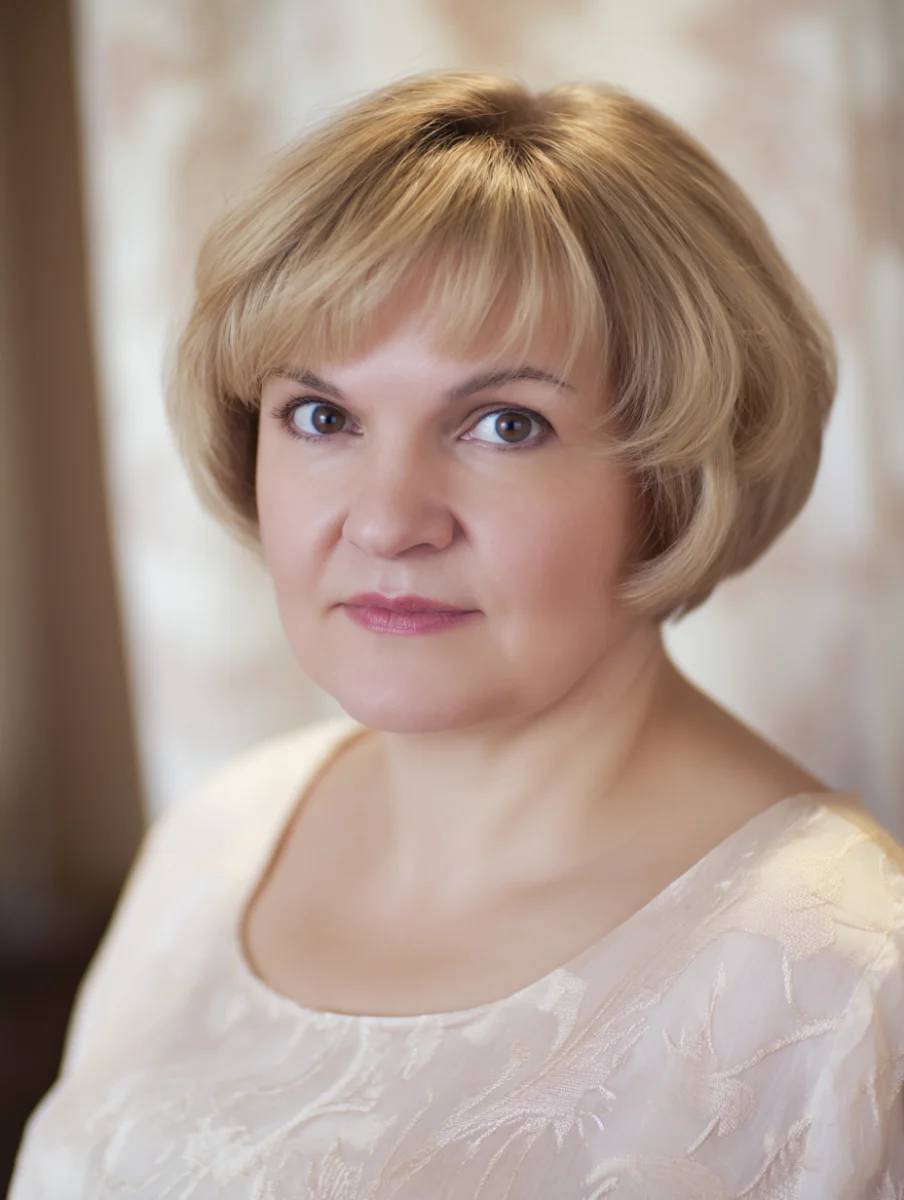
A soft, layered lob with face-framing pieces takes this even further. The internal layers add movement without sacrificing the length that’s doing the slimming work, and the face-framing pieces in front act almost like soft curtains on either side of the cheeks. I find this particular cut works beautifully across every age group, which is part of why it’s one of the most requested styles I do.
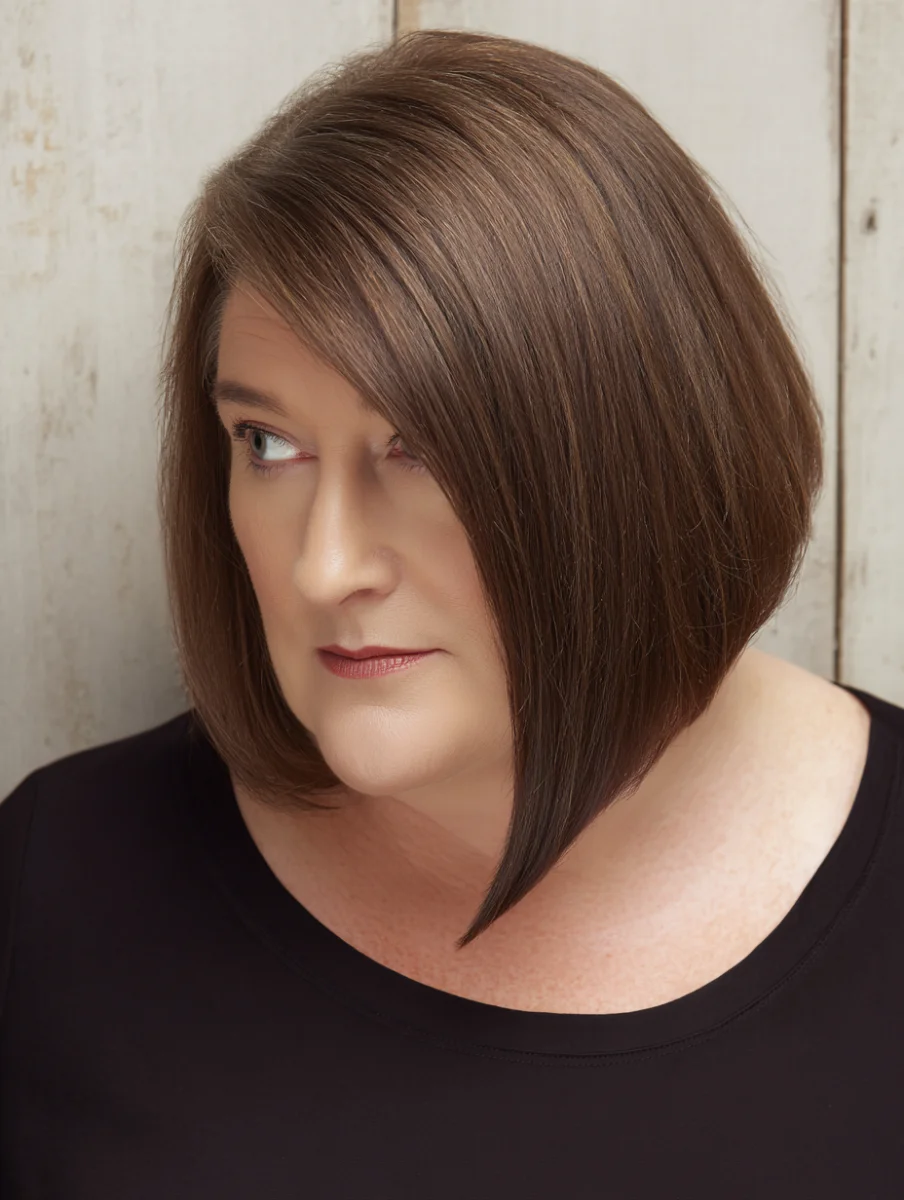
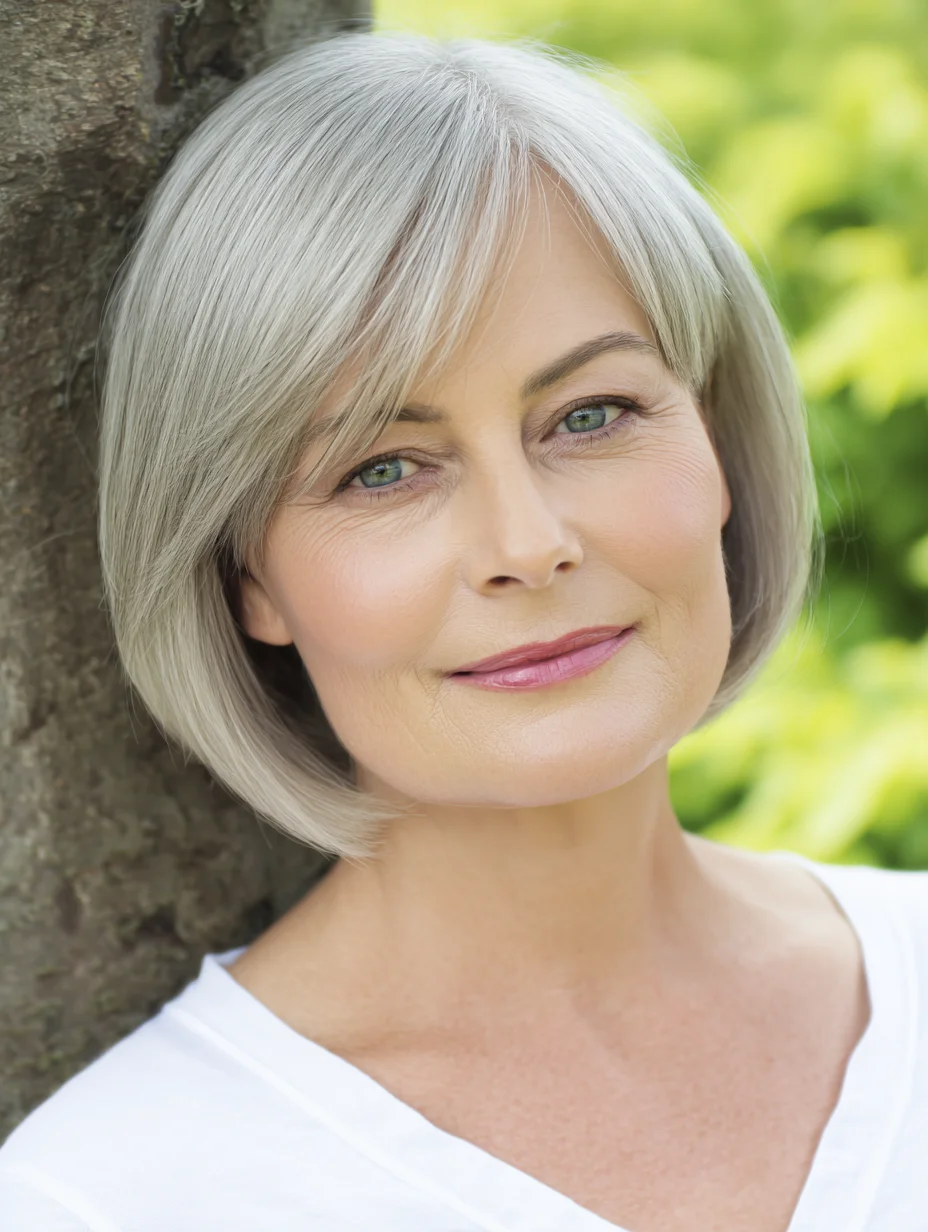
For a softer, rounder version of the bob that still avoids the pitfalls of a blunt cut, a rounded bob with light internal layering keeps a classic, polished shape while the layers prevent it from looking like a solid block of hair. It’s a wonderful low-maintenance option for women who want simplicity without sacrificing flattery.
Color Techniques That Enhance a Round Face
Cut isn’t the only tool we have — color plays a significant role in how a face shape reads, too. Vertical highlights, placed in face-framing sections, create the same elongating illusion as a well-cut layer. I often place slightly brighter pieces right where the face is widest, drawing the eye up and down rather than side to side.
Balayage with darker roots and lighter ends is another technique that works in our favor here, because the gradual transition mimics the natural shadow-and-light pattern that contouring creates on the face. This is one of the reasons rich, warm color families look so good on round faces — they add depth without adding visual width the way a flat, single-process color can.
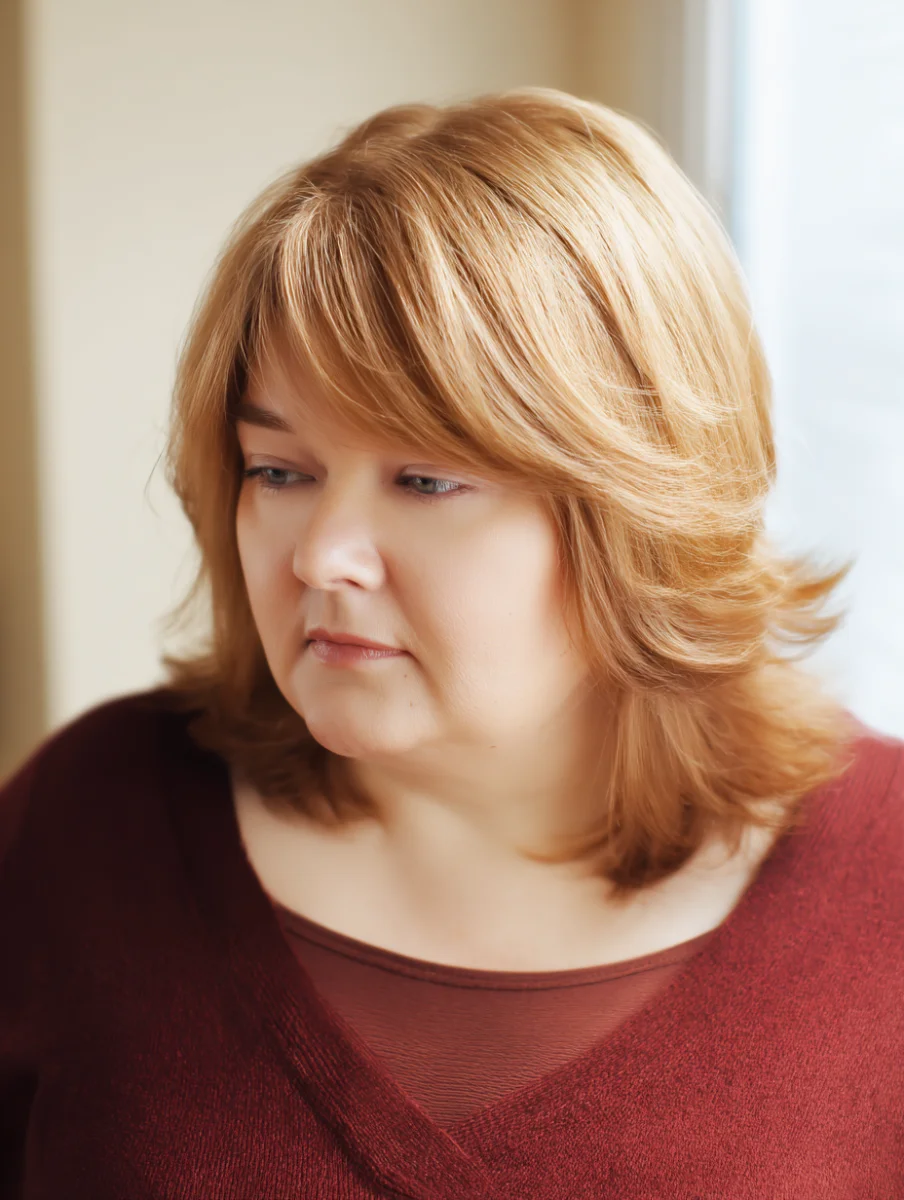
Avoid heavy, solid color blocks at the sides of the face, particularly anything very light or very dark concentrated right at the cheek level, since this tends to emphasize width rather than minimize it.
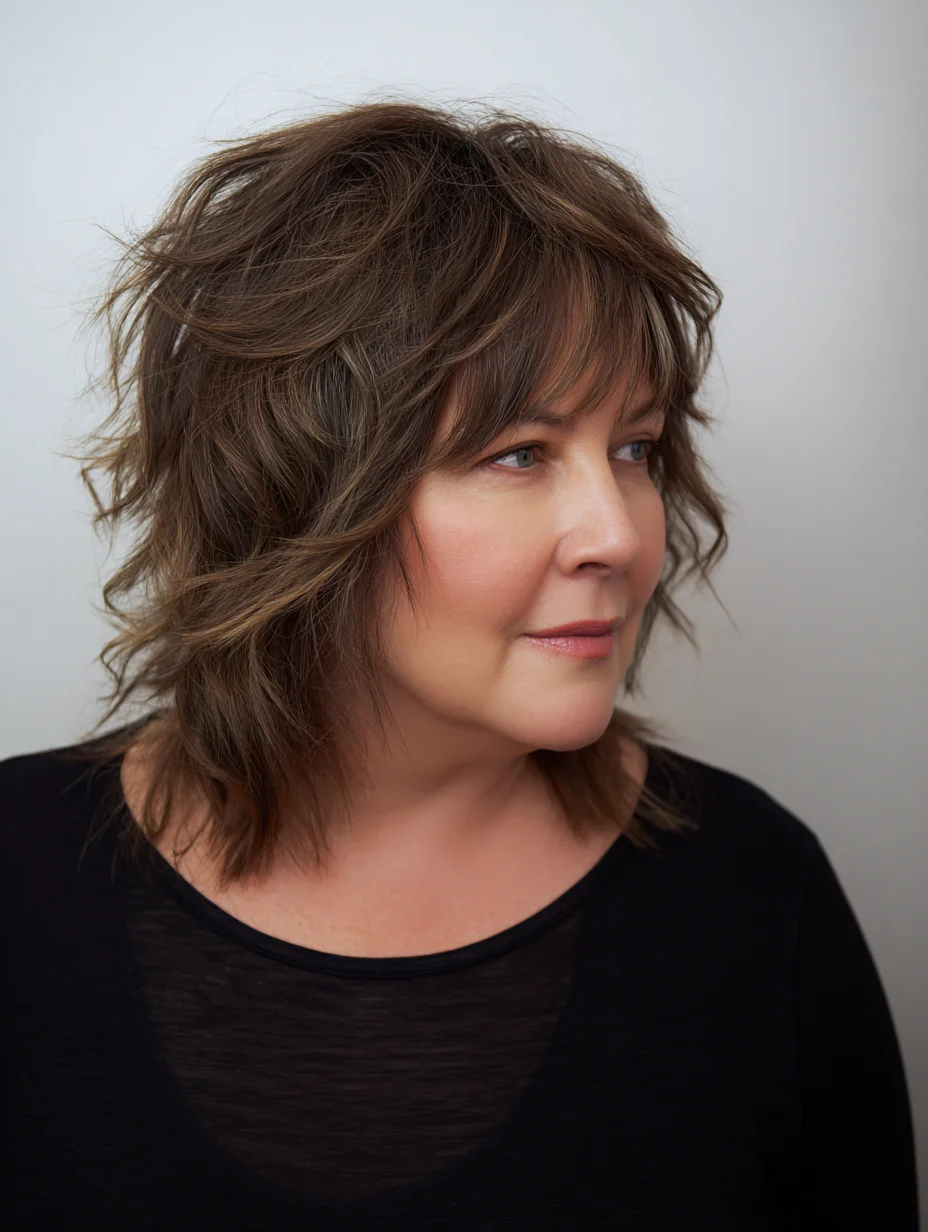
Best Hairstyles for Round Faces in Your 40s
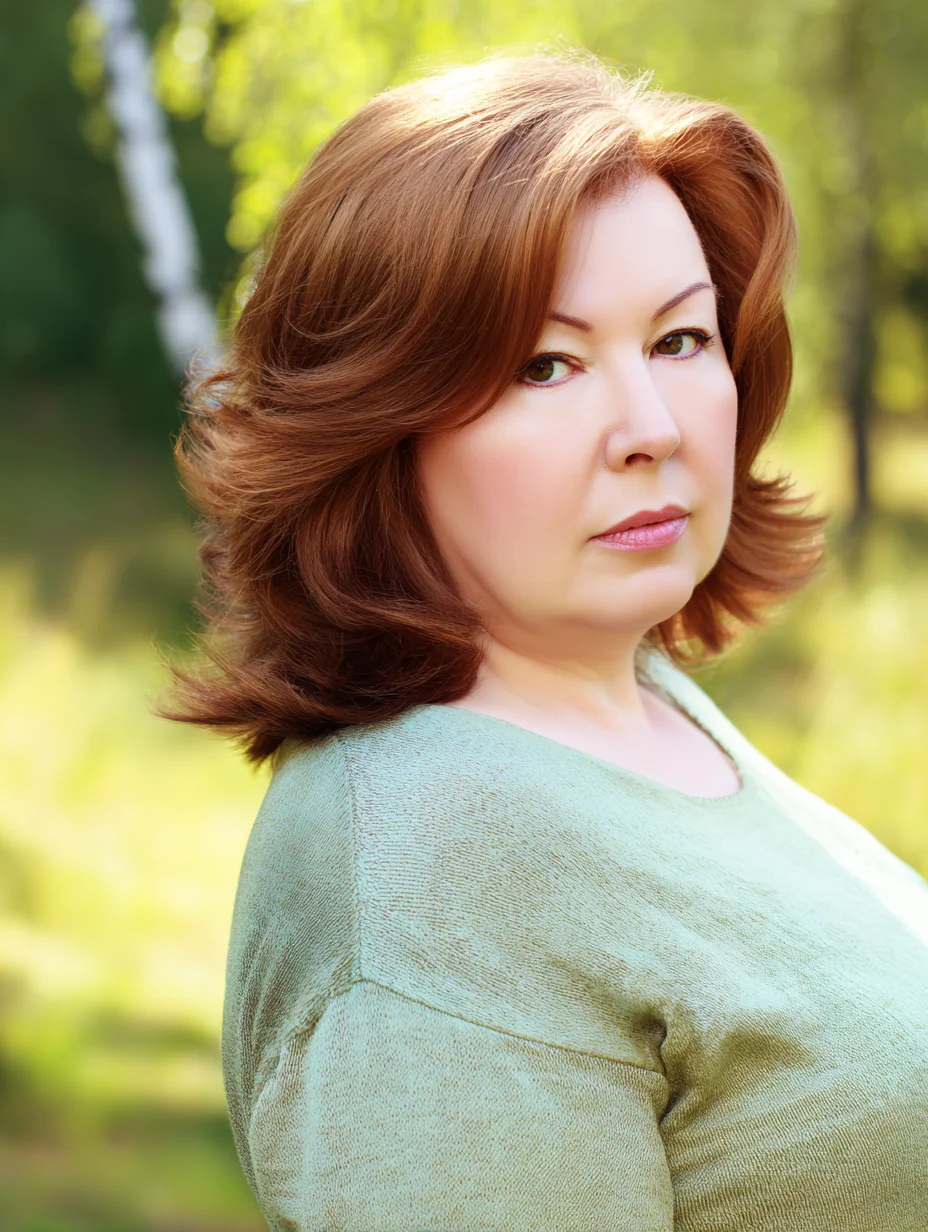
In your 40s, hair often starts to shift in texture and density, but you’re also at a stage where you likely have the most flexibility in terms of length and styling time. This is a great decade to experiment with shoulder-length shags, textured lobs, or long layers with curtain bangs. I find women in their 40s respond especially well to face-framing layers combined with a deep side part, since it offers a polished, professional look that still photographs beautifully for anything from work to weekends.
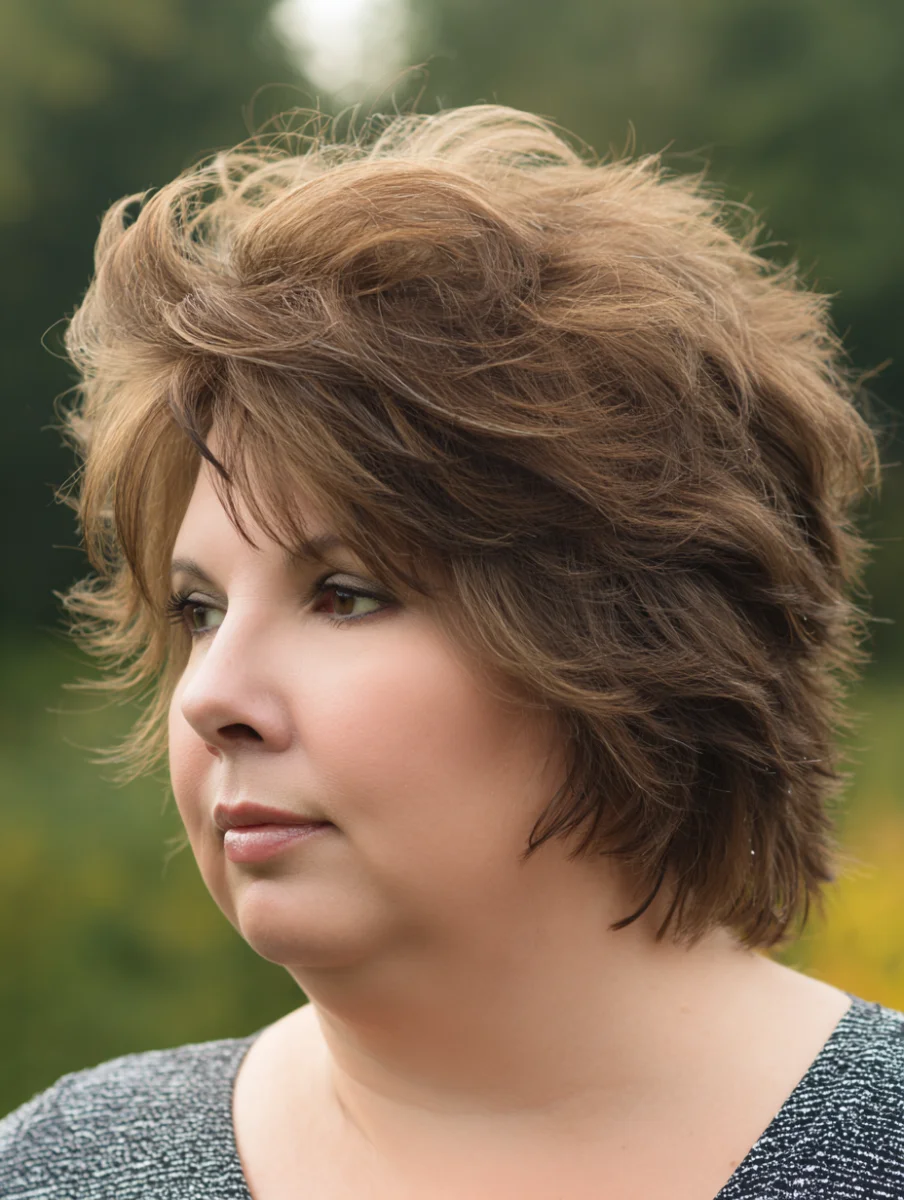
This is also a wonderful decade to play with color, since most women in their 40s haven’t yet dealt with significant gray coverage needs, giving you more freedom with vivid balayage, warm brunettes, or even a bold red.
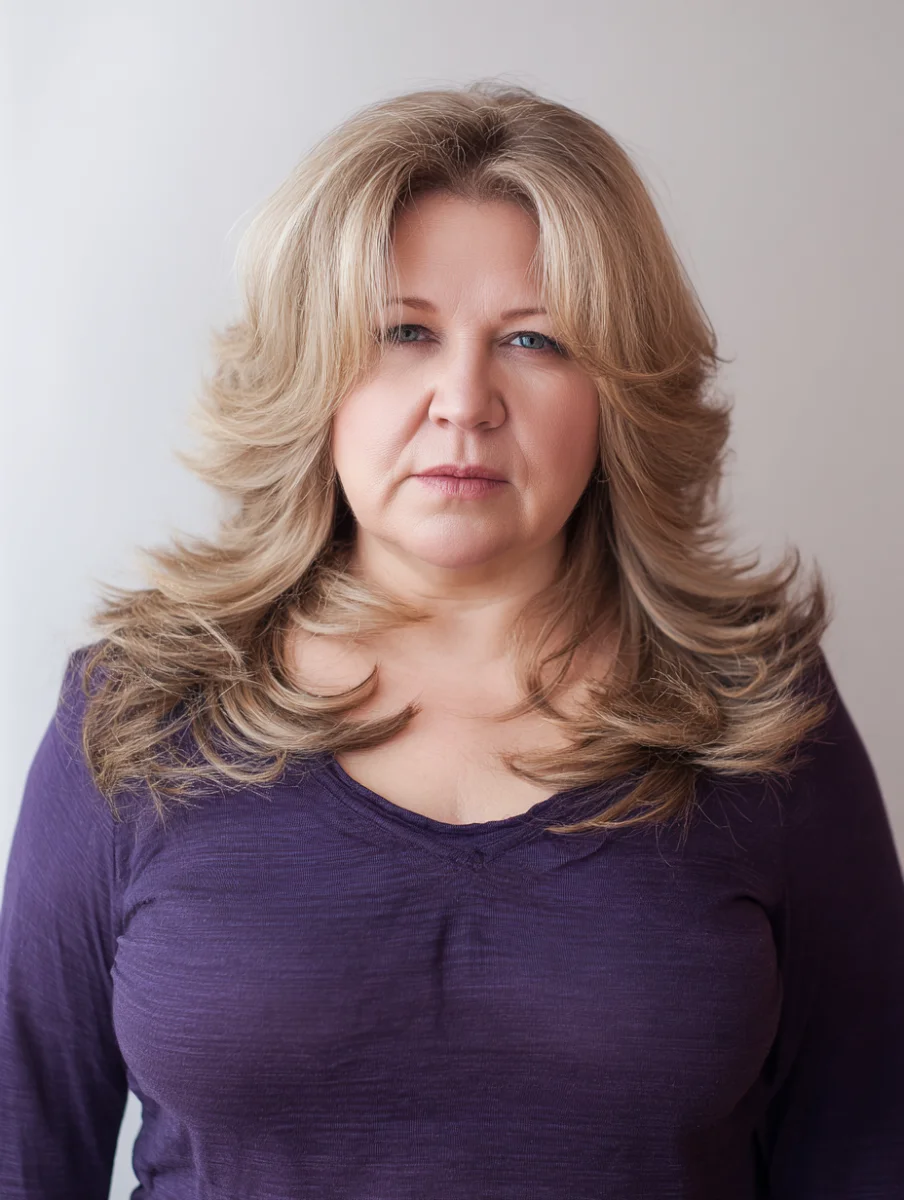
Best Hairstyles for Round Faces in Your 50s
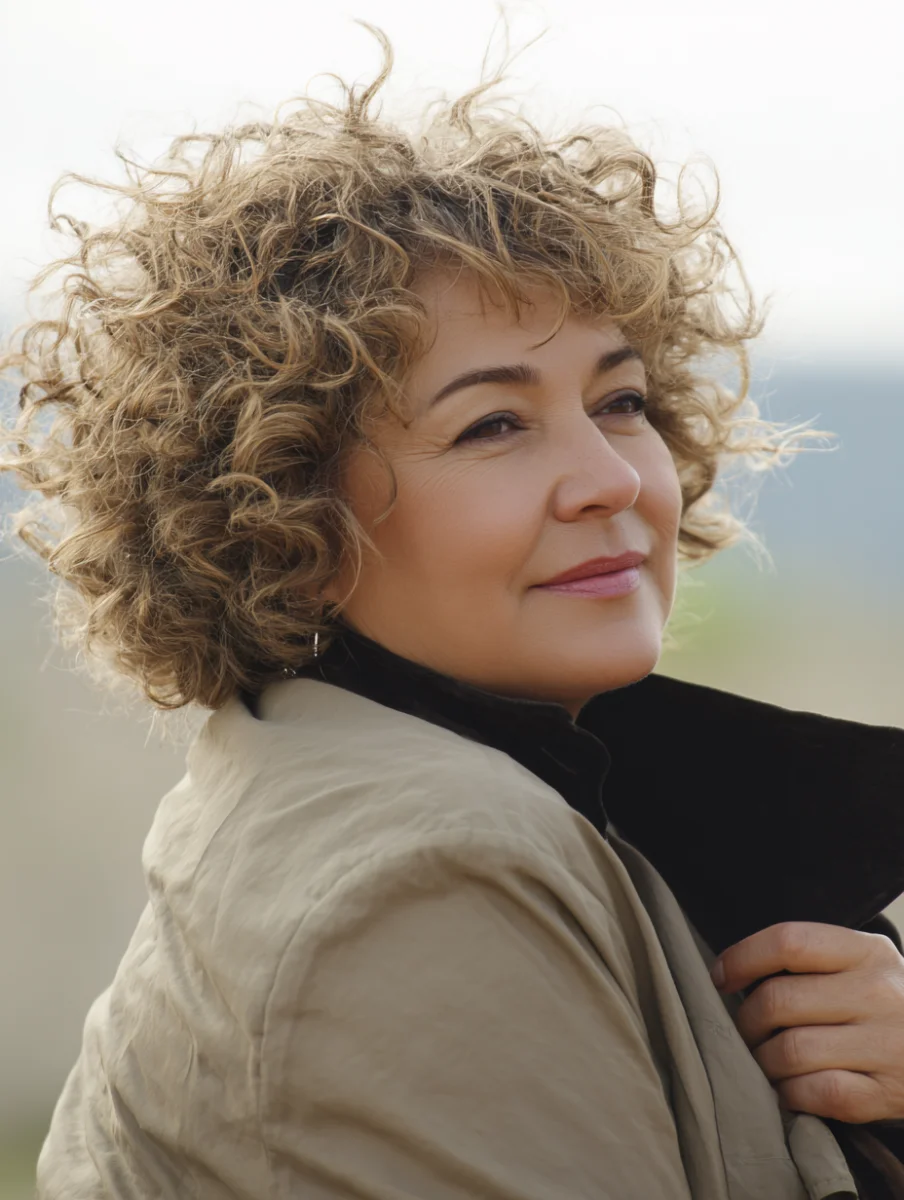
By your 50s, many women are navigating changes in hair texture, thickness, and often the early stages of gray. This is where layered medium cuts with natural flow really shine — they require less daily styling effort while still doing all the contouring work we’ve talked about. A textured shoulder-length shag is another excellent 50s option because the piecey layers disguise any thinning at the crown while adding the volume and movement a round face benefits from.
If you’re embracing your gray in your 50s, ask your stylist about a slightly warmer, lower-maintenance gray blend rather than a stark, flat gray — the subtle dimension does the same elongating work that highlights do for color-treated hair.
Best Hairstyles for Round Faces in Your 60s and Beyond
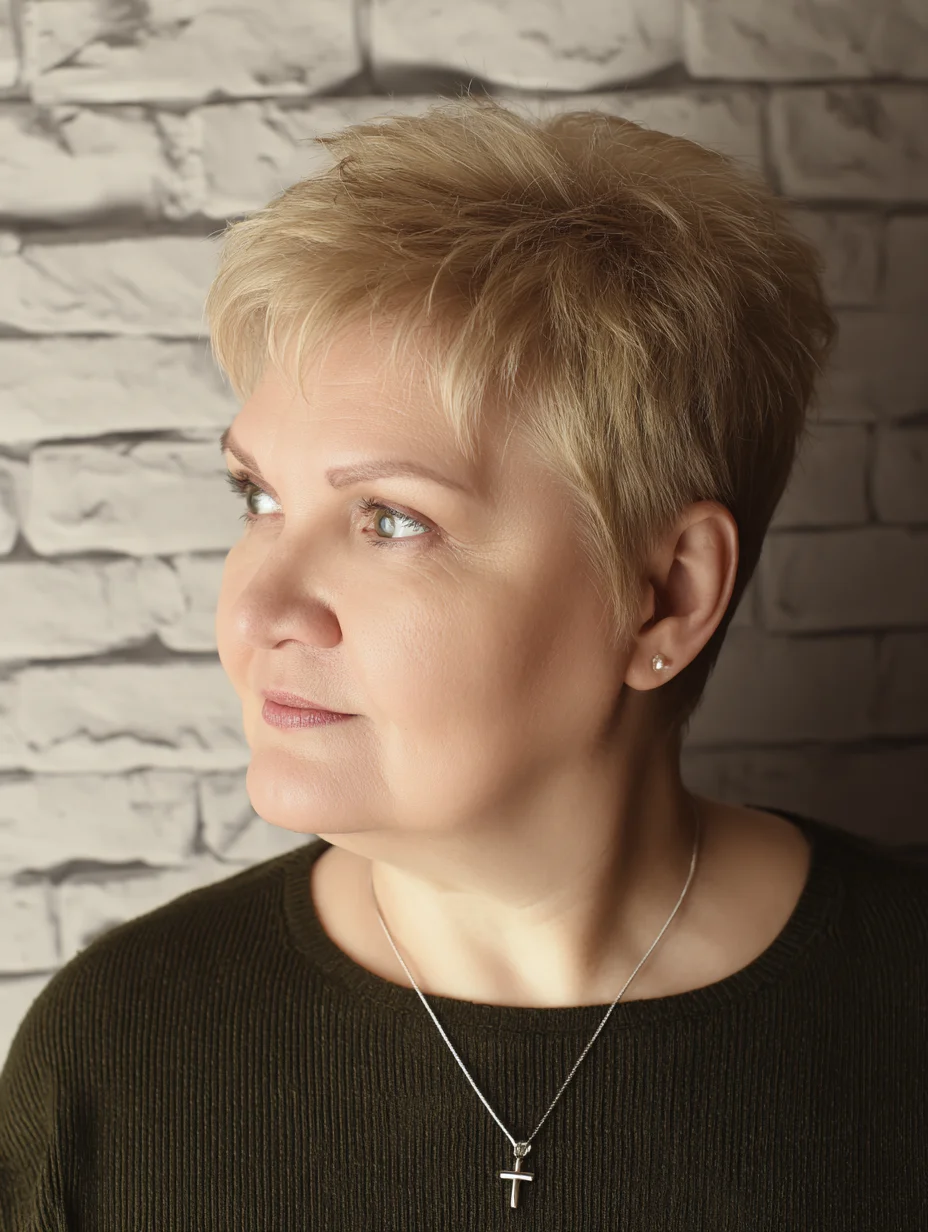
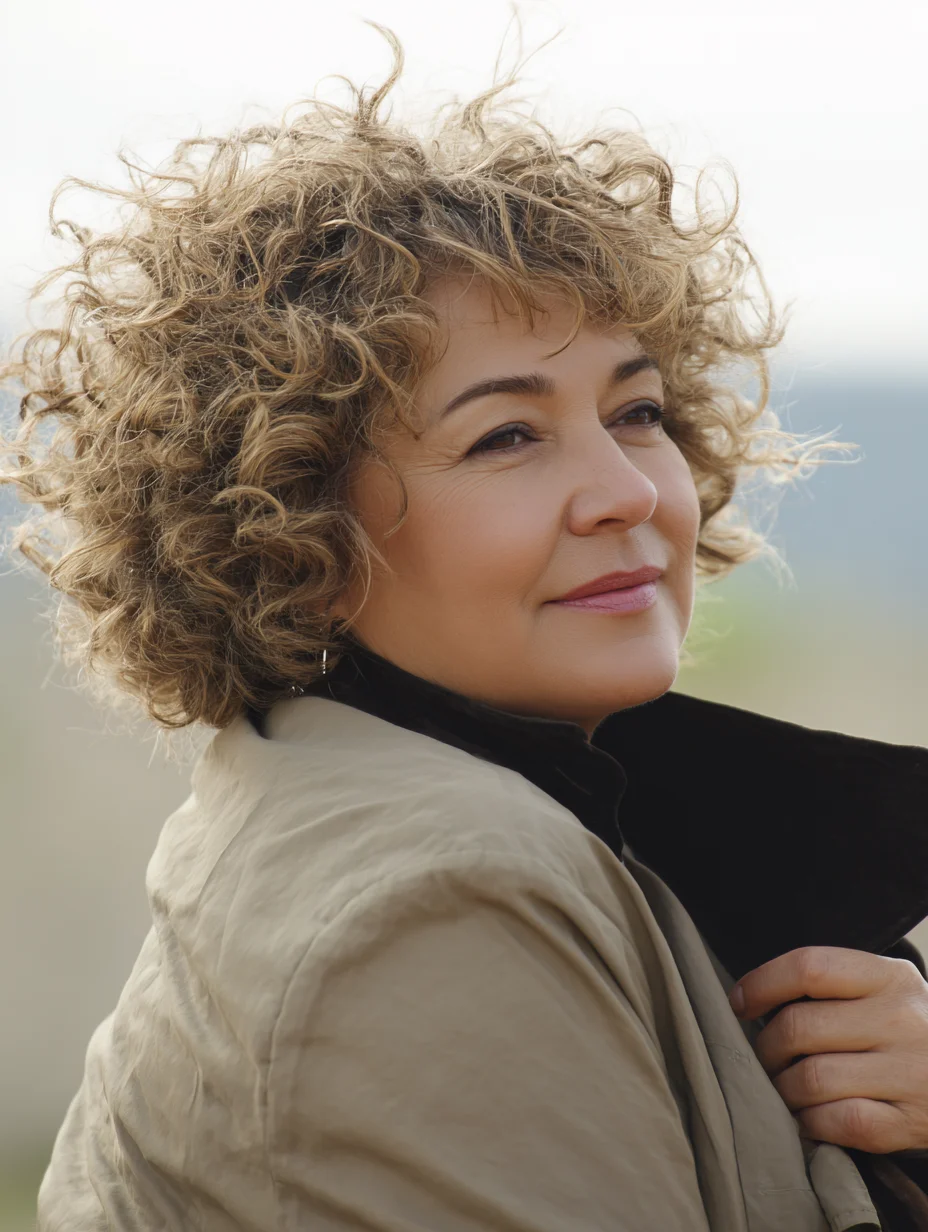
In your 60s and beyond, I almost always steer clients toward cuts that prioritize ease of styling alongside flattery, because life is simply too full to spend forty-five minutes on hair every morning. A short, layered bob with soft texture is one of my favorite recommendations here — it’s quick to style, requires minimal heat tools, and the layering does all the slimming work automatically. A layered pixie with volume on top is equally wonderful for this stage, particularly for women who’ve noticed their hair has become finer over time, since shorter styles tend to make fine hair look fuller and healthier.
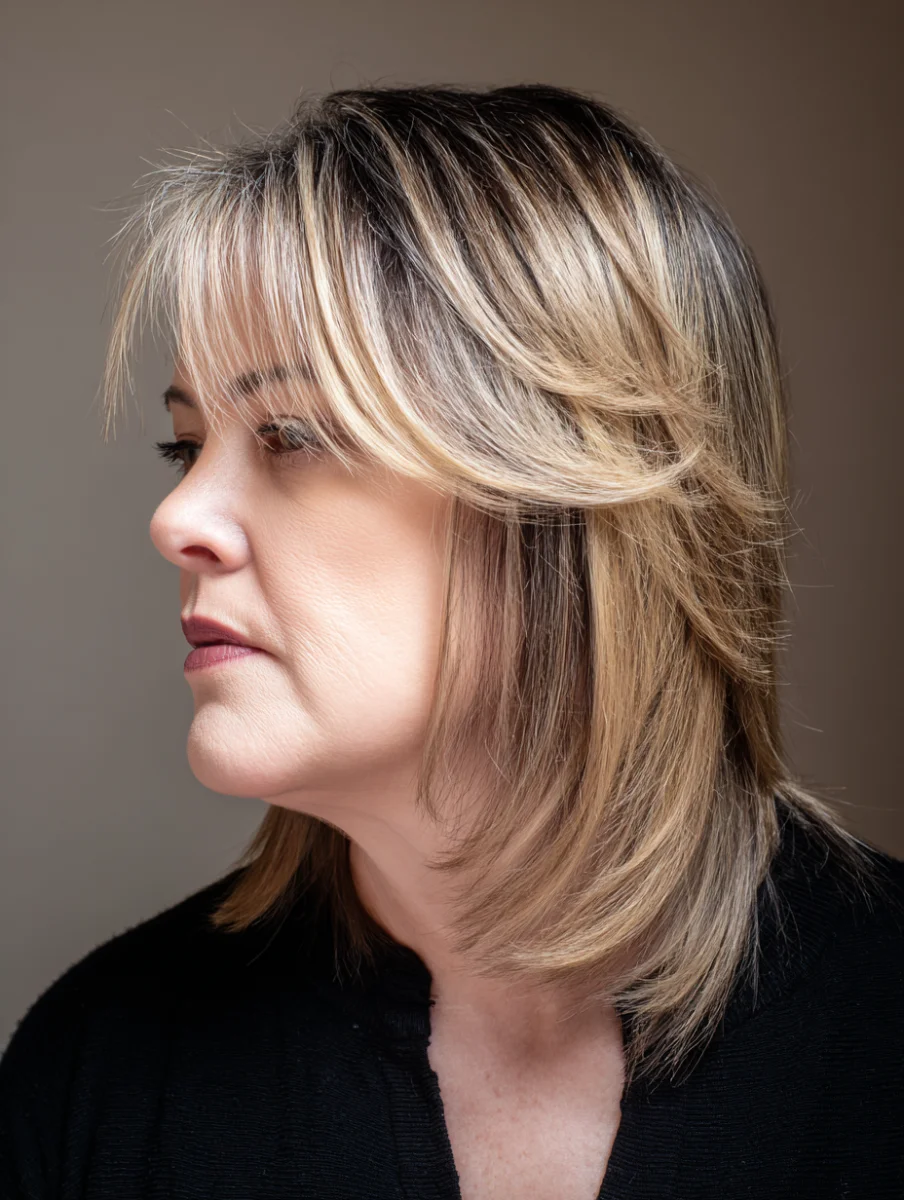
Whatever length you choose in your 60s, I always recommend keeping at least some layering around the face. Even a very short, cropped cut benefits from soft, angled pieces near the cheek rather than a completely blunt perimeter, which can look severe rather than soft.
Daily Styling Tips for Round-Face Flattering Cuts
Once you’ve got the right cut, styling is really about reinforcing the same principles we used to choose it. A round brush and blow dryer, directed downward and slightly outward at the ends only (never at the roots straight back), keeps that slimming, vertical line intact. If you prefer air-drying, a light mousse applied to the mid-lengths and ends — never the roots — will encourage natural texture without adding width at the sides.
A texturizing spray is one of the most useful products in a round-faced woman’s routine, because it creates the piecey, broken-up look that flatters this shape without requiring heavy styling. Spray it into damp or dry hair and scrunch gently with your fingers rather than brushing it through, which would smooth out the very texture you’re trying to create.
When it comes to parting, I’ll say it one more time because it matters so much: a deep side part is doing more for your face shape than almost any product on the market. It costs nothing and takes seconds, but the asymmetry it creates is one of the most effective tools available to round-faced women of any age.
Hair Care Essentials for Mature, Round-Face-Flattering Cuts
Healthy hair holds these cuts and colors far better than damaged hair, so a solid care routine matters as much as the cut itself. As hair matures, it often becomes drier and more porous, which means moisture-focused shampoos and conditioners — rather than ones designed for oily or fine hair — tend to serve mature clients best. A weekly deep conditioning treatment helps maintain the elasticity that keeps layers looking soft rather than frizzy or straw-like.
Heat protectant is non-negotiable if you’re using any hot tools to maintain volume or waves, particularly for color-treated hair, which is more vulnerable to heat damage than virgin hair. And regular trims — every six to eight weeks for shorter cuts, every eight to ten for longer ones — keep the shaping of these layers crisp, since the entire effect we’ve discussed relies on the precision of where each layer falls.
Frequently Asked Questions
What is the most flattering haircut for a round face over 40?
In my experience, a layered lob or shoulder-length cut with face-framing layers and a deep side part is the most universally flattering option for round faces over 40. The combination of length, layering, and asymmetry hits all three of the key techniques that slim and soften a round shape.
Should women with round faces avoid short hair?
Not at all — short hair can be wonderfully flattering on a round face as long as there’s height at the crown and some texture or tapering at the sides. A pixie or textured crop with lift on top is often more flattering than many medium-length cuts, since the verticality does so much of the work.
Is a center part or side part better for a round face?
A side part, ideally a deep one, is almost always more flattering on a round face. A center part divides the face into two equal, symmetrical halves, which can emphasize roundness, while a side part creates the kind of asymmetry that visually slims the face.
What bangs work best for a round face?
Side-swept bangs or curtain bangs are far more flattering than a full, blunt fringe. A straight-across fringe tends to shorten the face and draw attention to its width, while side-swept and curtain styles add softness without cutting off length.
How often should I get my hair trimmed to maintain a face-flattering cut?
I generally recommend every six to eight weeks for shorter, more structured cuts like pixies and bobs, and every eight to ten weeks for medium and long layered styles. Since these cuts rely on precise layering to create their slimming effect, growing out too far can blur that shaping.
Does hair color really make a difference for a round face?
Yes — strategic color placement, like vertical highlights or balayage that’s darker at the root and lighter at the ends, can enhance the same elongating effect that a good cut creates. Heavy, solid color blocked right at cheek level, on the other hand, can work against you by emphasizing width.
Final Thoughts
A round face is a beautiful canvas, not a problem to solve — and after two decades of cutting hair, I can say with confidence that some of my favorite, most striking transformations have been on exactly this face shape. Whether you choose a short, textured crop, a layered lob, or long, feathered layers, the principles stay the same: length, layering, and asymmetry. Bring this guide with you to your next appointment, and don’t be afraid to ask your stylist specifically for “face-framing layers” and “a deep side part” — those two phrases alone will get you most of the way to a cut you’ll love.
If this guide helped you, save it to your hair inspiration board on Pinterest so you can find it again before your next salon visit — and come back to maturehairguide.com anytime you need a fresh idea for your next cut or color.