
If you have fine hair and you’ve been told that shaggy haircuts are “too much” for thin strands, I’m here to tell you that’s completely wrong. After more than two decades working with clients in their 40s, 50s, and 60s, I can say with confidence that shaggy lobs for fine hair are one of the most transformative cuts I recommend. The strategic layers, the razored ends, the deliberately undone texture — all of that creates the illusion of fullness and movement that fine hair desperately needs. Whether your hair is straight, slightly wavy, or color-treated, there is a shaggy lob here for you. Save this collection before you scroll — you are going to want to come back to it more than once.

Collarbone Shag Lob with Soft Money Piece
This is one of my favorite gateway styles for women who are trying a shag for the first time. The cut lands right at the collarbone, which is a universally flattering length, and the money piece — those brighter, face-framing strands — adds instant warmth without a full color overhaul. For fine hair, that pop of lighter color near the face creates the optical illusion of depth and dimension. Ask your stylist for disconnected layers that are slightly heavier at the ends so the hair holds its shape longer between washes.
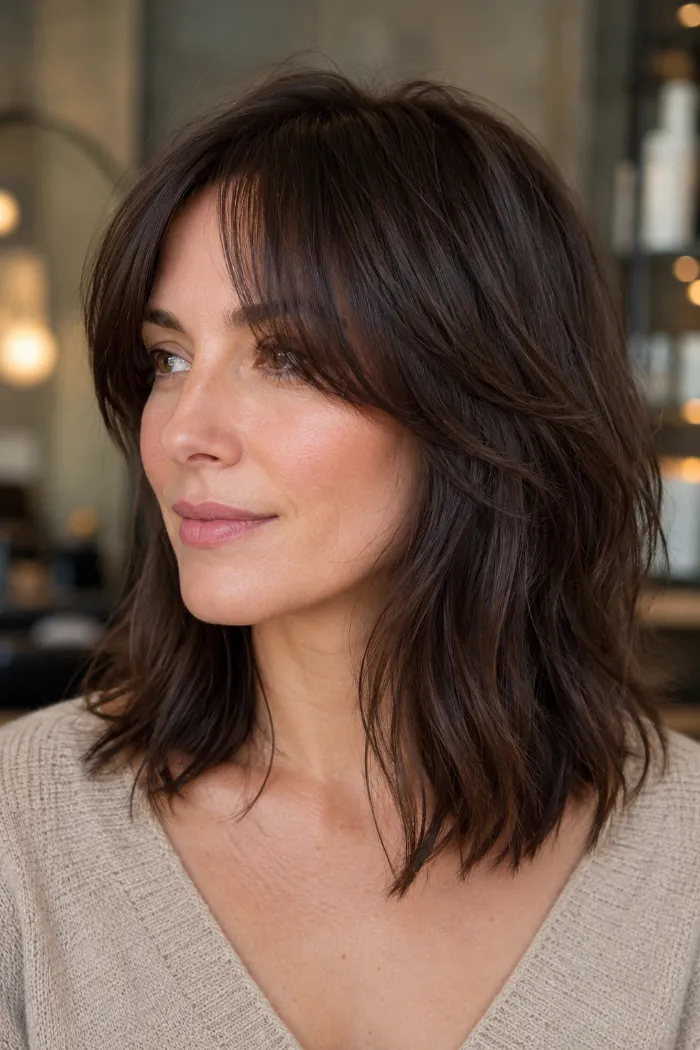
Brunette Shaggy Lob with Soft Curtain Bangs
Curtain bangs have never gone out of style for a reason — they are incredibly face-flattering and they require minimal daily effort to maintain. On fine brunette hair, soft curtain bangs blend seamlessly into the layers of a shaggy lob, creating a cohesive look that feels effortless. I always tell my clients who are curious about bangs but nervous to commit: curtain bangs are the most forgiving fringe cut available. You can wear them as true bangs or sweep them fully to the side when you want a different look.

French Shaggy Lob with Baby Curtain Fringe
The French-girl shag is all about that studied nonchalance — hair that looks like you did nothing to it but somehow looks chic. Baby curtain fringe, which sits just above the brow and is shorter than a standard curtain bang, intensifies that Parisian effect. On fine hair, this fringe is actually ideal because lighter hair bends and falls more naturally into that swooped, airy shape. Pair this look with a texturizing spray and simply tousle with your fingers while air-drying for maximum authenticity.
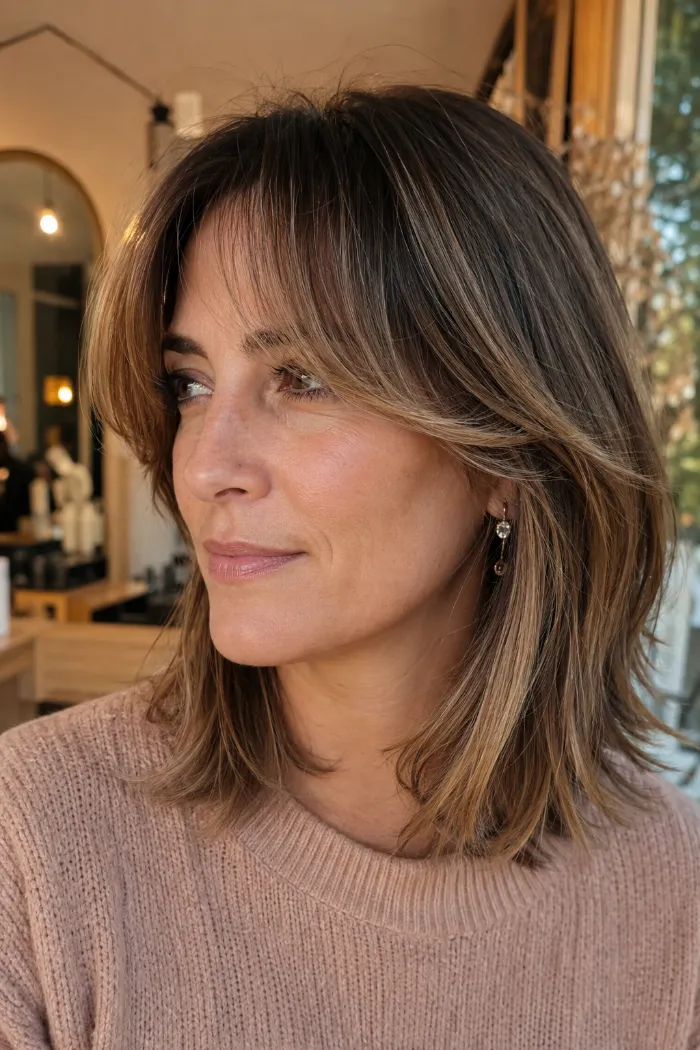
Fine Hair Shag Lob with Swoopy Bangs
Swoopy bangs — long, sweeping fringe that curves gently across the forehead — are a brilliant choice for women with fine hair because they add visual weight exactly where the face needs it most. This style pairs those sweeping bangs with a classic shag lob, giving the overall cut a retro-modern feel that works across age groups. I particularly love this look on women in their 50s and 60s who want something that feels current without being trendy. A round brush blowout on just the bang section keeps it polished while the rest of the hair air-dries for a natural finish.
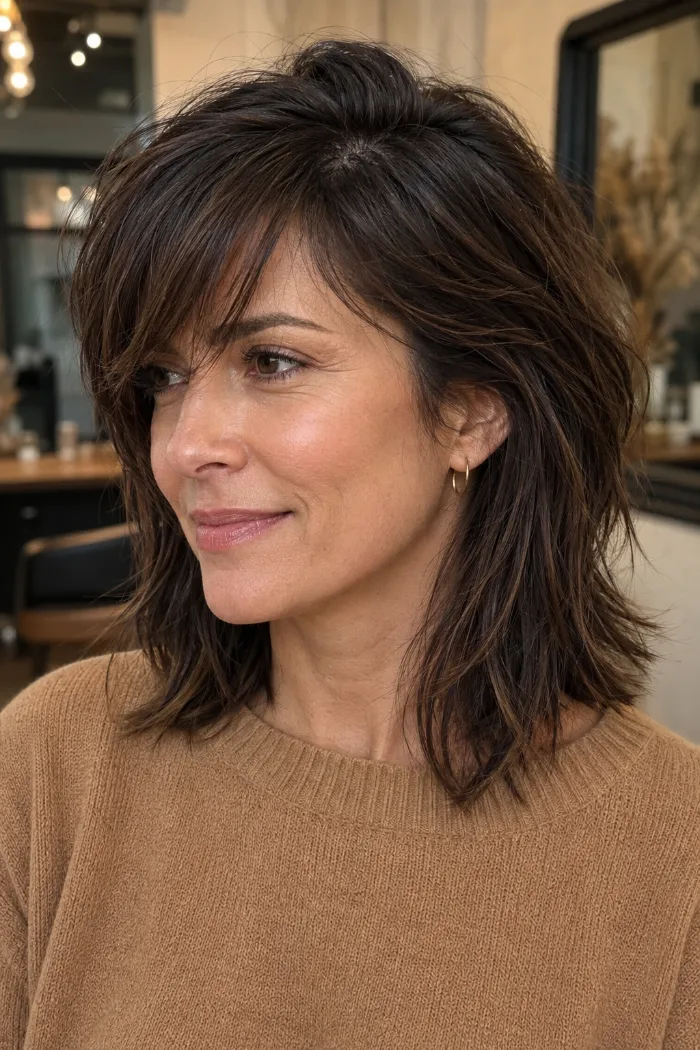
Shaggy Lob with Deep Side Part and Crown Lift
A deep side part is a classic styling tool for adding volume to fine hair, and when combined with the layered architecture of a shaggy lob, the result is exceptional. The crown lift in this cut — achieved by cutting layers shorter at the top — creates natural height that persists even as the day goes on. This is an excellent option for women who struggle with flat roots. I recommend using a lightweight volumizing mousse at the roots before blowdrying, then sweeping the part to whichever side feels most natural to you.
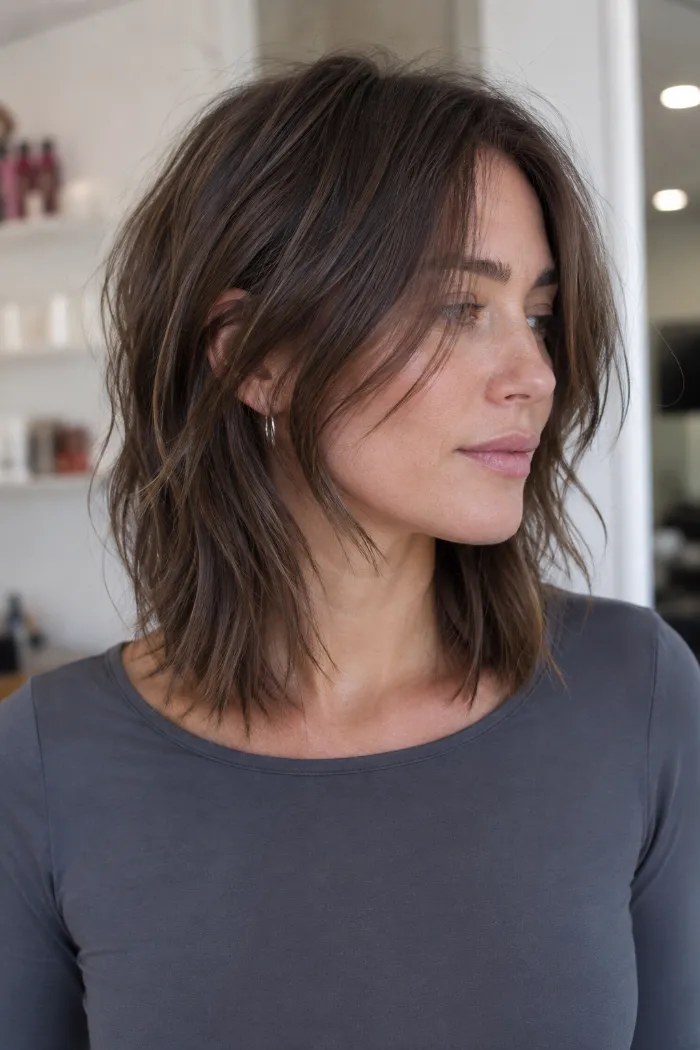
Modern Shag Lob with Tapered Ends
Tapered ends might sound like they would remove bulk from already-fine hair, but the opposite is actually true when they’re done correctly. By tapering the very tips of each layer, a skilled stylist removes the blunt, heavy weight that drags fine hair down. What remains is a cut that springs up, moves freely, and holds texture beautifully. This modern interpretation of the shag lob is polished enough for professional environments but relaxed enough for weekends. If you are exploring hairstyles for women over 40 with round faces, this tapered-end shag lob is worth adding to your consultation board — the layers slim and elongate beautifully.

Razored Shaggy Lob with Wispy Brow Bangs
The razor cut is the foundation of the shaggy lob’s signature look, and wispy brow-grazing bangs are its most flattering companion. A razor removes weight in a sliding, slicing motion that leaves ends with a soft, feathery finish rather than a hard line. For fine hair, this is a game changer — the hair moves, bends, and catches light in a way that blunt cuts never allow. Wispy brow bangs keep the look youthful and soft without overwhelming a delicate facial structure. This is one of my top recommendations for clients in their 60s who want something modern and a little edgy.

Airy Collarbone Shaggy Lob with Curtain Fringe
This is the lightest, most ethereal version of the shaggy lob — it is designed to maximize movement and minimize weight, which is exactly what fine hair needs. The collarbone length keeps the hair at a manageable density zone, and the curtain fringe adds just enough structure at the front to keep the look intentional. I recommend this cut for women whose hair tends to go limp by midday — the strategic layer placement means that even as the style relaxes throughout the day, it still looks beautifully undone rather than flat. A quick scrunch with a texturizing spray will revive it in seconds.

Feathered Shaggy Lob with Side-Swept Fringe
Feathered layers were the hallmark of glamorous 1970s hair, and they have returned in a thoroughly modern form in today’s shaggy lobs. A side-swept fringe that blends into the face-framing layers gives this cut a seamless, sophisticated quality. I love this style for women who are transitioning from longer hair and want a cut that still feels substantial. The feathered technique works beautifully on fine hair because it distributes the hair’s natural oils more evenly, keeping the style looking fresh longer. For women exploring long hair over 60 and aging gracefully, this feathered shag lob is the perfect stepping stone before committing to a shorter cut.
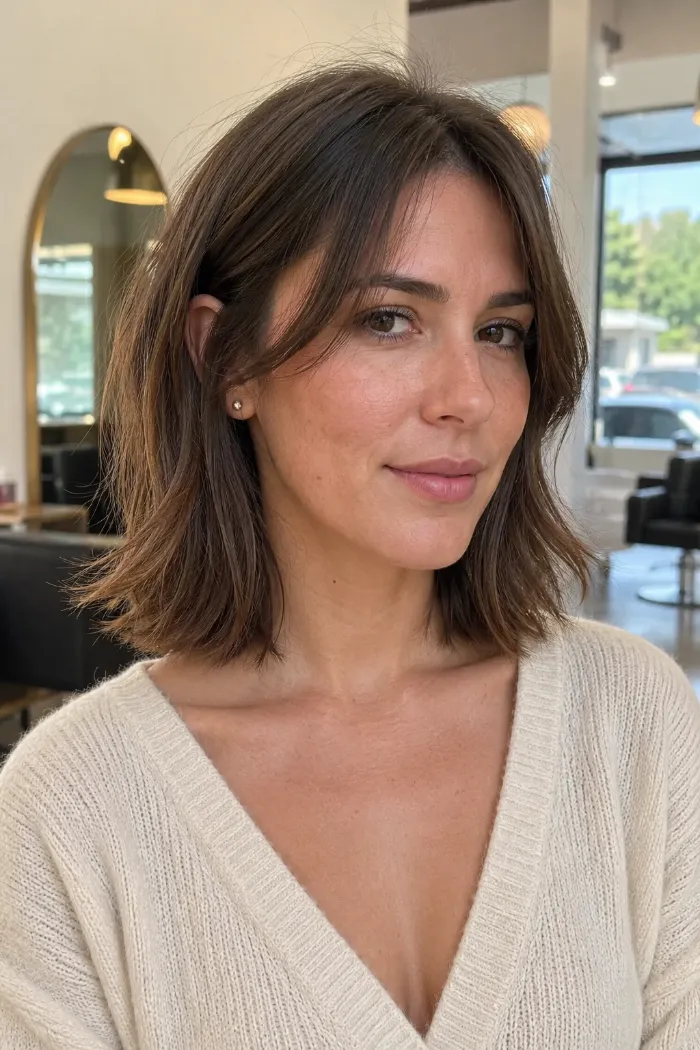
Minimal Shag Lob with Invisible Layers
Not every woman wants a shag that screams “textured.” The minimal shag lob is for the client who wants movement and body but prefers that the cut look seamless and understated from the outside. Invisible layers — layers that blend so completely you cannot see where one ends and the next begins — give fine hair lift and flow without the obvious “choppy” look some women want to avoid. This is a wonderfully versatile style that can be worn sleek for formal occasions or diffused for a more relaxed finish. It photographs beautifully and suits virtually every face shape.
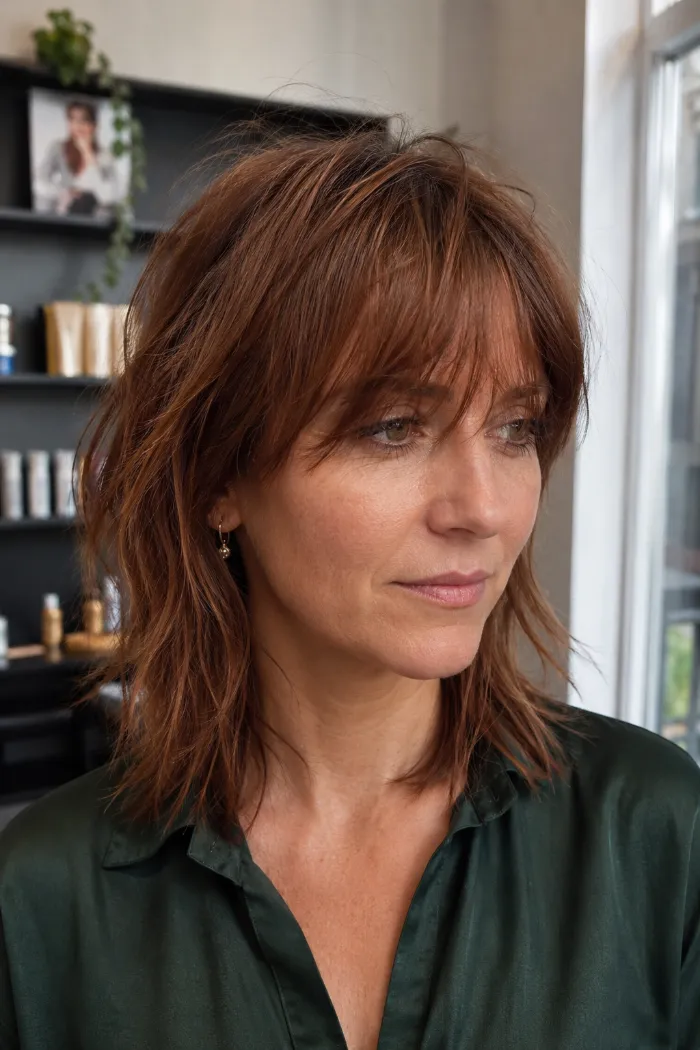
Piecey Shag Lob with Long Wispy Fringe
Piecey texture is achieved by using a texturizing product to separate individual strands, creating a defined but undone look that adds perceived volume and visual interest. A long wispy fringe — one that grazes the cheekbones rather than landing at the brow — gives this style a soft, romantic quality that I find extremely flattering on women in their 40s and 50s. The fringe can be styled straight across for a more dramatic effect or swept to one side for something gentler. Fine hair actually holds piecey texture well because individual strands are easier to separate and define than thicker hair.
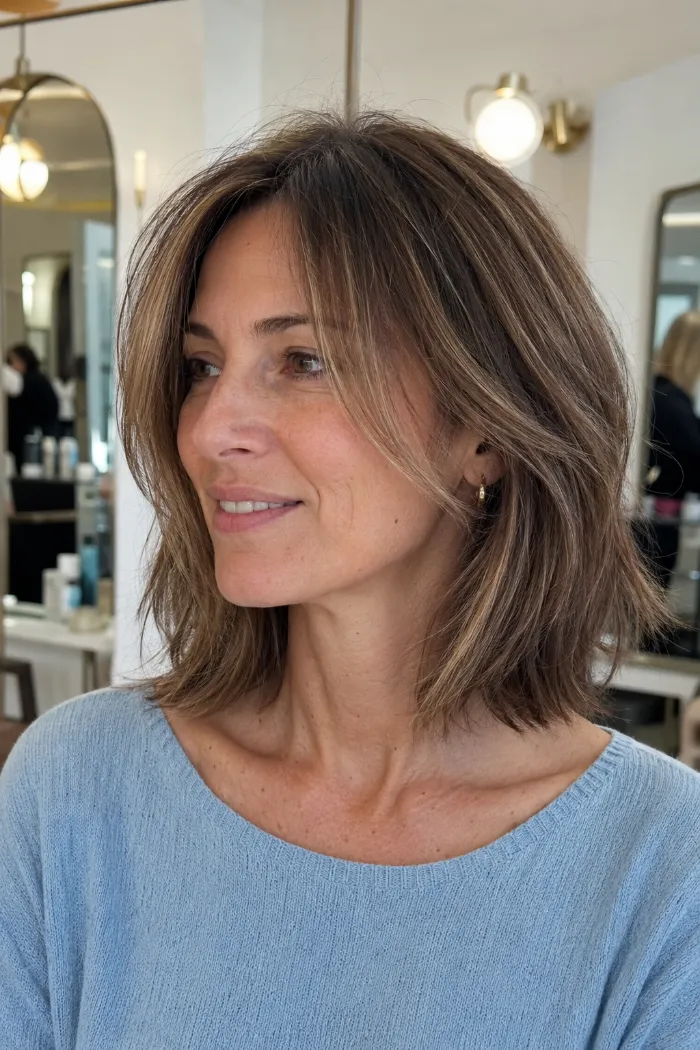
Rounded Shaggy Lob with Soft Graduation
Graduation — where the hair is slightly shorter underneath and builds to longer length on top — adds a subtle structural support that is particularly valuable for fine hair. The rounded shape prevents the look from feeling too angular or severe, keeping it soft and approachable. This style is especially well-suited for women with oval, heart, or oblong face shapes who want a cut that balances their features without overcomplicating the morning routine. A light hold cream worked through the ends after washing will help the graduation maintain its beautiful curve throughout the day.
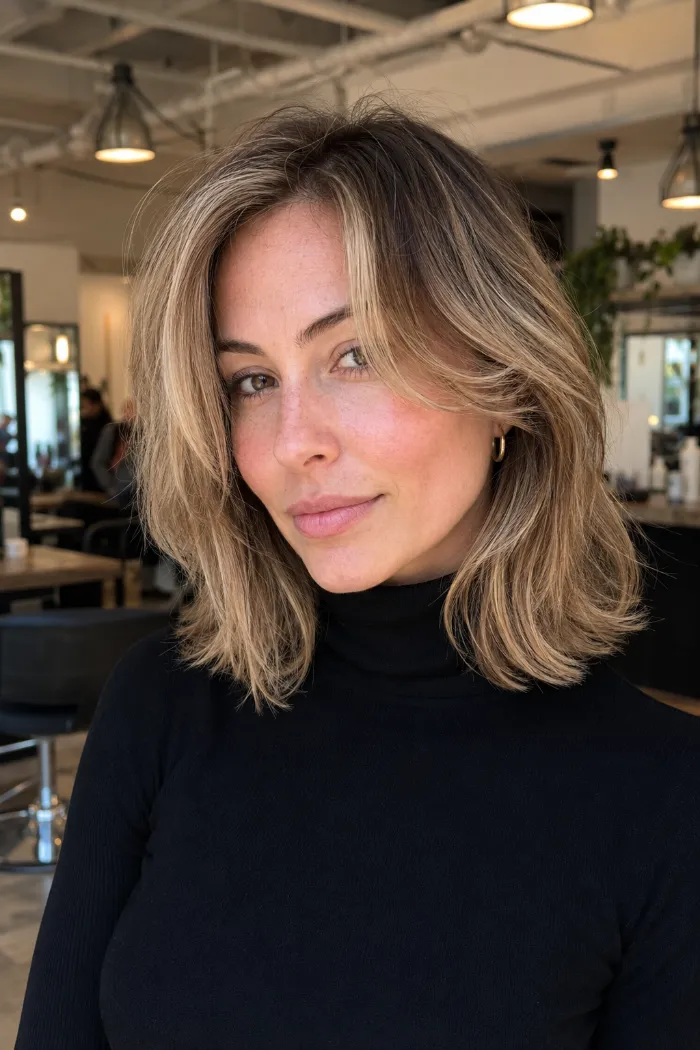
Shaggy Lob with Flipped Face Layers
Face layers that are cut to flip outward — rather than curling under — create a bold, retro silhouette that is having a significant moment in hair right now. For fine hair, this flip does double duty: it adds volume by turning the ends away from the head, and it creates a striking visual frame around the face. I have seen this style completely transform the look of women who felt their fine hair was too flat to hold any shape at all. A large round brush and about two minutes of blowdrying on the ends is all it takes to achieve that confident, retro-forward flip every morning.
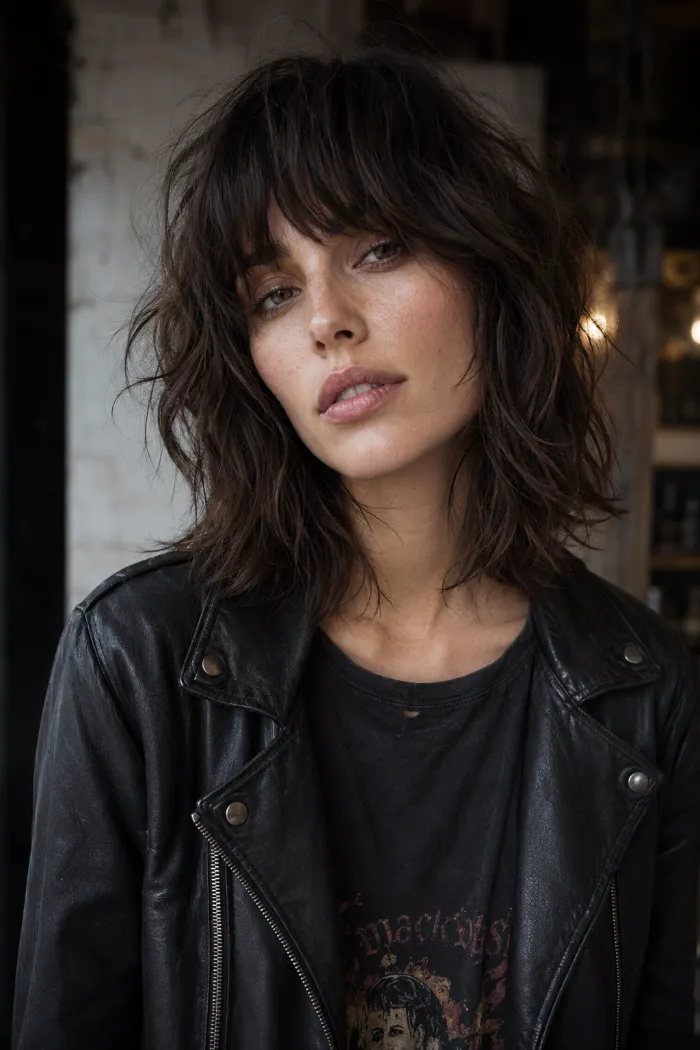
Soft Grunge Shag Lob with Piecey Fringe
The soft grunge shag is a contradiction that works beautifully in practice — it has the lived-in, slightly disheveled energy of grunge but with all the softness and wearability of a well-crafted cut. Piecey fringe that falls across the forehead in soft, separated strands is the defining feature here. For women in their 40s who want a style that feels current and a little unexpected, this is one of my most exciting recommendations. The key to keeping it on the right side of polished: use a light texturizing spray rather than a heavy wax, so the pieces stay soft and mobile rather than stiff. Women who enjoy bold color experiments might also love soft autumn hair color tones — warm coppers and bronzes look stunning against this kind of textured, layered cut.
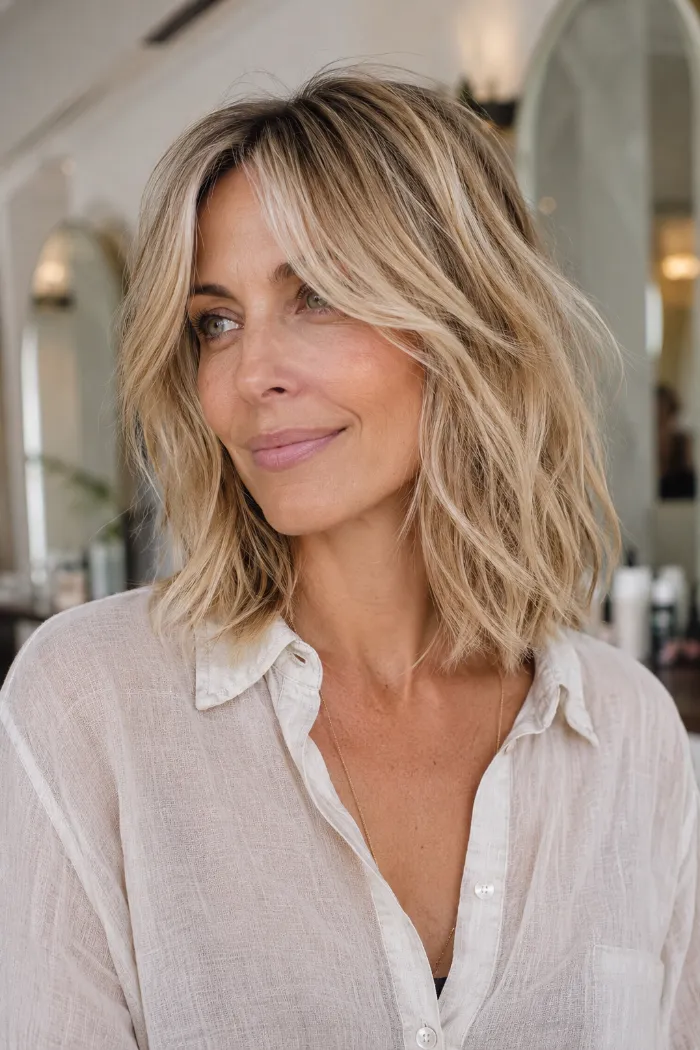
Textured Blonde Shaggy Lob with Root Shadow
Root shadow — a technique where a darker tone is blended at the roots to create depth — is one of the most practical color decisions a fine-haired woman can make. It creates the illusion of density at the root, where fine hair is most vulnerable to looking flat, while the lighter blonde lengths add brightness and life. Paired with a textured shaggy lob, this color-cut combination is a masterclass in making fine hair look significantly fuller than it actually is. It also means fewer touch-up appointments because the regrowth blends naturally into the root shadow rather than creating a visible line.

Shoulder-Grazing Shag Lob with Razored Ends
A shoulder-grazing length is the sweet spot for fine hair management — long enough to feel feminine and versatile, short enough to maintain body and movement without weight dragging the hair flat. Razored ends at this length create a beautiful, feathery finish that catches light and stays lively throughout the day. I recommend this cut to my clients who have been growing their hair out and want to keep their length while gaining much-needed texture and life. For women who love an occasional updo, this length still allows for a pulled-back style — browse some updo hairstyle ideas that work beautifully with a shoulder-grazing shag lob.
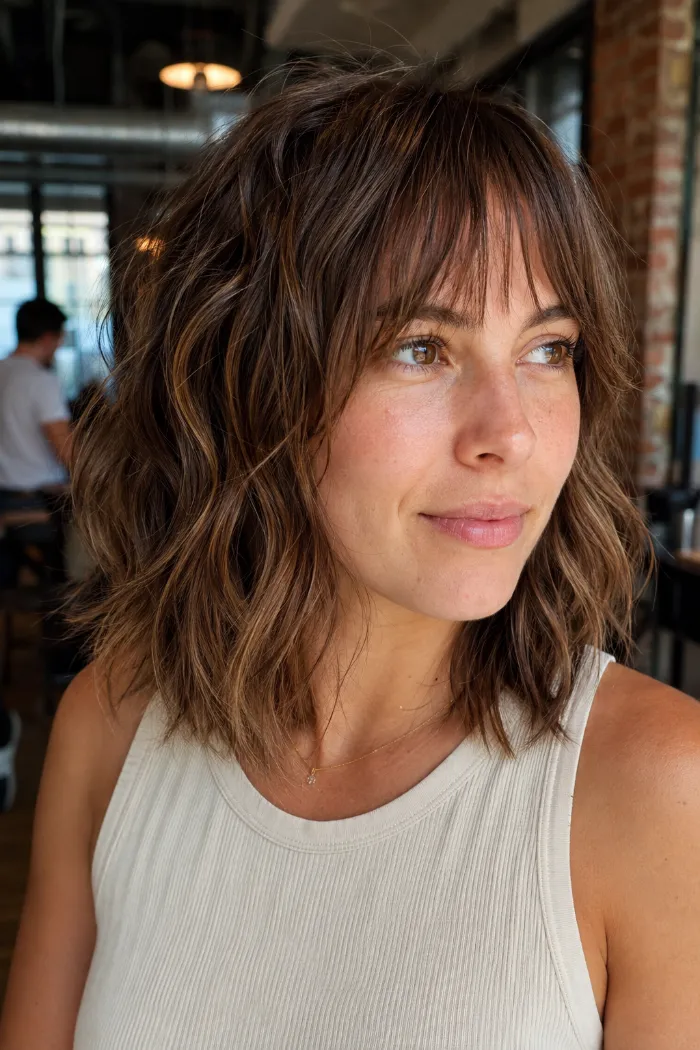
Wavy Shaggy Lob with Barely-There Bangs
Barely-there bangs — those ultra-long, wispy fringe pieces that barely register as bangs at all — are having a major moment, and for good reason. They soften the forehead without committing to a full bang, and they require virtually no daily styling effort. When paired with a wavy shaggy lob, those soft fringe pieces blend naturally into the texture of the rest of the cut. I often suggest this option to clients who have been curious about bangs for years but never quite committed. You can always let them grow without going through an awkward phase, because at this length they simply become extra face-framing layers.

Tousled Shaggy Lob with Short Crown Layers
Short layers at the crown are the secret weapon against the number one complaint I hear from fine-haired clients: flat roots. By cutting the topmost layer shorter — sometimes just a few inches longer than a pixie at the crown — the hair at the top gains genuine structural support rather than relying on products alone. The rest of the shag lob can be as long and flowing as you like; those short crown layers will keep the whole style lifted. A tousled, undone finish suits this cut perfectly and is achieved easily with a diffuser or simply by scrunching a texturizing mousse through towel-dried hair.
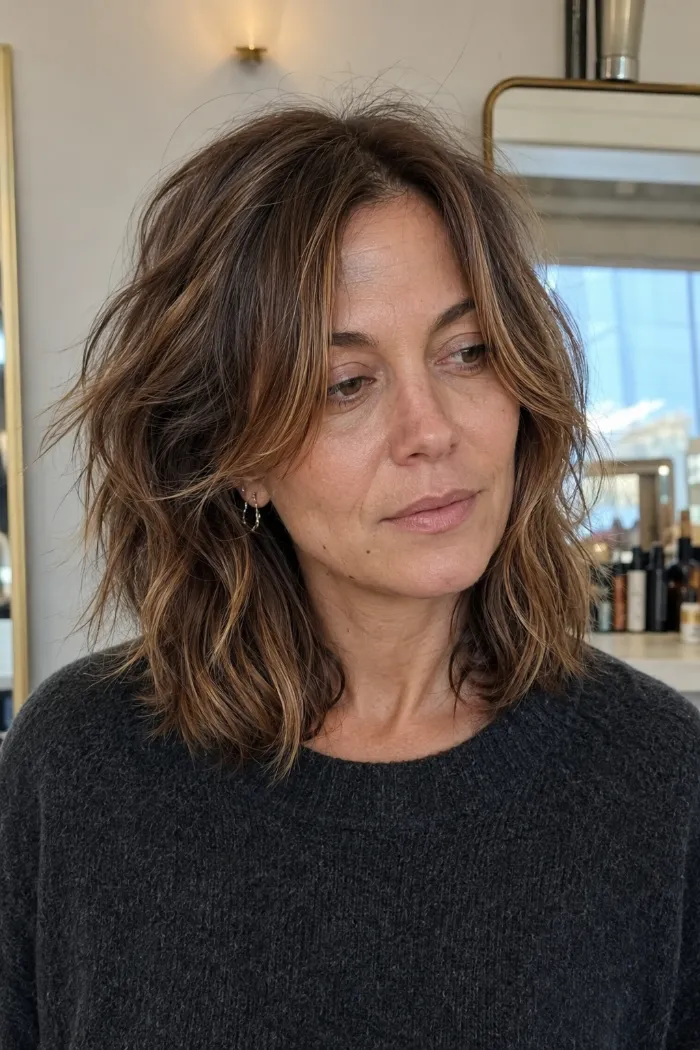
Soft Wolf Lob for Fine Hair
The wolf cut is a hybrid between a shag and a mullet, and the “lob” version brings all of that dramatic texture and volume into a more polished, manageable length. For fine hair specifically, the wolf lob’s stacked crown layers create extraordinary volume that holds up all day — even without professional blowdrying skills. This is a cut that looks incredible on women who are comfortable with a bold, fashion-forward style. The soft version, as shown here, keeps the lengths longer and the transition between sections more gradual, making it wearable for everyday life rather than just editorial shoots. Women who love adventurous styles might also enjoy browsing young women’s hairstyle inspiration for fresh ideas to bring to their stylist.
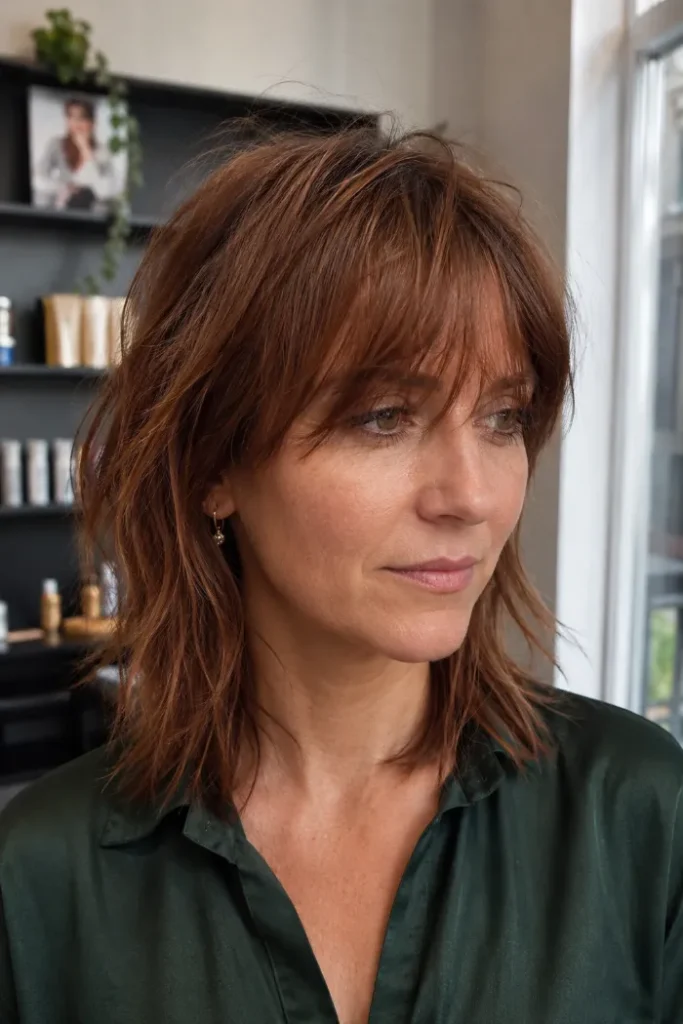
Piecey Shag Lob with Long Wispy Fringe (Portrait)
This portrait-orientation view of the piecey shag lob with long wispy fringe gives a stunning close-up of how the separated layers interact with the fringe. You can see clearly how each piecey section creates its own shadow and highlight, giving fine hair the multidimensional quality that it so often lacks. Photograph this shot and bring it to your salon consultation — it communicates the texture, the fringe length, and the overall spirit of the cut in a single image that a stylist can reference immediately.
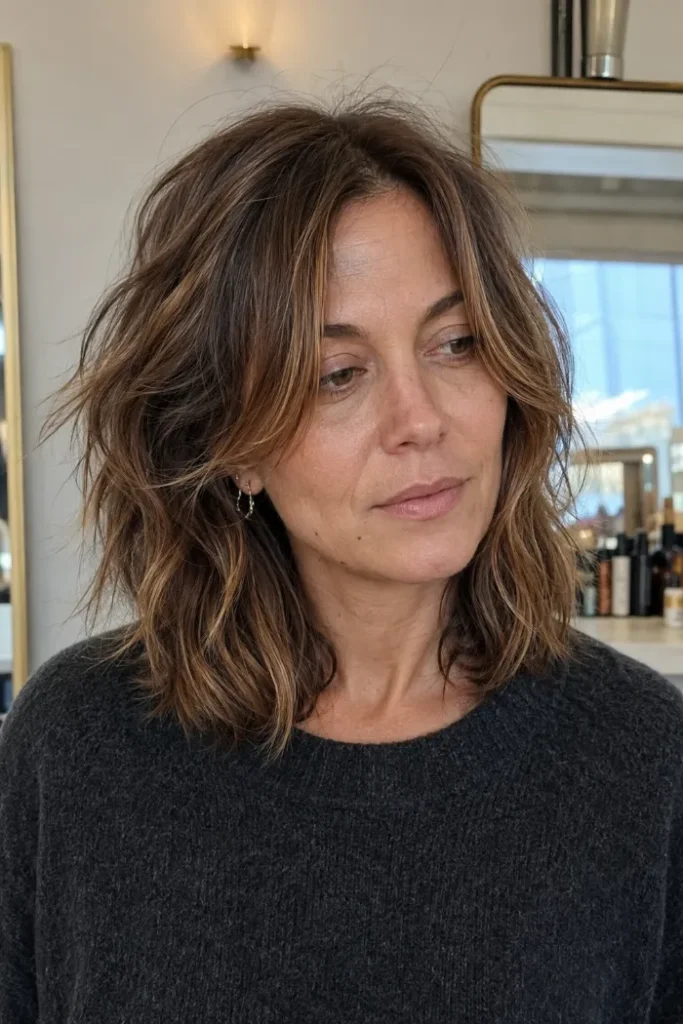
Soft Wolf Lob for Fine Hair (Portrait)
Seen from this angle, the soft wolf lob reveals the dramatic volume architecture built into the crown section. The short layers at the top contrast beautifully with the longer lengths below, creating a silhouette that is both edgy and elegant. This portrait view is particularly useful for showing how the style behaves at natural light — fine hair can look translucent or flat in bright light, but the layered construction of the wolf lob ensures that there is always dimension and visual weight. If you have been hesitant about whether this cut will work on your hair, I want to reassure you: the wolf lob was practically made for fine-haired women.
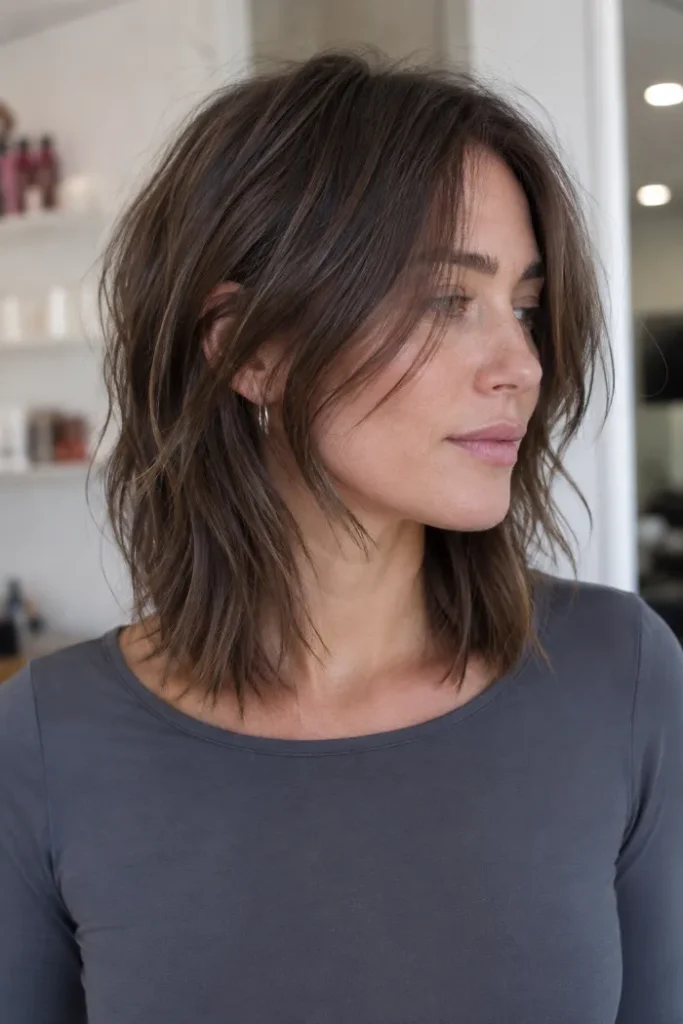
Modern Shag Lob with Tapered Ends (Portrait)
This close-up portrait of the modern shag lob with tapered ends illustrates the precision behind what looks like a casually effortless cut. Each layer tapers to a soft, fine point rather than ending in a blunt line, allowing layers to stack and overlap in a way that looks organic and full. Notice how the crown area sits slightly higher than the ear-level layers — that architectural quality is what gives fine hair its perceived thickness. This is a cut that benefits enormously from a good initial blowout; the tapering holds the shape through multiple air-dry cycles afterwards.
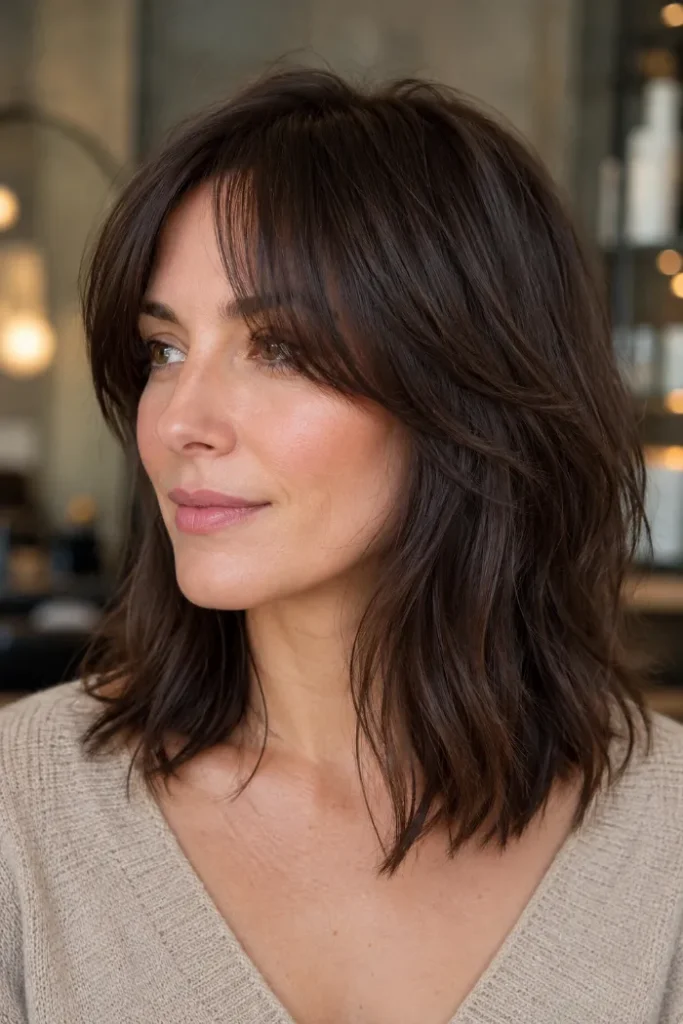
Brunette Shaggy Lob with Soft Curtain Bangs (Portrait)
This portrait angle on the brunette curtain bang shag lob shows the beautiful way the bangs part naturally and frame the upper face. Fine brunette hair often looks its most dimensional in this lighting because individual strands catch the light in a way that thicker hair sometimes obscures. I want my clients who are worried about going darker with fine hair — fearing it will look thin — to see images like this one, which demonstrate that rich brunette tones combined with the right cut create an incredibly full, lustrous result. A glossing treatment every six to eight weeks will keep that depth and shine at its peak.
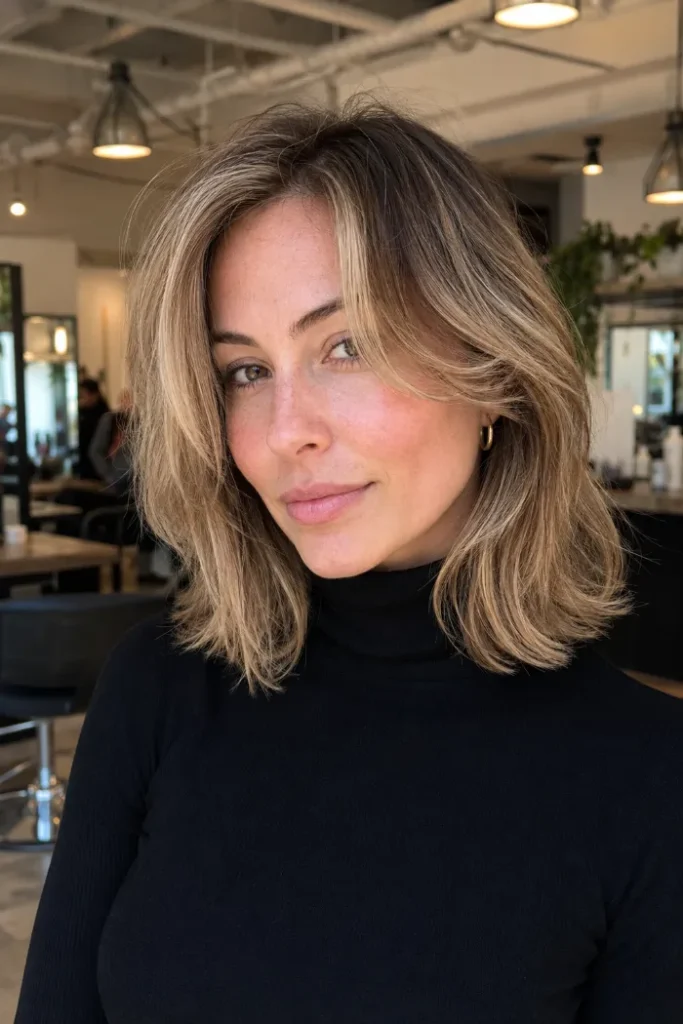
Shaggy Lob with Flipped Face Layers (Portrait)
The flipped face layers in this portrait view show just how much volume a simple outward curl at the ends can create. The hair appears to be twice as dense as it might at rest because the outward flip adds physical dimension and negative space around the face. I find that clients who choose this style often get compliments on their “thick hair” from people who see them post-haircut — a wonderful confidence boost for women who have long felt self-conscious about their fine strands. This look is achievable with a large barrel curling wand used briefly on the ends in an outward direction, or with a round brush during blowdrying.
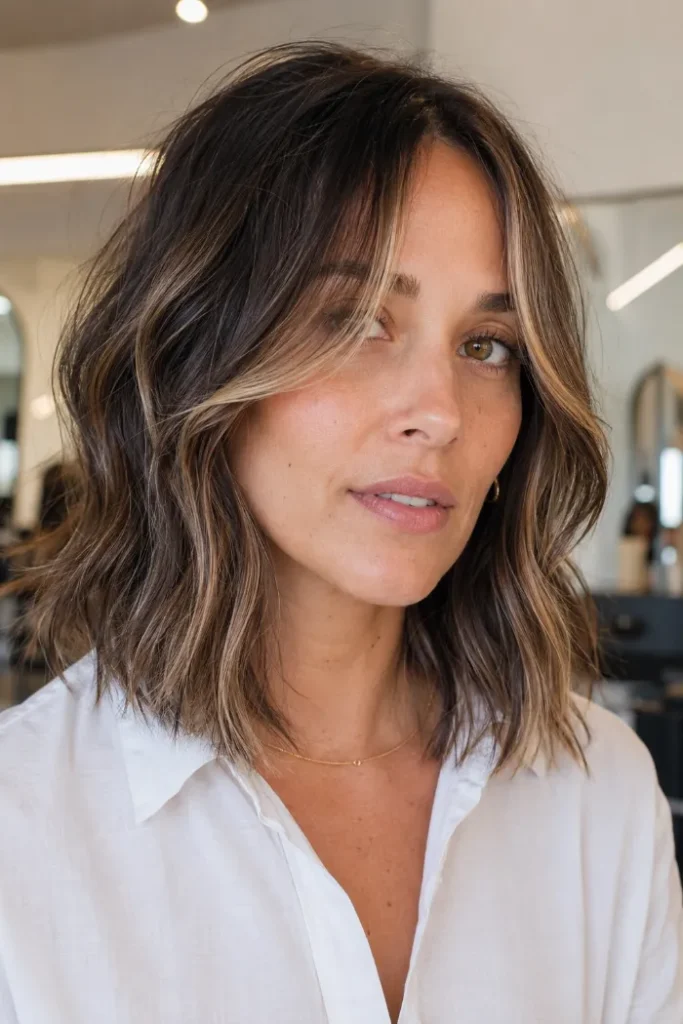
Collarbone Shag Lob with Soft Money Piece (Portrait)
Seen in this close-up portrait view, the money piece on this collarbone shag lob is subtler and more lived-in looking than a classic chunky highlight — it is more of a brightening around the face than a defined stripe. This is the approach I recommend for women who want the brightening effect of a money piece without it looking too deliberate or high-maintenance. Fine hair responds beautifully to this technique because the lightened pieces literally catch and reflect more light, making the hair appear fuller and more vital. This style is on my top-three list for clients in their 50s who are transitioning toward lighter, more luminous color.

Fine Hair Shag Lob with Swoopy Bangs (Portrait)
This portrait view of the swoopy bang shag lob captures the dramatic sweep of the fringe in a way that the wider shot cannot. You can see how the bang section takes up significant visual real estate across the forehead, creating a flattering horizontal line that balances longer face shapes or draws attention away from a high forehead. For fine hair, this length of bang — longer than a traditional fringe, shorter than a full curtain bang — hits a sweet spot where the hair has enough weight to hold the sweep without needing heavy product to stay in place throughout the day.
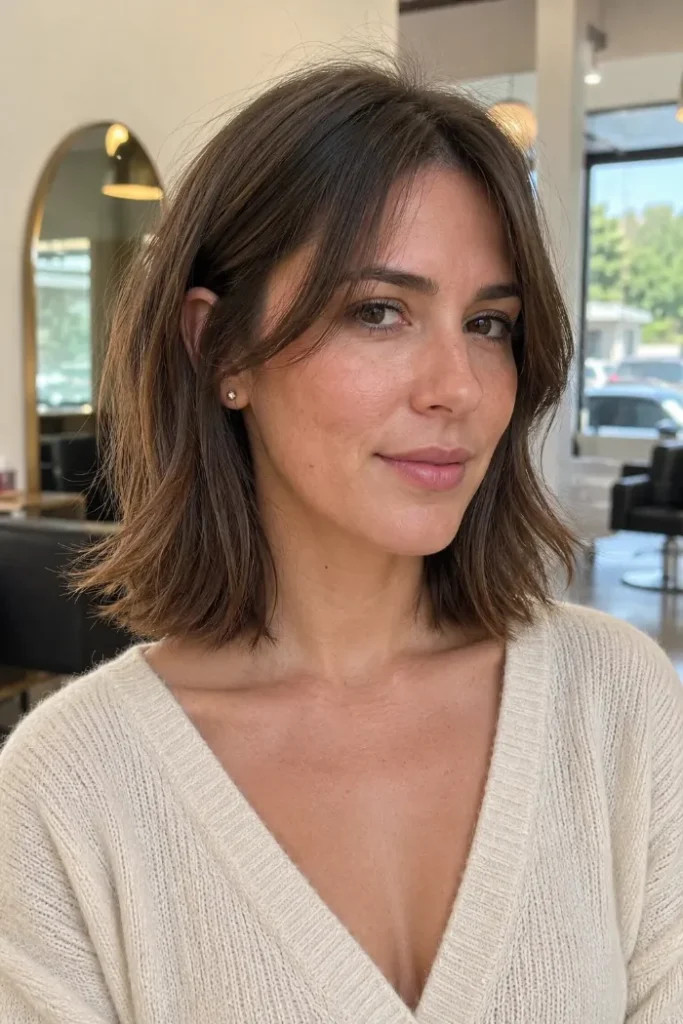
Minimal Shag Lob with Invisible Layers (Portrait)
This portrait angle reveals the precise craftsmanship required to execute invisible layers correctly. From this vantage point, you can see that the hair appears both full-bodied and completely seamless — there are no obvious lines where layers begin and end. The surface of the hair looks smooth and healthy rather than choppy or heavily textured. This is the version of the shaggy lob I recommend to clients who work in conservative professional environments and need their hair to look impeccably polished. It is the Swiss Army knife of shag lobs: it looks formal when blown out and beautifully casual when air-dried.
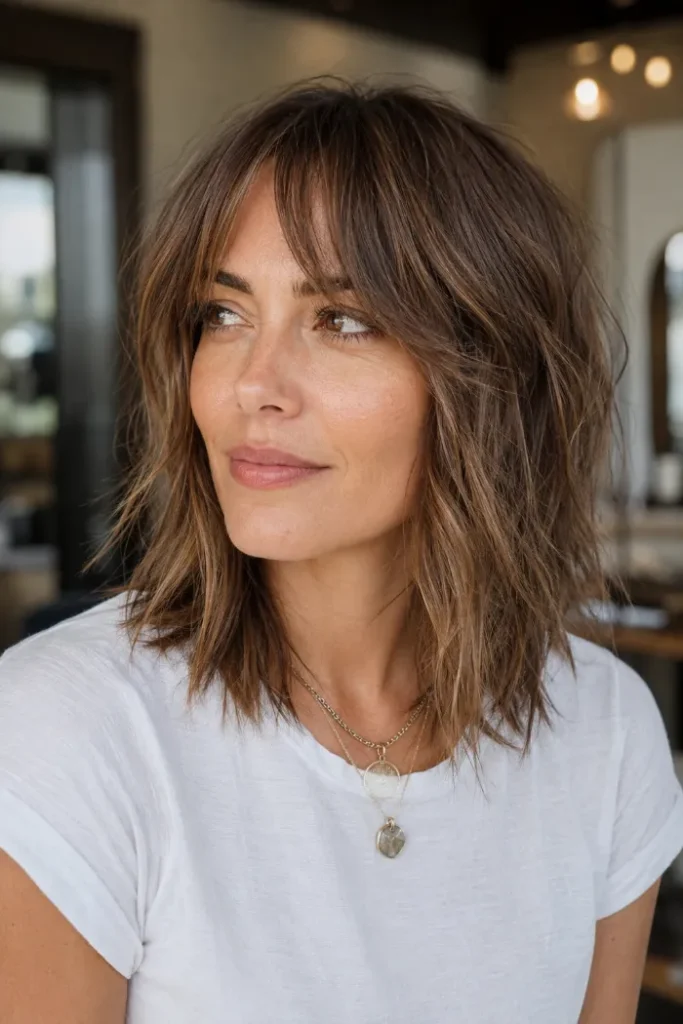
Choppy Collarbone Lob with Bottleneck Bangs
Bottleneck bangs — wide at the part and narrow at the temples — are one of the most flattering bang styles for women with fine hair because they frame the widest part of the face while keeping the temples light and open. The choppy collarbone lob they’re paired with here brings the same energy to the lengths: deliberate, confident cuts that celebrate texture over smoothness. I have found this combination works particularly well for women who have felt their hair has become thinner or less lively over the years. Rather than hiding that reality, this cut leans into it and turns fine texture into a style asset.

Rounded Shaggy Lob with Soft Graduation (Portrait)
The portrait view of the rounded graduation lob reveals the beautiful C-shaped perimeter line that defines this cut. Graduation — meaning the hair is built longer on top and shorter underneath — is a structural technique that supports fine hair from below, preventing it from collapsing under its own weight. This is a particularly smart cut for women who notice their hair getting fine at the nape and wanting more fullness there. A boar bristle brush blowout on this style will emphasize the rounded shape and add incredible shine, making fine hair look rich and healthy.

Feathered Shaggy Lob with Side-Swept Fringe (Portrait)
In this portrait view, the feathering technique is visible in the way each layer lifts slightly away from the head rather than lying flat. Fine hair treated with feathered layers takes on an almost three-dimensional quality — the strands interweave and separate in a way that creates genuine depth. The side-swept fringe in this close-up shows a beautifully tapered transition from bang to cheekbone-length piece, giving the face a soft, open frame. This is one of the most frequently pinned styles I have seen from my clients in their 60s, and for good reason — it is timeless, effortless, and deeply flattering.

French Shaggy Lob with Baby Curtain Fringe (Portrait)
This portrait view of the French shaggy lob captures the exact quality I try to describe when explaining the “Parisian” effect to clients: it looks like you simply woke up this way. The baby curtain fringe sits lightly across the upper forehead, parting naturally in the center and curving softly to each side without stiffness or product buildup. Fine hair creates this effect naturally because the strands are light enough to move with minimal encouragement. One pass of a fine-tooth comb and a touch of lightweight oil on the fringe in the morning is genuinely all the styling this look requires.

Shaggy Lob with Deep Side Part and Crown Lift (Portrait)
This portrait view dramatizes the crown lift effect beautifully — you can see clearly how the hair at the top of the head sits higher and with more volume than the lengths below, creating a silhouette that reads as genuinely full-bodied. The deep side part also creates an interesting asymmetry that is visually engaging and prevents the style from looking too “done.” For women who have been struggling with flat roots for years, seeing a portrait image like this one can be genuinely revelatory — this kind of volume is achievable without backcombing or heavy volumizing products when the cut is structured correctly.

Airy Collarbone Shaggy Lob with Curtain Fringe (Portrait)
From this close-up angle, the “airy” quality of this collarbone shag lob is unmistakable — there is literal space between the layers, creating the kind of light-filled, weightless texture that fine hair dreams of. The curtain fringe parts cleanly in the center without any fussiness, reflecting how well this style works with fine hair’s natural tendency to separate and fall. This is the portrait I show clients who say they “can’t have voluminous hair” — I want them to see what strategic layer placement does when it removes weight in exactly the right places and keeps it where it counts.
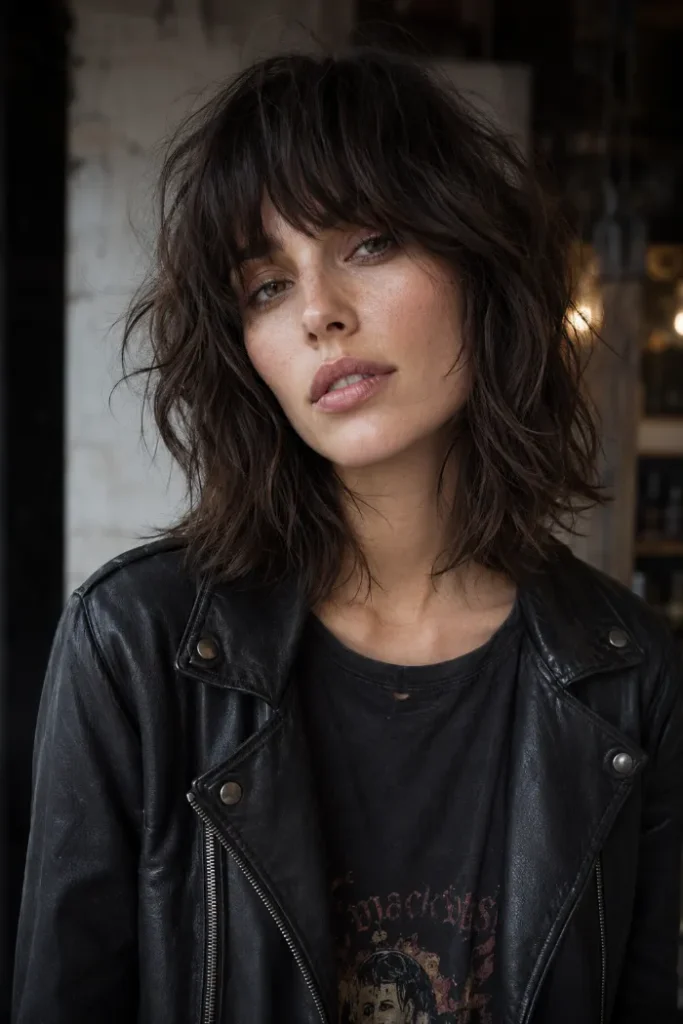
Soft Grunge Shag Lob with Piecey Fringe (Portrait)
This close-up portrait of the soft grunge shag lob shows how deliberately separated the fringe pieces are — each one is a distinct, defined strand rather than a continuous sheet of hair. That piecey quality is what makes this style feel modern and editorial rather than simply “messy.” For fine hair, this effect is easier to achieve than it is on thick hair because each individual strand has enough definition and lightness to stay separated once styled. A salt spray or light texturizing mist, scrunched through the fringe after drying, will recreate this look effortlessly at home.
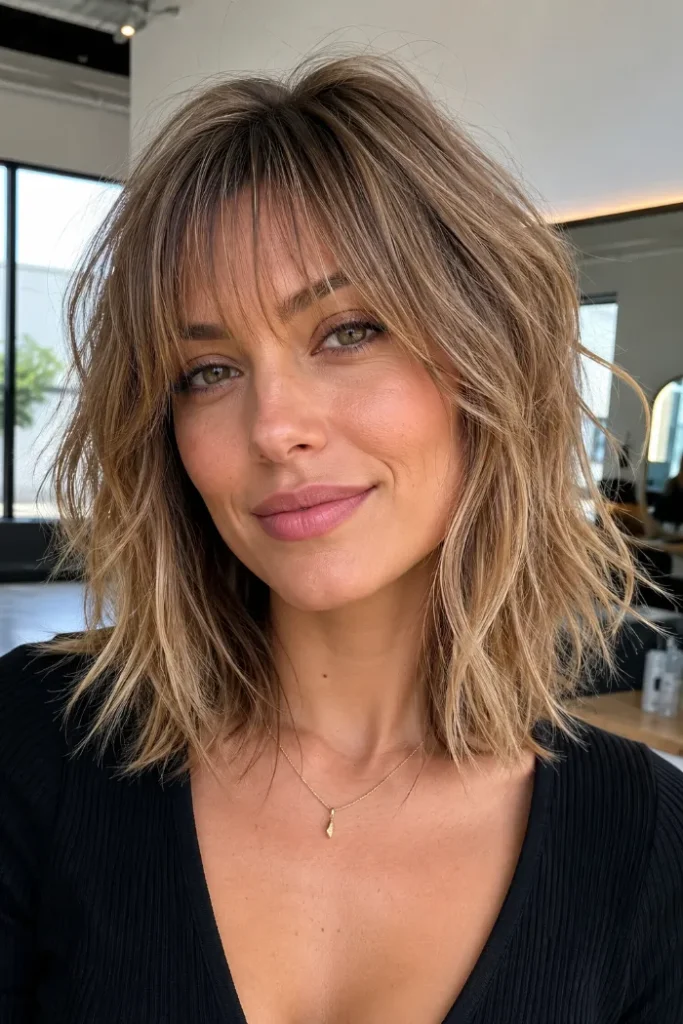
Razored Shaggy Lob with Wispy Brow Bangs (Portrait)
This portrait view shows the razor-cut finish at close range — you can see how the hair tips end in soft, tapered wisps rather than blunt edges. Those wispy brow bangs that barely graze the eyebrow make the eyes appear more open and defined. On women who have noticed their brow area changing with age — whether from shifts in brow density or forehead volume — this fringe placement can be a subtle but meaningful way to rebalance the upper face. I recommend this cut to women of all ages but find that clients in their 50s and 60s who try it are particularly delighted with the youthful energy it brings back to their overall look.
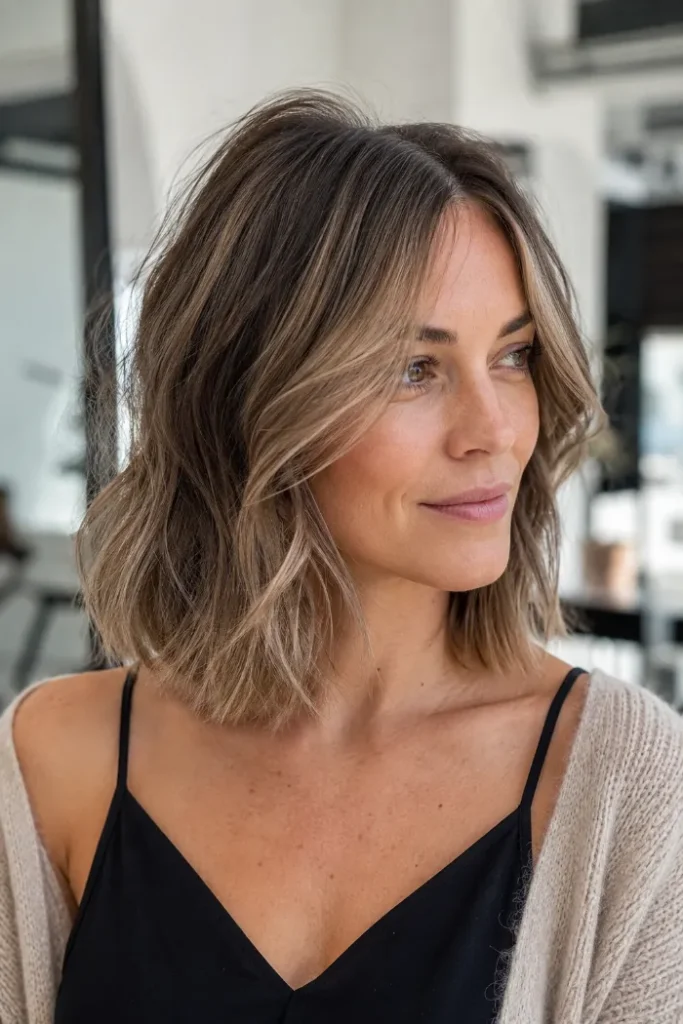
Shoulder-Grazing Shag Lob with Razored Ends (Portrait)
This portrait view highlights the beautiful way razored ends on a shoulder-grazing lob interact with different hair thicknesses within the same head of hair. Fine hair often has variation — some areas are finer than others — and razored ends accommodate that variation gracefully, blending seamlessly rather than emphasizing it. The shoulder-grazing length seen from this angle also demonstrates the versatile styling potential: the ends can be curled under for a classic look, flipped out for a retro silhouette, or left natural for an undone modern finish. Women who sometimes wear their hair pulled back will appreciate that this length still allows for a simple updo hairstyle on days when they want their hair off their face.
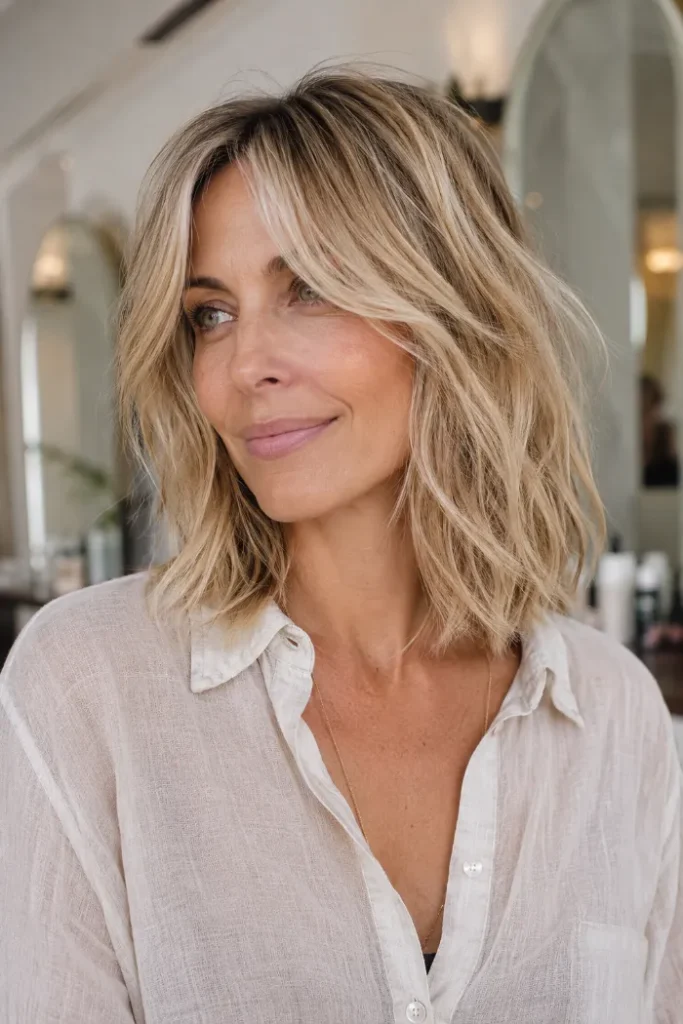
Textured Blonde Shaggy Lob with Root Shadow (Portrait)
This portrait view lets you study the root shadow technique in detail — the way a darker tone at the scalp transitions through mid-tones into the lighter blonde lengths creates extraordinary depth even in fine hair. What you are seeing here is not just a haircut; it is a carefully constructed optical illusion of density, using both color and texture to make the hair appear significantly richer than its actual strand thickness. Women who are managing fine hair as they move through their 40s and 50s and want to maintain a blonde palette without constant root appointments will find the root shadow approach genuinely life-changing in terms of maintenance frequency and hair health.
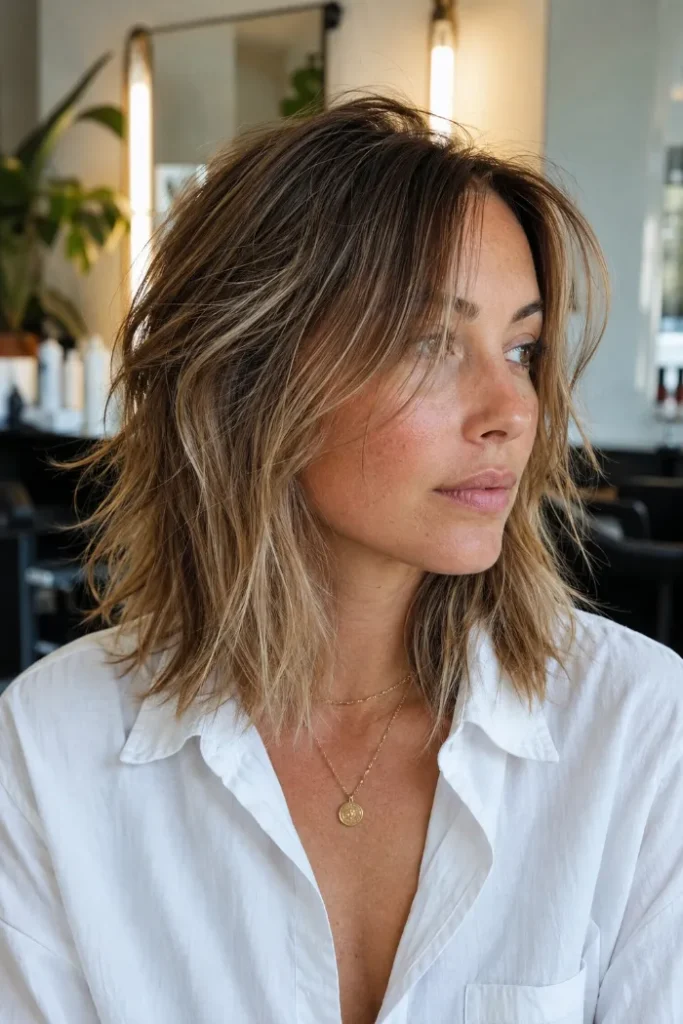
Tousled Shaggy Lob with Short Crown Layers (Portrait)
This portrait view of the tousled shag lob beautifully demonstrates how short crown layers create genuine elevation rather than product-dependent volume. The tousled finish — achieved here with minimal styling intervention — shows how fine hair, when layered with purpose at the crown, holds shape and movement throughout the day. I love this portrait for clients who are skeptical about whether a haircut alone can transform their fine hair, because the answer is visible in every strand here. This is a style that gets better as the day goes on, relaxing from a fresh blowout into an authentically lived-in texture by evening. Women considering short cuts might also like to see short hairstyle inspiration for older women over 50 as a counterpoint reference.
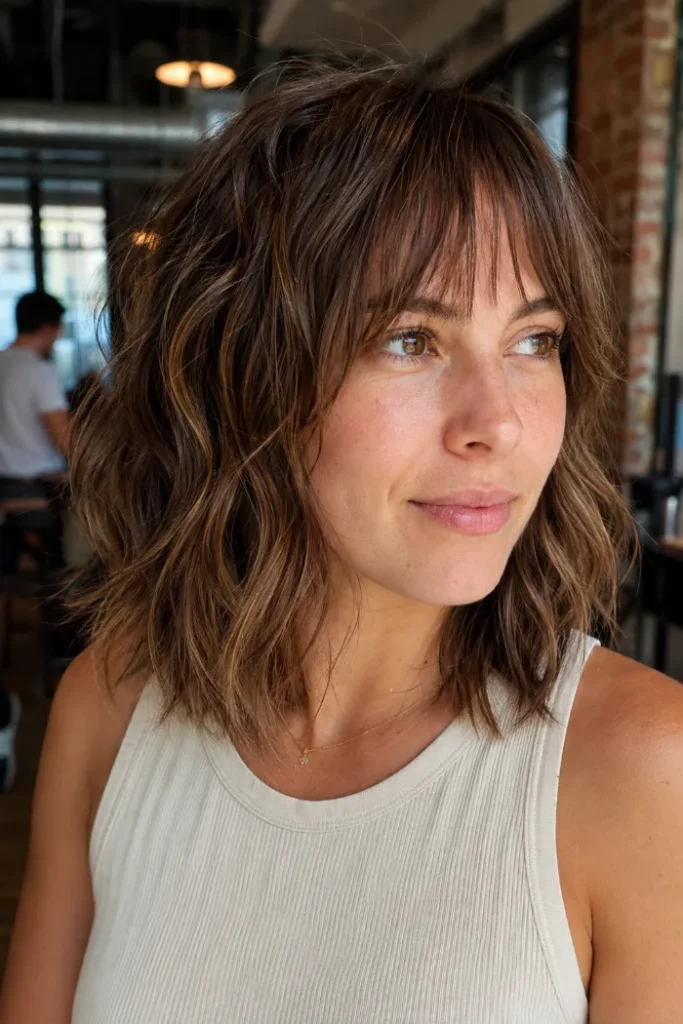
Wavy Shaggy Lob with Barely-There Bangs (Portrait)
This portrait of the wavy shaggy lob with barely-there bangs reveals how naturally the fringe integrates into the rest of the wavy texture — there is no obvious demarcation between bang and layer. For women who want the softening effect of fringe at the forehead but dislike the idea of a hard bang line, this ultra-blended approach is the answer. Fine wavy hair creates this effect particularly well because the natural wave pattern allows the fringe to curve and blend rather than hanging straight and separately from the layers beneath. A touch of curl cream or wave-enhancing spray through damp hair and a hands-off air-dry approach will keep this look exactly as relaxed and beautiful as shown here.
How to Style Shaggy Lobs for Fine Hair at Home
Styling a shaggy lob on fine hair is simpler than you might expect — the cut itself does most of the work. Here are the techniques I recommend consistently to my clients.
Start with the right products. A lightweight volumizing mousse or foam applied to damp hair at the roots before drying is the single most effective step for fine hair. Avoid heavy creams or oils on the roots entirely — reserve those for the ends only. A texturizing spray applied after drying adds definition and grip to the layers without weighing them down.
Use heat selectively. You do not need to blowdry every layer of a shaggy lob to achieve a great result. Focus your heat tools on the roots and the crown section for volume, then let the lengths air-dry with a texturizing product worked through. This combination reduces heat damage while producing a more authentically tousled, lived-in finish.
Diffuse rather than direct-blow if you have wave. If your fine hair has any natural wave — even a gentle one — a diffuser will enhance that wave and add body simultaneously. Direct high-velocity heat on wavy fine hair tends to smooth and flatten rather than lift. Many women in their 40s and 50s find their hair developing more texture than it had when they were younger, and a diffuser helps them work with that change rather than against it.
Embrace the second-day style. One of the great advantages of a shaggy lob on fine hair is that it often looks better on day two or three, when the layers have relaxed and the texture has settled. A small amount of dry shampoo at the roots and a finger-tousle through the lengths can revive the style beautifully without re-washing or re-styling from scratch.
Hair Care Tips to Keep Your Shaggy Lob Looking Its Best
The health of your hair matters as much as the cut itself. These care habits will support your shaggy lob and keep fine hair looking as full and vibrant as possible.
Wash less frequently. Fine hair benefits significantly from extending the time between washes. Overwashing strips the scalp’s natural oils and leaves fine hair looking even flatter and more vulnerable. Two to three washes per week is ideal for most fine-haired women; a good dry shampoo at the roots on in-between days maintains freshness without disrupting the hair’s natural moisture balance.
Use a scalp-focused shampoo. Fine hair needs volume at the root above all else. Look for shampoos that clarify and lift the scalp rather than heavy moisturizing formulas designed for thick or coarse hair. Save the deep conditioning treatments for the mid-lengths and ends only, and apply them from the ears down.
Protect against heat damage. Fine hair is more vulnerable to heat damage than coarser hair types, and heat-damaged fine hair appears even thinner. Always use a heat protectant spray before any tool contact, and keep curling irons and flat irons at the lower end of the temperature range — fine hair styles easily at 300–350°F rather than the higher settings used for thick hair.
Trim regularly. Shaggy lobs, with their many layers and textured ends, benefit from trims every six to eight weeks. Split ends on fine hair are more visible and make the hair look even thinner and more fragile than it is. A quick dusting of the ends keeps the razored, feathery tips healthy and intentional-looking rather than ragged.
Consider a bond-strengthening treatment. Products in the Olaplex family — or similar bond-repair systems — can make a meaningful difference in the resilience of color-treated fine hair. They work by repairing broken disulfide bonds within the hair shaft, making each strand more resistant to breakage and giving the whole head of hair a healthier, denser appearance. Many of my clients who are also managing grey hair transitions, like those explored in grey hair options for men over 50 (a surprisingly relevant reference for hormonal hair changes that affect texture in both sexes), find bond-repair treatments make the transition smoother and less damaging.
Color Options That Work Beautifully with a Shaggy Lob for Fine Hair
The right color can enhance everything a shaggy lob does for fine hair. Here are the approaches I recommend most often.
Balayage and babylights. Both techniques involve painting or weaving highlights in a way that mimics natural sun-lightening, creating seamless dimension throughout the shaggy layers. On fine hair, these lighter pieces catch light differently than the darker base, creating the impression of significantly more hair. Babylights — extremely fine highlights woven throughout the entire head — are particularly effective for adding dimension to very fine hair without creating obvious demarcation lines.
Root shadow or root smudge. As discussed in the textured blonde style above, darkening the root area while keeping the lengths lighter creates depth right where fine hair needs it most — at the scalp. This technique also dramatically reduces maintenance frequency by making regrowth virtually invisible.
Warm tonal work. Warm tones — coppers, bronzes, golden blondes, soft auburn — tend to reflect more light than cool ashy tones, making fine hair appear fuller and more lustrous. Women who are navigating or embracing their natural grey might explore platinum blending, which I cover in depth in platinum blonde hair for Black women as well as short platinum blonde hair ideas — both feature color techniques that translate beautifully to fine hair of any ethnicity or length.
Glosses and toners. A professional gloss applied after coloring — or simply as a standalone treatment — adds incredible shine and dimensional softness to fine hair. It does not add color in a dramatic way but instead enriches whatever tone you already have and creates a reflective surface quality that makes fine hair look healthy and full. Many women who try a gloss for the first time are stunned by how different their hair looks from a service that took less than 30 minutes.
Which Shaggy Lob Works Best for Your Face Shape
The shaggy lob is one of the most adaptable cuts available, but small adjustments in fringe style, layer placement, and perimeter shape can optimize the cut for your specific face shape. Women exploring this topic more broadly might also find value in reading about hairstyles for women over 40 with round faces, which covers the broader principles in useful detail.
Oval face: Almost every variation of the shaggy lob works on an oval face. You have the freedom to choose based entirely on personal style preference — curtain bangs, swoopy fringe, minimal layers, or a dramatic wolf lob are all equally flattering.
Round face: Aim for a shaggy lob with longer layers and a side part or asymmetrical fringe rather than a center part with blunt bangs. The goal is to add vertical visual length. Flipped face layers that extend the silhouette downward work particularly well.
Heart or triangular face: Curtain bangs and fringe that adds width at the forehead balance a pointed or narrow chin beautifully. A shaggy lob that is slightly shorter at the front and longer at the back emphasizes the jaw and adds balance to a heart-shaped face.
Square face: Soft, layered shaggy lobs with wispy or curtain bangs soften angular jawlines effectively. Avoid very blunt ends or extremely geometric fringe, which can echo the squareness of the face rather than counterbalancing it.
Oblong or rectangular face: This is the face shape that benefits most from fringe of any kind, as it shortens the perceived vertical length of the face. Swoopy bangs, brow-grazing fringe, and even the barely-there bang styles all work to add width at the forehead. Side parts can further emphasize length, so a more centered part or curtain bang approach often works better.
Frequently Asked Questions About Shaggy Lobs for Fine Hair
Will a shaggy lob make my fine hair look thinner?
Not if it is cut correctly. A shaggy lob removes weight from the ends and distributes it through layers, which actually makes fine hair look fuller and more dynamic. The key is working with a stylist who understands fine hair — aggressive thinning or excessive razoring on already-fine hair can backfire, but a well-calibrated shag cut is one of the most effective volume-adding haircuts available.
How often will I need to get my shaggy lob trimmed?
I recommend every six to eight weeks for a shaggy lob. The layered structure grows out unevenly, and the textured, razored ends need occasional refreshing to maintain their intentional quality. Some of my clients stretch to ten weeks and still look great; others prefer the crisp feeling of a fresh cut at six. You will develop a sense of your own preference over time.
Can I get a shaggy lob if my fine hair is also color-treated?
Absolutely, and many of the styles in this collection feature color-treated hair. The main consideration is keeping your hair in good condition so the layers and ends look healthy and intentional rather than damaged. A bond-strengthening treatment system and regular conditioning of the mid-lengths and ends will support both color vibrancy and the integrity of the cut.
Is the shaggy lob appropriate for women in their 60s?
Completely and enthusiastically yes. Many of the most elegant versions of the shaggy lob — the minimal shag with invisible layers, the feathered lob, the airy collarbone shag — are particularly flattering for women in their 60s because they add fullness and movement without adding visual “heaviness” or appearing age-inappropriate. Hair naturally becomes finer with age, and the shaggy lob is specifically designed to address exactly that. Explore some quick weave options too if you want to experiment before committing — curly flip-over quick weave styles give you a sense of how volume and texture work around the face before a permanent cut.
What is the difference between a shaggy lob and a regular lob?
A regular lob (long bob) has a clean perimeter line with minimal layering and a smooth, polished finish. A shaggy lob adds extensive internal layers, textured or razored ends, and often some form of fringe. The shag element introduces movement, volume, and an undone quality that a traditional lob does not have. For fine hair, that added textural complexity is what transforms the cut from simply serviceable to genuinely transformative.
How do I ask my stylist for a shaggy lob that works for fine hair?
Bring reference photos — this article is full of them. Beyond that, tell your stylist specifically that you have fine hair and that you want layers that add volume rather than remove it. Ask for razored or point-cut ends rather than blunt cuts. Mention whether you want fringe or not, and if you do, what length. Clear communication supported by visual references virtually guarantees a successful result. If they seem unfamiliar with fine hair techniques, it may be worth finding a stylist who specializes in it.
The Bottom Line on Shaggy Lobs for Fine Hair
After more than two decades in this industry, I have never seen a cut category with a higher success rate for fine hair than the shaggy lob. The 39 styles in this collection represent the full spectrum of what this cut can do — from barely-there, minimal interpretations to bold wolf-inspired volumes — and every one of them is achievable on fine hair. The key is understanding that fine hair is not a limitation. It is a canvas that the shaggy lob uses exceptionally well.
Whatever your age, your face shape, your color preference, or your morning routine tolerance, there is a shaggy lob in this collection that was designed for you. Take your time browsing, pin your favorites, and walk into your next salon appointment with confidence.
📌 Save this pin to your hair board on Pinterest so you always have your favorite shaggy lob references close at hand. More styles, tips, and expert guidance for women 40, 50, and 60+ are waiting at maturehairguide.com.